e-Literate

Present is Prologue

Author: Audrey Watters

  • Bundling Textbook Costs with Tuition

    With all the talk about the “unbundling” of education, it’s interesting to see several universities start to experiment with a re-bundling of sorts — that is, bundling textbook expenses along with students’ course fees and tuition, and as such requiring students purchase the course materials (often in digital format) for their classes. In doing so, the schools argue, they’re able to negotiate lower prices with publishers by promising bulk sales of textbooks and other materials.

    Indiana University was among the first to pilot this sort of program several years ago, and similar efforts are underway at other schools. According to a recent story in USA Today, this includes the University of California-Berkeley, University of Minnesota, University of Wisconsin, University of Virginia and Cornell University.

    It’s an experiment that seems to be catching on with schools, with bookstores, and with publishers. The latter are looking to survive the shift from print to digital; the former want to help students afford the materials they need to do well in their classes.

    (more…)

  • Whose Data Is It Anyway?

    I admit: I don’t read Terms of Service agreements before hitting the “Accept” button. I doubt many folks do, save the lawyers who actually write them. As such, it’s hard for me to write an article wagging my finger at those of us who adopt software only to realize later that it has quite onerous terms – that we’ve granted someone an irrevocable license to our content, that we’ve agreed to have our data mined and sold to third parties. 

    Ignorantia juris non excusat. Caveat emptor. Et cetera. Et cetera. Et cetera.

    Moreover, I write this article on the heels of several rants penned last week about my inability to access the Twitter archives for the ISTE12 hashtag. “I can’t even export my own Twitter archives!” I tweeted in frustration. (Yes, I realize the irony.) But I do love Twitter; it’s one of my favorite tools. Nonetheless, I’ve started keeping my own personal Twitter archive (thanks ifttt!), and more broadly, I’m trying to make sure all the other services I rely on let me export and/or host my data, allow me to opt-out of data-mining, and offer me user-friendly terms.

    Easier said than done – in consumer as in ed-tech.

    (more…)

  • What Lies Beneath: Some Thoughts on MOOCs’ Tech Infrastructure

    Much of the mainstream media attention paid to MOOCs lately has involved the content, the credentialing, the cost, the class size. But what about the technology?

    It was (not surprisingly) Stephen Downes’ OLDaily that got me thinking about what can we glean about MOOCs based on their infrastructure. Last week, Downes’ OLDaily highlighted a post from Dirk Uys, a member of the P2PU tech team, that describes the code that runs Peer 2 Peer University. For his part, Downes noted the differences between that code, Lernanta (source code), and his own gRSShopper (source code).

    Django-based Lernanta is a fork of the code that ran Mozilla Drumbeat, once Mozilla’s community, communication, and project management software. Lernanta contains the features of many learning management platforms: user profiles, courses, schools, certification (or at least, badges). But as its origins in Drumbeat might suggest, Lernanta facilitates community management –how people participate, what people and projects they follow.

    (more…)

  • Google Apps for Education: When Will It Replace the LMS?

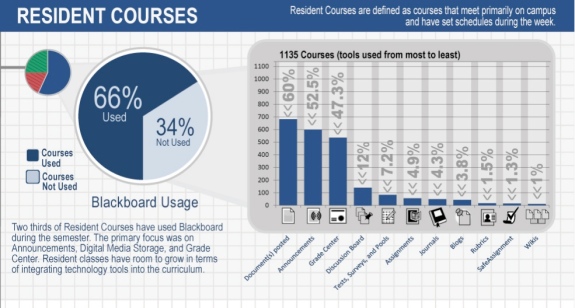
    History professor Jonathan Rees called it an “uncharacteristically subtle post.” When he posted an excerpt from his university’s report on its Blackboard usage, he didn’t have to say much: “I think all I want to do here is point out that all the things professors use Blackboard for here most (as well as a few of the things that not many people use Blackboard for) can be done for a lot less money than whatever our Blackboard license costs. Sometimes they can be done for no money at all.”

    Rees asks a really important question: why would a school opt to spend so much money on an LMS when many of its features go unused? Why pay when you can find cheap or free alternatives elsewhere?

    (more…)

  • Instructure Makes Its Move into the K-12 Market

    The learning management system upstart Instructure is unveiling Canvas K-12 today, a version of its platform aimed — as the name suggests — for the K-12 level. The company says that it’s already had over a dozen school districts adopt Canvas, even before this roll-out of a specially designed LMS.

    Traditionally the LMS has been something implemented primarily by colleges and universities, but as more and more K-12 schools move to online learning and digital curriculum, there’s a growing demand at that level. It’s a hot market, and according to research published in December 2011 by Simba Information, “the LMS segment is expected to grow at a compound annual rate of 7.3%, reaching $377 million by the 2014-2015 school year.”

    As such, it’s hardly surprising to see some of the big education companies make their move to offer schools these services. The acquisition of Edline by Blackboard last fall made it clear that the learning management giant was serious about its push into that market.

    But as the Simba research suggests, it’s a market that’s still up for grabs. While Blackboard still holds a little over half of the higher ed LMS market, Blackboard, Pearson and Moodle altogether share only about 30% of the K-12 market.

    That provides an interesting opportunity for Instructure, which officially launched its cloud-based LMS this time last year.

    (more…)

  • (I Hope This Isn’t a) 2012 Predictions Post

    Happy 2012. After writing a blog series outlining some of the major ed-tech trends of 2011 as well as a few obligatory posts with predictions for the new year, I figured I’d be off to the races, energized about my work as an education technology writer, excited for the potential for better teaching and learning opportunities facilitated by technology. But so far — and yes, I realize it’s only January 4 — it doesn’t feel like a terribly happy new year to me. There have been a string of ed-tech-related news stories over the last 4 days that have left me frustrated, if not depressed, about the year ahead.

    (more…)

  • Does BYOD Solve or Worsen K-12 Tech Woes?

    Over the weekend, educator and journalist Gary Stager penned a fiery blog post calling BYOD (“bring your own device”) the “worst idea of the 21st century.” Stager’s post is a response to the increasing popularity among K-12 schools to allow students to bring their own computers to schools, whether they’re laptops, netbooks, iPads, or cellphones.

    Stager, who has been an advocate for one-to-one computing initiatives for about as long as the concept has been around, argues that by opting to support BYOD, schools are eschewing their responsibilities to provide students with equitable access to technology. Among his complaints: BYOD “enshrines inequality” by allowing affluent classmates to have better tools than others. Furthermore, it reduces the potential of computers in the classroom to the lowest common denominator — or lowest common technology specifications — present. In other words, if you have a classroom that’s a mix of iPads, laptops, and clamshell mobile phones, he argues, you’re going to devise activities for the “weakest device.” And oftentimes that’ll mean using these devices solely for information retrieval — “looking stuff up on the Internet.”

    BYOD, Stager contends, “contributes to the growing narrative that education is not worthy of investment.” Recognizing that making the pitch for buying “one of something for every student” is challenging, Stager argues that that’s the pitch that educators must make, rather than simply relying on parents to fund the purchase of their children’s technology in the classroom.

    No doubt, allowing students to bring their own devices to school does highlight income inequalities (of course, there are a myriad of ways in which income inequalities manifest themselves based on what’s in a student’s backpack — or even what that backpack looks like). Seeing the range of devices that students can and do bring to school is certainly a good reminder that the digital divide remains. (Of course, seeing the ancient PCs in some schools’ computer labs is a depressing exercise as well.) And while it’s easy, perhaps, to peg schools’ embrace of BYOD as a sly move to offload technology hardware procurement onto parents, I’m not sure that’s an adequate or complete assessment of what’s actually happening.

    I don’t actually think that schools are trying to implement one-to-one programs without buying the necessary tech. I think there’s a difference — one not just of technology but of pedagogy — between one-to-one programs and between crafting more lenient policies about which personal computing devices students are allowed to bring to school.

    That being said, once we have opened the doors to BYOD, there are a lot of important considerations, some of which Stager alludes to. How will we make sure that students with “inferior” devices don’t suffer? And I don’t just mean suffer ridicule. How will we tackle that very thorny problem of making sure that all lessons, projects, assignments, e-textbooks and so on are accessible across platforms, across devices?

    In fact, I’d say that could be one of the major side effects of BYOD, and a benefit at that. I’m hopeful BYOD can help challenge some of the vendor lock-in with software that, say, only works on Windows, or only works on iPads. I hope this is something that will drive schools to the Web versus native apps.

    Of course, I think this is also the thing that causes schools balk at BYOD more than any promise of saving money on buying hardware: allowing BYOD gives students an element of personal control and responsibility they don’t often feel with the equipment — digital or print — that’s assigned them by schools. How do you handle what software they use? How do you handle which browser they use? Students own these devices — they aren’t handed back at the end of the day; they aren’t checked in and out for the weekend; they aren’t returned at the end of the school year.

    I tend to think, as more K-12 students own some sort of mobile computing device, that BYOD will be an inevitability. I’m not sure it’ll be the laptop or the netbook that students will bring to school either. I think it’ll be a cellphone (a device that Stager views as vastly inferior to the laptop or netbook). After all, last year’s Speak Up 2010 report pegged cellphone ownership of middle schoolers at over 50%. An additional 34% said they own a smartphone. Both figures are sure to rise, but it’s the latter I think that will seal the deal for BYOD. While true, many might look at the small screen, the lack of keyboard and peripheries on an iPhone and say, “This will never work for schoolwork!”, I’ve seen Arduino devices running on iPhones. I’ve seen Androids used — via App Inventor — to teach basic programming. I think we’re still just beginning to see innovation around mobile devices.

    Nevertheless, some of the challenges that Stager point out ring true. And they’re the challenges, I think, that face almost every one-to-one program. They’re challenges that exist whether students own or “rent” their hardware from districts for the duration of the school year. How do we effectively bring technology into the classroom? How do we use it to enable learning, inquisitiveness, curiosity, problem-solving? How do we weigh schools’ desire for centralized control with the fact that these are personal computing devices? And, of course, how do we make sure that everyone — from school districts to families — can have access to high-quality technology and to high-speed Internet?