
e-Literate

Present is Prologue

Category: Ed Tech

The “Ed Tech” category includes posts about educational technology products themselves, including LMSs and other learning platforms, adaptive learning and other digital curricular materials products, learning analytics, and educational apps of all types. It also includes technical aspects of ed tech products, especially interoperability.

  • Blackboard Confronts Erosion of Market Share, Makes a Major Change in Strategy

    In a series of announcements that has the educational technology world buzzing, Blackboard reversed their strategy of their core LMS business.

    Most of the discussion in articles and blogs follows the meme of Blackboard entering open source, or even the meme of Blackboard acquiring competitors. I think the news is more significant than either of these two memes.

    Blackboard just did a 180-degree turn on their strategy for their core LMS business. They have moved from consolidating all customers into Learn 9.1 to providing products and services that are almost LMS-agnostic. As Dr. Chuck described:

    The notion that we will somehow find the “one true LMS” that will solve all problems is simply crazy talk and has been for quite some time.

    There is another aspect to this story not described in yesterday’s press releases and the associated articles and blogs. This is the first public strategic decision by Blackboard since they were acquired by Providence Equity Partners. I suspect that if you take all four of Blackboard’s announcements within the context of the private equity ownership, the underlying strategy and rationale make much more sense.

    (more…)

  • Blackboard Acquires Moodlerooms and Netspot

    Press release is here.

    This is obviously a gob smacker of a story. I’m going to take a few days, talk to a few folks, and think about the implications before I write a reaction post. You may hear from other e-Literate bloggers on the subject in the meantime.

    Stay tuned.

  • The Ultimate Hack: Re-coding Textbooks and Other Learning Content (Introduction)

    (This is an initial  rough draft of the Introduction to my next book, The Ultimate Hack: Re-coding Textbooks and Other Learning Content. I will be posting drafts of all the chapters on this site, and will post final versions along with the accompanying open textbook project on my personal blog. Both the drafts and final product will be open and free. All feedback and comments are appreciated.)

    Introduction

    This is a book about making things. More precisely, it is a book about making things better. In this case, the “things” I want to improve are textbooks and other types of learning content.

    I want to re-envision these things because they have outlived their purpose and because their design is based on constructs that are no longer relevant to education or the learning process.

    Over the course of this book, I will introduce an entirely new type of coding for learning content, one that can help us revolutionize the learning content industry and, at the same time, greatly reduce the cost of learning materials for students. And, because this is a book about doing as much as it is about thinking, I will actually create a complete example of this new kind of “textbook” over the course of our journey together.

    Indeed, this is a book about hacking the code of learning content and re-engineering it into a form that will work for the future. It is about imagining learning content differently. About creating it faster and less completely. Constructing it fluidly and with constant room for change and improvement. (more…)

  • The Master Course: A Key Difference in Educational Delivery Methods

    In part 1 of this series of posts I presented a view of different educational delivery models based on course design and modality.

    Why does it matter that we describe these educational delivery models with finer granularity than just traditional and online? Because the aims of the models differ, as do the primary methods of how these models are created and delivered.

    To show an example of how the methods differ, let’s look at one of the most significant, but overlooked, concepts in this landscape – the master course. This concept of the master course changes the educational delivery methods of an institution, and in my opinion is the real differentiator between traditional institutions and for-profit institutions (both blended and fully online) and even non-profit fully-online organizations.

    (more…)

  • Classroom Salon: Social Highlighting for Education

    As educational content moves increasingly digital, one of the big pushes is to rethink highlighting and margin notes. On the downside, these capabilities are seen as table stakes. If students can’t do with their digital textbooks what they can already do with their analog textbooks, then that’s a step backward. On the upside, there’s a sense that highlighting and annotation is an opportunity to re-think educational affordances, particularly if you add social capabilities into the mix. But, for the most part, social highlighting has been a bust so far. Tools like Diigo have had them for some time now, and I just don’t see a lot of adoption. Even the teaching with Web 2.0 crowd doesn’t seem to have latched onto to these capabilities in a substantial way. Part of the problem, I think, is the lack of strong, core educational use cases informing the design.

    Classroom Salon—a product developed at Carnegie Mellon University with funding from the NSF and the Gates Foundation—is different. It has a few key features that make it stand out from the pack as a great tool for teaching critical reading and writing.

    (more…)

  • The Emerging Landscape of Educational Delivery Models

    Part 2 in this series, on a key difference in educational delivery methods, can be found here.

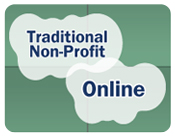
    Traditional education or online education. In the past decade it seems that the dominant conversation has been around the potential for online learning, both from for-profit and non-profit options, to disrupt education as an industry.

    What I believe we are seeing in 2011 and 2012 is a transition to an educational system no longer dominated by traditional education and one or two alternative models. As my colleague Molly Langstaff has described, educational technology and new educational courses and programs are interacting to create new language and models for education. What does this emerging landscape of educational delivery models look like?

    While I do not claim to be able to solve this problem, I would like to offer a more descriptive view than the dichotomy of traditional and online education describes.

    (more…)

  • GoodSemester: Not an LMS, but a Learning Platform

    A while back here on e-Literate, Phil wrote a post called Farewell to the Enterprise LMS, Greetings to the Learning Platform. In it, he wrote,

    In my opinion, when we look back on market changes, 2011 will stand out as the year when the LMS market passed the point of no return and changed forever. What we are now seeing are some real signs of what the future market will look like, and the actual definition of the market is changing. We are going from an enterprise LMS market to a learning platform market.

    What I mean by ‘enterprise LMS’ is the legacy model of the LMS as a smaller, academically-facing version of the ERP. This model was based on monolithic, full-featured software systems that could be hosted on-site or by a managed hosting provider. A ‘learning platform’, by contrast, does not contain all the features in itself and is based on cloud computing – multi-tenant, software as a service (SaaS).

    There tends to be a pendulum swings in technology. In the old days, there were dumb terminals, with all the business logic residing on the mainframe. Then came the PC revolution, pushing functionality out to the edges of the network. Next came the internet, driving functionality back to the server. And now we have apps. Similarly, in educational technology, we started with a few tools, moved to an all-in-one, all-you-can-eat LMS model, and now are moving back toward more specialized systems. And one of the questions platform developers and teachers a like are asking is how much functionality do you really need? Is it just WordPress? Is it WordPress plus Google Docs? Is it WordPress, Google Docs, and grade book? Is it a simple LMS with only a handful of tools and an app store? There are lots of different models.

    Enter GoodSemester, which has its own take on…well…just about everything. I had a chance to talk to company founder Jason Rappaport a while back about both the product and the company.

    (more…)