Babson Survey Research Group (BSRG) just released its annual survey of online learning in US higher education (press release here). This year they have moved from use of survey methodology for the online enrollment section to use of IPEDS distance education data. Russ Poulin from WCET and I provided commentary on the two data sources as an appendix to the study.
The report highlights the significant drop in growth of online education in the US (which I covered previously in this e-Literate post). Some of the key findings:
- Previous reports in this series noted the proportion of institutions that believe that online education is a critical component of their long-term strategy has shown small but steady increases for a decade, followed by a retreat in 2013.
- After years of a consistently growing majority of chief academic officers rating the learning outcomes for online education “as good as or better” than those for face-to-face instruction, the pattern reversed itself last year.
- This report series has used its own data to chronicle the continued increases in the number of students taking at least one online course. Online enrollments have increased at rates far in excess of those of overall higher education. The pattern, however, has been one of decreasing growth rates over time. This year marks the first use of IPEDS data to examine this trend.
- While the number of students taking distance courses has grown by the millions over the past decade, it has not come without considerable concerns. Faculty acceptance has lagged, concerns about student retention linger, and leaders continue to worry that online courses require more faculty effort than face-to-face instruction.
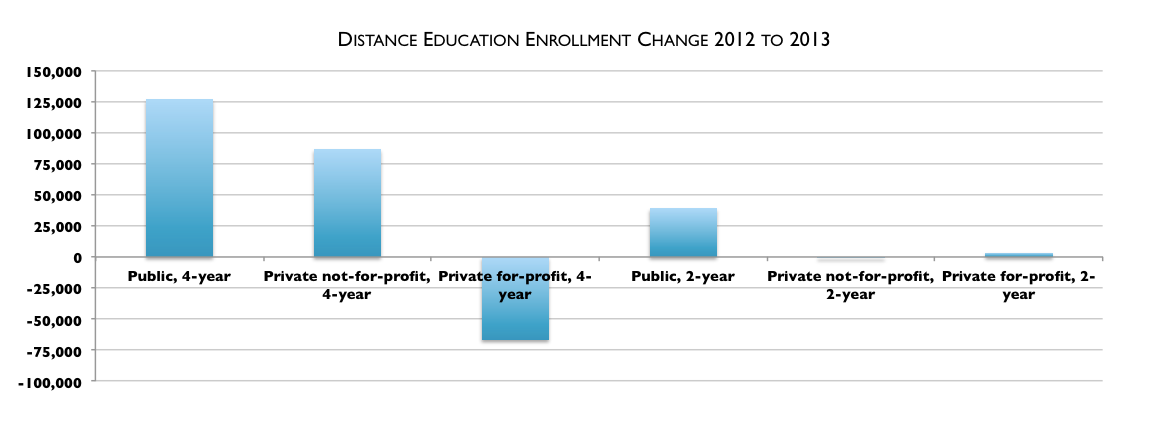
BSRG looked at the low growth (which I characterized as ‘no discernible’ growth’ due to noise in the data) and broke down trends by sector.