
In the first part of this series, I identified four design goals for a learning platform that supports conversation-based courses. In the second part, I brought up a use case of a kind of faculty professional development course that works as a distributed flip, based on our forthcoming e-Literate TV series on personalized learning. In the next two posts, I’m going to go into some aspects of the system design. But before I do that, I want to address a concern that some readers have raised. Pointing to my apparently infamous “Dammit, the LMS” post, they raise the question of whether I am guilty of a certain amount of techno-utopianism. Whether I’m assuming just building a new widget will solve a difficult social problem. And whether any system, even if it starts out relatively pure, will inevitably become just another LMS as the same social forces come into play.
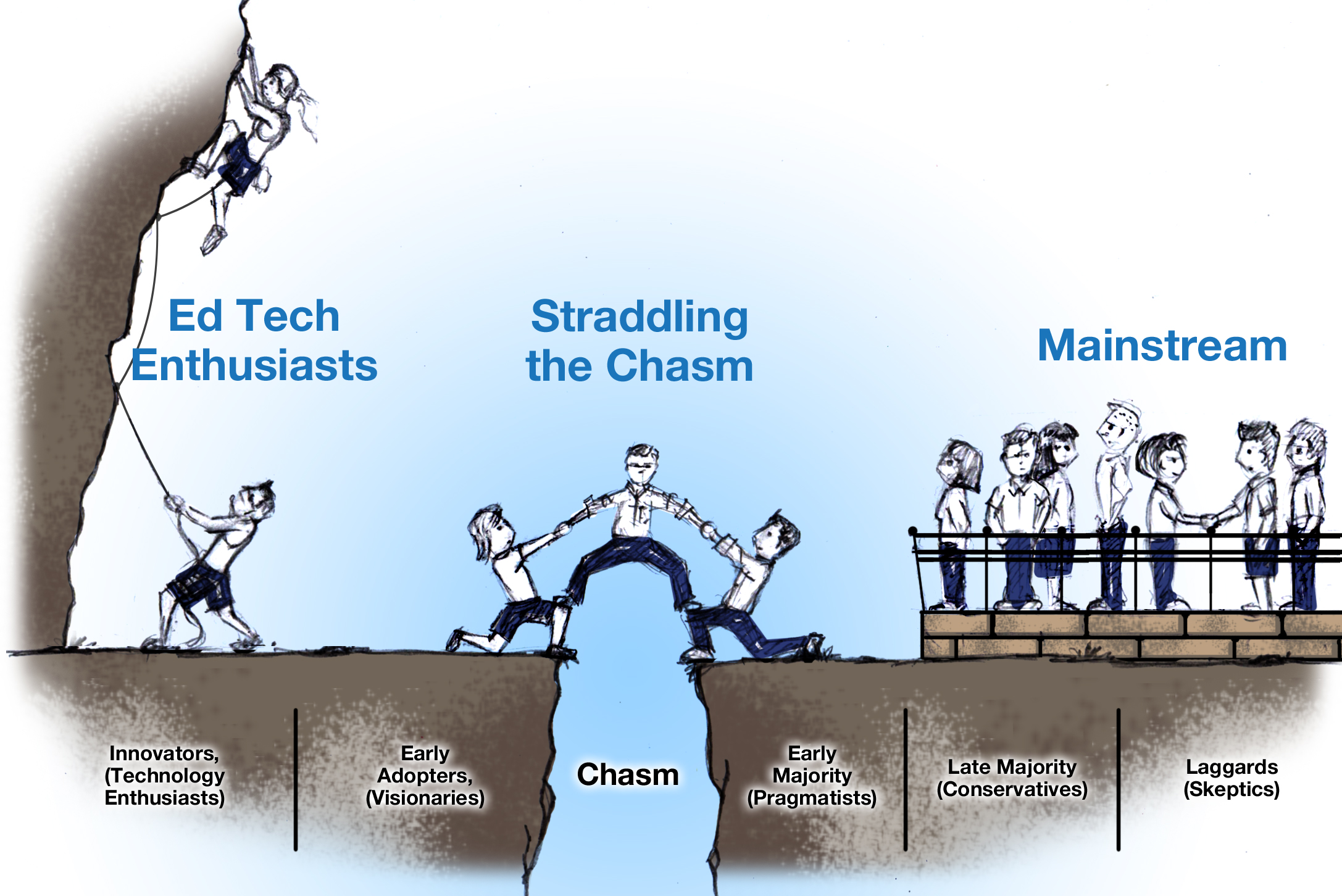
I hope not. The core lesson of “Dammit, the LMS” is that platform innovations will not propagate unless the pedagogical changes that take advantages of those changes also propagate, and pedagogical changes will not propagate without changes in the institutional culture in which they are embedded. Given that context, the use case I proposed in part 2 of this series is every bit as important as the design goals in part 1 because it provides a mechanism by which we may influence the culture. This actually aligns well with the “use scale appropriately” design goal from part 1, which included this bit:
Right now, there is a lot of value to the individual teacher of being able to close the classroom door and work unobserved by others. I would like to both lower barriers to sharing and increase the incentives to do so. The right platform can help with that, although it’s very tricky. Learning Object Repositories, for example, have largely failed to be game changers in this regard, except within a handful of programs or schools that have made major efforts to drive adoption. One problem with repositories is that they demand work on the part of the faculty while providing little in the way of rewards for sharing. If we are going to overcome the cultural inhibitions around sharing, then we have to make the barrier as low as possible and the reward as high as possible.
When we get to part 4 of the series, I hope to show how the platform, pedagogy, and culture might co-evolve through a combination of curriculum design, learning design, platform design, prepared for faculty as participants in a low-stakes environment. But before we get there, I have to first put some building blocks in place related to fostering and assessing educational conversation. That’s what I’m going to try to do in this post.