
e-Literate

Present is Prologue

Tag: Online Education

  • Proposed California Legislation for Statewide Online Education Courses – The Basics

    Outside of the Vatican, the big news this week in higher education is the proposed legislation in California that would identify and approve a set of up to 50 online courses that the three public systems would accept as credit for admitted students. Senate President Pro Tem Darrell Steinberg is co-authoring SB520 that addresses popular, introductory courses for which students cannot get access from their University of California, California State University, or California Community College campus. The pre-coverage of the event included the following:

    As described in the NY Times:

    Legislation will be introduced in the California Senate on Wednesday that could reshape higher education by requiring the state’s public colleges and universities to give credit for faculty-approved online courses taken by students unable to register for oversubscribed classes on campus.

    If it passes, as seems likely, it would be the first time that state legislators have instructed public universities to grant credit for courses that were not their own — including those taught by a private vendor, not by a college or university.

    “We want to be the first state in the nation to make this promise: No college student in California will be denied the right to move through their education because they couldn’t get a seat in the course they needed,” said Darrell Steinberg, the president pro tem of the Senate, who will introduce the bill. “That’s the motivation for this.”

    Update 3/14: Text of bill here

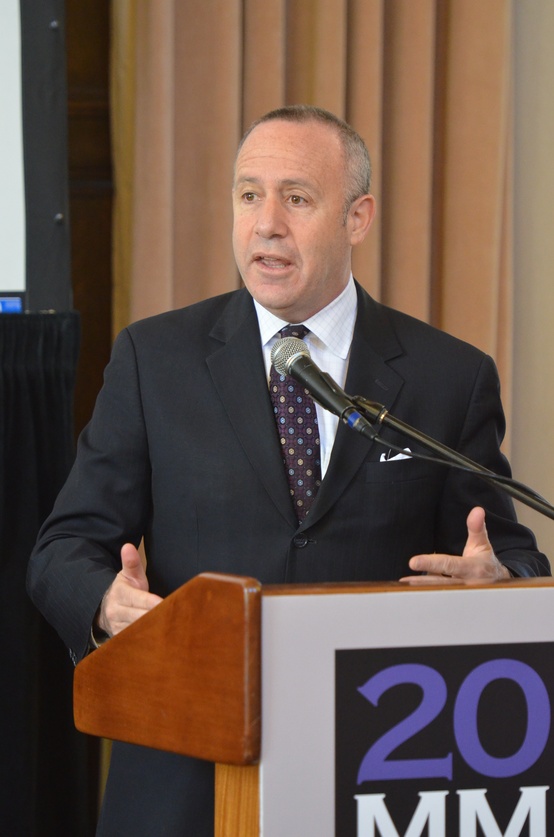
    Senate President Pro Tem Steinberg held a press conference today via Google Hangout and video streaming (archive available soon on site) to announce the package of legislation. I have attempted to summarize the press conference below (any mistakes in note-taking are my own, and I’ll update as needed). While Michael and I will both have analysis of this proposal soon, I wanted to first share the information directly.

    (more…)

  • Further Evolution of MOOCs with Academic Partnerships and MOOC2Degree Launch

    One of the fastest growing educational delivery models over the past year is the school-as-a-service concept, where companies like Pearson, 2U, Academic Partnerships and Deltak provide the services needed for a traditional institution to create an online program at scale. As I have often pointed out, traditional institutions have a organizational designs and cultures that often prevent them from successfully creating self-sustaining online programs, which is the reason for the barrier in the landscape diagram. School-as-a-service model provides a bridge over that barrier.

    Of course, the model that has grown even faster are MOOCs. Yesterday Academic Partnerships launched a new concept called MOOC2Degree that attempts to combine these two models, thus giving working adults (the sweet spot of their market) a lower cost, easier method to get credits in an online program.

    AP Graphic 2


    (more…)

  • New Post at WCET On Activist Role of State Government in Higher Education

    I have a new post up at WCET based on some observations from the recent 20 Million Minds conference.

    In past years the primary role of state government was to take the lead on funding while working with statewide systems on enrollment policies to serve workforce and general educational needs. Last week in California we witnessed the state government, both from the governor’s office and the legislature, become the driving force of change for determining the role of educational technology and online education to transform the public systems. State officials are no longer content with encouraging and hoping that postsecondary institutions will develop a strategy for systemic change on their own.

    Three interdependent events are emerging that clarify this trend.

    Read the whole article here.

  • Re:Booting California Higher Education – Transcript of Darrell Steinberg Introduction

    The following is a rough transcript of Senate President Pro Tem Darrell Steinberg’s talk at the 20 Million Minds conference on January 7th. Any errors in transcription are mine, and sections that were garbled are marked by []. I’d like to thank Rovy Branon for his recordings of these sessions. I’ll post additional transcripts soon.

    Thank you, Dean. Senator Florez, once you’re a senator, you’re always a senator. And thank you for your nice introduction and for inviting me to give a brief welcome, and I know we have a busy agenda today. And I want to thank you and 20 Million Minds, not only for organizing this forum, but for directing me towards these issues that we’re talking about here today.

    Steinberg

    I’m not really a tech guy that much [] – I think about traditional education, mental health, foster care … I balance budgets and that sort of thing. And this [online education] is a whole new world for me. But Senator Florez last year, after he left office, talked to me about this revolution and possibilities around using technology in ways that not only equal or enhance quality but also reduce the cost of higher education for struggling students and their families. And so after we did SB1052 and 1053, which are now being implemented after Governor Brown’s signature, with the help of the faculty associations across all three systems, that take the 50 most popular courses across the three systems, and develop instructional materials to an online or open source format. Offer them as a competitive alternative to the traditional textbook and ensure that that offering is free for the student online (and no more than $20 if they print it). Simple, but potentially revolutionary in terms of bringing down costs of instructional materials, where we know the cost of higher education is becoming prohibitive to too many people and so many families.

    (more…)

  • Summary of Statements Before California Panel Discussion on Online Education

    As Michael mentioned, the two of us will be participating in a panel discussion next week – Rebooting CA Higher Education, sponsored by the 20 Million Minds Foundation, on January 8th. The event will be live streamed.

    I’ve been asked to give a short talk based on my recent EDUCAUSE Review article that described various online educational models, and I will also moderate several panels. Given my role, I’d like to collect links to several of the key posts and articles that frame the issues to be discussed next week. After the event I’ll share my thoughts on the discussions.

    Statements Prior to Formation of Online Symposium

    The panel discussion is based on governor Jerry Brown’s call for the three public higher education systems in California (University of California, California State University and California Community Colleges) to evaluate online education as one method to control or reduce student costs. In particular, much of the discussion started during Governor Brown’s meeting with the UC Regents on Nov 14, 2012.

  • Online Educational Delivery Models: A Descriptive View

            This article was originally published at EDUCAUSE Review.

    Update (11/25): This post has been bumped and amended to include the full article.

    Although there has been a long history of distance education, the creation of online education occurred just over a decade and a half ago—a relatively short time in academic terms. Early course delivery via the web had started by 1994, soon followed by a more structured approach using the new category of course management systems.1 Since that time, online education has slowly but steadily grown in popularity, to the point that in the fall of 2010, almost one-third of U.S. postsecondary students were taking at least one course online.2 Fast forward to 2012: a new concept called Massive Open Online Courses (MOOCs) is generating widespread interest in higher education circles. Most significantly, it has opened up strategic discussions in higher education cabinets and boardrooms about online education. Stanford, MIT, Harvard, the University of California–Berkeley, and others have thrown their support—in terms of investment, resources, and presidential backing—behind the transformative power of MOOCs and online education. National media outlets such as the Wall Street Journal, the New York Times, and The Atlantic are touting what David Brooks has called “the campus tsunami” of online education.3

    Unfortunately, a natural side effect of this new interest in education and educational technology is an increase in hype and in shallow descriptions of the potential for new educational models to replace the established system. All too often, the public discussion has become stuck in a false dichotomy of traditional vs. online—a dichotomy that treats all online models as similar and that ignores blended or hybrid approaches. This false dichotomy is even more evident now that discussions are spilling into national media forums. But in fact, as my colleague Molly Langstaff has described, educational technology is interacting with innovative educational courses and programs to create not only new language but also multiple models for delivering education.4

    (more…)

  • Is Coursera Facebook, Amazon, or Pets.com?

    Before I get started, let me just say that Phil can vouch for the fact that I had already planned to use “Pets.com” in the title of this post before MIT Technology Review used it in their article on Minerva. As we’ll see, there are reasons to reach for that particular analogy at this particular moment in educational technology.

    Anyway, it’s an uncomfortable truth for educational folks that one of the principal innovations of the xMOOC is the store front. It is the ability to find courses in a catalog. If you look at what Coursera is right now from a platform perspective, it is primarily a store front on top of an LMS. The same could be said of edX. And as Phil and I have both written about recently, this is also the primary innovation in Instructure’s Canvas Network. I don’t expect that innovations in MOOC platforms to stay confined to the store front in the long run; for example, Daphne Koller, the co-CEO of Coursera, is also a leading expert in Bayesian machine learning. I think the scale of usage will drive other innovations. But right now, it’s the store front that is the most obvious differentiator between an LMS and a MOOC platform. As we game out which of the various xMOOC entrants will be successful, it’s important to understand how the store front works and the degree to which the growth of one dominant platform could impact the ways that colleges and universities function. I think there are at least three possibilities.

    (more…)