
e-Literate

Present is Prologue

Tag: Washington Post

  • College Scorecard Article Published In Washington Post

    I have written several posts looking at the new College Scorecard and its inherent flaws in the data, often starting with observations from Russ Poulin at WCET. Today Susan Svrluga, education reporter at the Washington Post, posted a new article co-written by me and Russ and titled “Hundreds of colleges missing from Obama’s College Scorecard?”. The gist of the article is taking a holistic view of data problems and why they exist.

    In a nutshell, the College Scorecard combines data from multiple sources – primarily from the Education Department’s own Integrated Postsecondary Education Data System (IPEDS) and National Student Loan Data System (NSLDS) – and publishes the results of both as a consumer-facing Web site and an analyst-friendly data download. The essence of the problem is that throughout this process the data is filtered based on questionable assumptions, leading to the fuzzy lens viewing subsets of the real data.
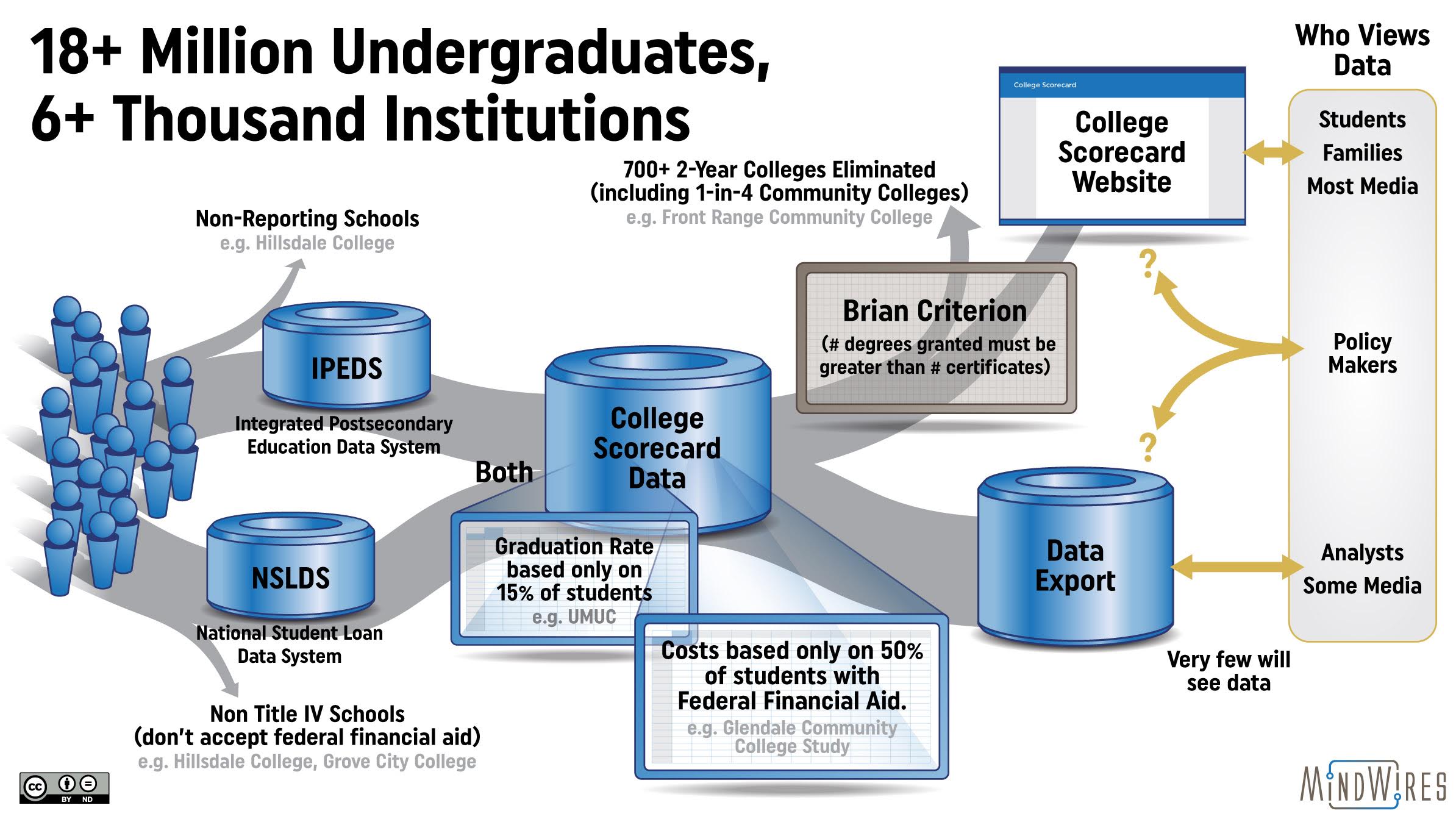
    Poulin Hill College Scorecard Graphic

  • Using TAs As Key Component Of Active Learning Transformation at UC Davis

    Last week I described how UC Davis is making efforts to personalize one of the most impersonal of learning experiences – large lecture introductory science courses. It is telling that the first changes that they made were not to the lecture itself but to the associated discussion sections led by teaching assistants (TAs). It is well known that much of the instruction in lower division classes at large universities is led not by faculty but by TAs. This situation is often seen as a weakness of the business model of a research university, but it can also be leveraged as an opportunity to lead educational change. Consider this interview with staff from the iAMSTEM group at UC Davis from our e-Literate TV series on personalized learning:


    (more…)

  • UC Davis: A look inside attempts to make large lecture classes active and personal

    In my recent keynote for the Online Teaching Conference, the core argument was as follows:

    While there will be (significant) unbundling around the edges, the bigger potential impact [of ed innovation] is how existing colleges and universities allow technology-enabled change to enter the mainstream of the academic mission.

    Let’s look at one example. Back in December the New York Times published an article highlighting work done at the University of California at Davis to transform large lecture classes into active learning formats.

    Hundreds of students fill the seats, but the lecture hall stays quiet enough for everyone to hear each cough and crumpling piece of paper. The instructor speaks from a podium for nearly the entire 80 minutes. Most students take notes. Some scan the Internet. A few doze.

    In a nearby hall, an instructor, Catherine Uvarov, peppers students with questions and presses them to explain and expand on their answers. Every few minutes, she has them solve problems in small groups. Running up and down the aisles, she sticks a microphone in front of a startled face, looking for an answer. Students dare not nod off or show up without doing the reading. (more…)