e-Literate

Present is Prologue

Category: Ed Tech

The “Ed Tech” category includes posts about educational technology products themselves, including LMSs and other learning platforms, adaptive learning and other digital curricular materials products, learning analytics, and educational apps of all types. It also includes technical aspects of ed tech products, especially interoperability.

  • Blackboard’s Defense of its Finances is not Persuasive

    Blackboard’s Defense of its Finances is not Persuasive

    When we were at BbWorld the week before last, Blackboard’s executive management pushed back vehemently on our analysis of how their high levels of debt could impact their business decisions. We heard their strong disagreement expressed in our very first meeting of the conference from Chief Learning and Innovation Officer Phill Miller and in our very last meeting from CEO Bill Ballhaus.

    We stand by our analysis. In fact, Blackboard’s pushback had the opposite of its intended effect. We left BbWorld more convinced that we are right rather than less.

    But in fairness, there is an empirical fact of the matter here, and we do not yet have conclusive public evidence that the company’s high levels of debt will, in fact, affect their business strategy. So here’s what we’re going to do:

    1. I will summarize their position as objectively as I can.
    2. I will explain why we don’t find their position persuasive.
    3. I will lay out the signs that concrete evidence we will be looking for going forward that will either support or undermine our thesis.
    4. Phil and I will publish updates as we monitor these signs and, if there is no additional public evidence of our thesis by BbWorld 2019 (or strong evidence emerges that we are wrong before then), then we will publish a mea culpa post.

    Blackboard’s position

    The public kerfuffle of the last couple of weeks has been over our reporting that Canvas has (barely) surpassed Blackboard in US market share. But the focus of the company’s pushback at BbWorld was on the financial claims. The heart of the argument we heard was essentially the same as the one articulated by Blackboard to the Washington Business Journal:

    A company spokesperson said in a statement that Blackboard was a “healthy business with a proven and sustainable business model” with strong financial backing from its private equity investors, who have placed hundreds of millions of dollars more over the last two years.

    “We have made a strategic decision to focus on the future instead of just quarterly results or debt ratings. Thus, we’ve chosen to focus investments on long-term, market-driving opportunities that meet the evolving needs of our clients, including but well beyond the learning management system (LMS),” the spokesperson said in an email.

    We’re not aware of public information about the “hundreds of millions of dollars more” that Blackboard claims their owner, Providence Equity, have placed in the company over the last two years, but Providence’s willingness to continue pouring money into Blackboard going forward is really the key question. Ballhaus argued to us that the amount of debt that Blackboard is carrying is a strategic choice that he and the private equity investors—he used the pronoun “we”—make together. In particular, he argued, “we” could choose at any time to invest more money in the company, paying down debt in exchange for equity. Further, he argued, it’s logical to assume that Providence would do so if needed because “they only make their money if we improve.”

    Why it’s not credible

    Paying down debt in exchange for equity, called “recapitalization,” is a strong vote of confidence by a private equity (PE) owner. First, since debt holders get paid before equity holders in the event of bankruptcy, it increases risk for the PE firm. Second, it would mean a substantial investment of cash, which is partly what PE firms typically try to minimize by requiring the companies that they own to take on substantial debt in the first place. When PE-owned companies find that they are in danger of being unable to make their debt payments—which both Moody’s and S&P Global Ratings have said is currently the case with Blackboard—the PE owners can and do employ a number of different strategies that are financially less risky to them in order to address the problem, either instead of or in addition to recapitalizing.

    For example, when Cengage Learning found itself with unmanageable debt levels after its acquisition by private equity, they filed for bankruptcy:

    “The decisive actions we are taking today will reduce our debt and improve our capital structure to support our long-term business strategy of transitioning from traditional print models to digital educational and research materials,” Michael Hansen, Cengage Learning’s chief executive, said in a statement.

    To be crystal clear, I am not suggesting that Blackboard is likely to file for bankruptcy. Providence Equity has other options at its disposal, some of which I will write about in the next section.

    Rather, the point is that Ballhaus’ claim that we should just assume Providence will see it as being in their interest to recapitalize Blackboard is not credible on its face to anybody with even passing knowledge of how private equity companies work. For example, the tone of the Washington Business Journal article I referenced above, which (obviously) was written by a business reporter, suggests significant skepticism that Providence will not let the company’s debt challenges impact their business decisions. The industry experts we typically consult with when writing financial or business stories like this one were even harsher in their evaluations of Blackboard’s position. Two literally laughed out loud at it.

    Further evidence we will be looking for

    All that said, there’s a lot we still don’t know. Because Blackboard isn’t publicly traded, we don’t have very good access to their financial information (though Moody’s and S&P do). And we certainly are not privy to the conversations that Ballhaus has with the company’s board of directors. It’s worth noting here that, in addition to being CEO, Providence chose to make him Chairman of the Board. So we will still label our analysis here as a (confident) hypothesis, subject to revision based on further empirical evidence.

    Here are a few actions Blackboard could take in the future that would indicate Providence Equity has chosen to push Blackboard to solve its own debt problem rather than making it go away with more of Providence’s money:

    • Sell off one or more parts of the business: A Bloomberg piece written by journalists from their distressed debt desk reports, “With some of Blackboard’s bonds selling at deeply distressed levels, Ballhaus is crafting a comeback, and possible options include the sale of its payment processing division, said the people, who asked not to be identified because the discussions are private.” Said payment processing division, Blackboard Transact, is a cash cow for the company. If Blackboard sells off one of its more profitable business units at a time when the company is having trouble making debt payments, that would indicate a choice by Providence Equity to find a way to reduce debt pressure that is less risky for them in terms of cash investment but more risky for Blackboard in terms of long-term health. Particularly since Providence already tried to sell Blackboard once and has now owned the company for well past the normal sell-by date that PE companies like to follow, the sale of Transact might suggest further moves to follow.
    • Unload expenses (like office space): The Washington Business Journal article notes, “Blackboard is also interested in unloading its 70,000 square feet of office space at 1111 19th street, with 12,000 square feet already sublet, according to an April post on Tech Office Spaces. It’s unclear where Blackboard will go if it succeeds in leasing out its entire footprint. Blackboard stood to benefit from a tax rebate program for companies that agree to sign 50,000 square feet for at least a dozen years, valued at half the company’s tenant improvement costs, or a maximum of $5 million over five years.” Of course, companies take cost-cutting measures all the time, regardless of their financial health. The business reporter’s phrasing suggests that he may be detecting a whiff of desperation in the specifics of this transaction. Since that’s his expertise more than ours, we’ll be looking for additional confirmation of our thesis, such as if Blackboard were to…
    • Significantly restructure with major layoffs: If Blackboard were to move to a smaller office while also laying off employees—beyond those that might leave in a sale of a business division or the slow leak of headcount that the company has been having for a while now—that would certainly be an indicator that Providence is not ready to just give Blackboard the money the company needs to complete a turn-around and is instead pushing them to solve their own financial problems.

    Given the sourcing of the first two potential indicators, we will not be surprised if at least those two come to pass by the end of 2018. Time will tell.

    What evidence would suggest that our analysis is mistaken? The strongest would be if Providence recapitalizes Blackboard. Even that would not be black and white; for example, Cengage’s owners recapitalized the company along side of having them declare bankruptcy. The details will matter. But a significant recapitalization—where “significant” is defined by the markets and the financial experts—certainly would indicate that Mr. Ballhaus’ characterization of Providence’s willingness to invest further in Blackboard’s success is more accurate than current evidence suggests.

    The other thing that could happen is nothing. If a year passes and Blackboard manages to weather the debt pressure without having to make any major moves, then it will only be fair to expect e-Literate to publicly revisit our analysis.

    And of course, we are still listening to any arguments that Blackboard executives are willing to make. While they haven’t persuaded us thus far, we have accepted their invitation to keep the dialog going, and we remain open to more persuasive arguments. We will hold ourselves accountable, just as we will hold Blackboard accountable.

    But honestly, I don’t think we will need to wait a year for public evidence that Providence is not going to wave its magic wand. I predict we will be writing a follow-up story within six months.
  • Moodle and Blackboard Cut Ties

    Sometimes breaking news overturns your blogging schedule. We have had e-Literate staff at four LMS conferences in the past few weeks and have a raft of news and analysis to publish. However, there’s some big news today out of Moodle that needs at least a timely mention while we write our other posts and chase down the details for more analysis of this event.

    Moodle just announced that Blackboard “will transition out of Moodle’s Certified Moodle Partner program in the coming months.”

    This is consequential for both Moodle and Blackboard. On the Moodle side, we have written about Moodle’s financial dependence on Blackboard as a partner and how that creates some risk for the community. Since those posts, Moodle has received $6 million in outside investment. According to Moodle Pty’s press release, that investment, combined with a decline in Blackboard’s financial contributions to Moodle made it feasible for Moodle to break off from the partnership.

    Note that all the information we have right now is Moodle’s press release; we will circle back to this story once we’ve had a chance to talk to folks from both Moodle and Blackboard and have caught up enough on our blogging schedule that we can give this story the attention that it deserves.

    But here’s my snap reaction: For Moodle, there is good news and risk. The good news is that it clears up the uncertainty that we have been reporting on. Moodle will now have a chance to demonstrate that they can be sustainable without depending on Blackboard. The risk, of course, is that they will now have to demonstrate that they can be sustainable without depending on Blackboard. We’ll try to get some more color on this from Martin Dougiamas.

    On the Blackboard side, it’s bad news in the short term, but the impact is hard to quantify. Because of the open source license under which Moodle is released, Blackboard can continue to use the code in their Moodlerooms business. However, Moodle Pty. owns the Moodle trademark. So unless Blackboard negotiated something with them, they will have to change the name of their product and division. In the medium term, there are open questions about their ability/willingness to continue contributing code to mainline Moodle, customer reactions to the split and, on the potential upside, Blackboard’s ability to make development decisions independently of Moodle Pty. There is some potential upside for them in that last piece, as well as not having to pay the partnership fee to Moodle. We will be reaching out to Blackboard (if they don’t reach out to us first) to hear more from them about how they see the future of their Moodlerooms business.

    So there’s still a lot here that we don’t understand yet. But this is significant news in the LMS world.

  • Terminology is Key to Understanding Blackboard Learn Prospects

    Terminology is Key to Understanding Blackboard Learn Prospects

    There are three observations from Blackboard’s users conference that we feel are important to share before we pull together our thoughts for more comprehensive posts, and all three issues build off of Blackboard’s strong focus at the conference on Learn Ultra as the future of their LMS product line.

    Learn Ultra “In Production” or “Using Ultra”

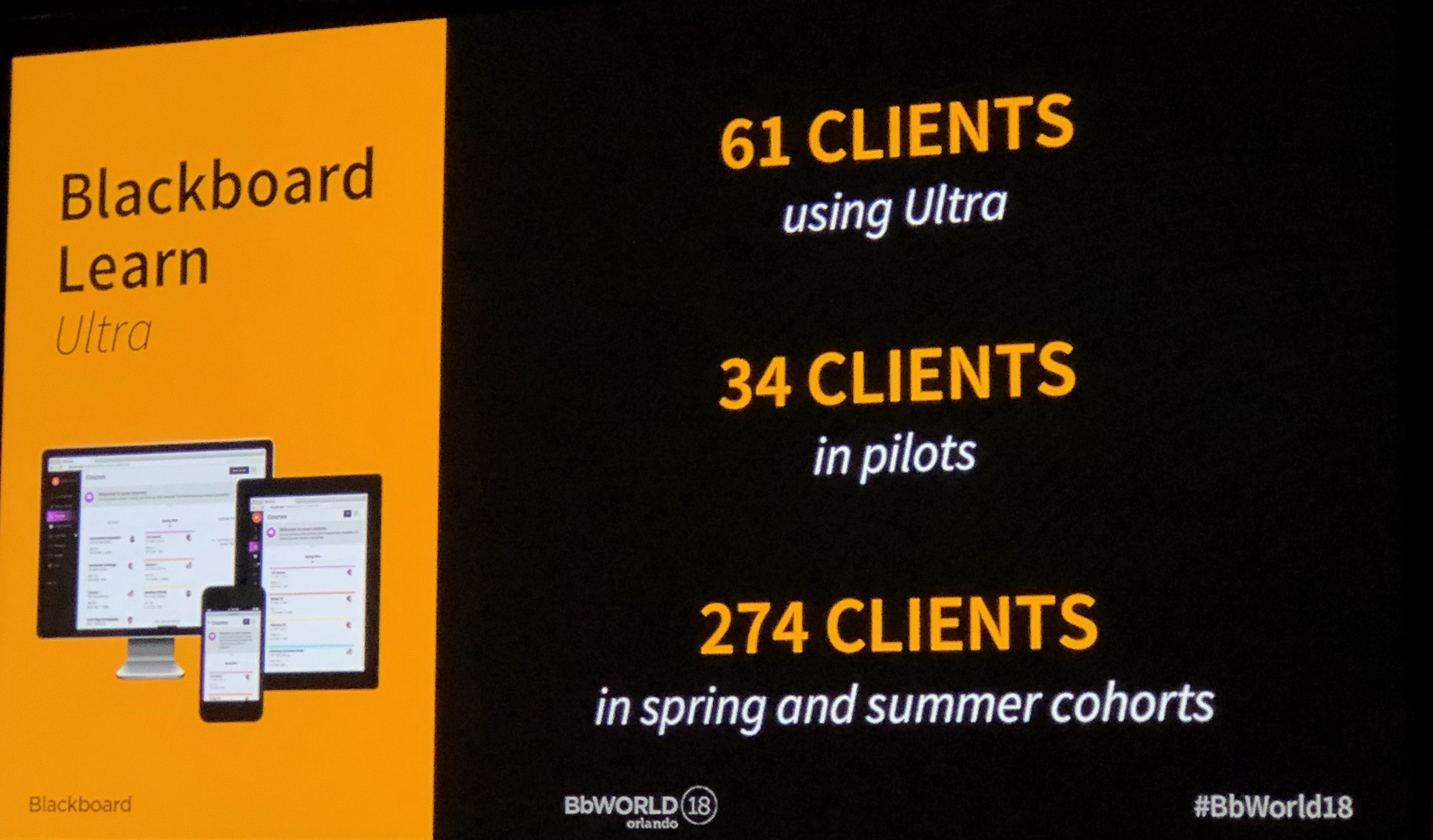
    The first issue is terminology around Learn Ultra. Blackboard ((Disclosure: Blackboard is a client of the e-Literate LMS Market Analysis service and a participating sponsor in our Empirical Educator Project.)) is pushing the metric that there are 61 or 62 Learn Ultra customers “in production” or “using Ultra”, yet we have found very few that use, or even plan to use, Learn Ultra as their primary, institution-wide LMS. What gives? What became quite clear at the conference is that when Blackboard says in production, what they mean is that the LMS administrator has enabled the Ultra global navigation, which uses the new Ultra user experience framework as the landing page / dashboard with activity feed that users see before entering a specific course. The company calls this Base Navigation, but at this point every course can be configured to be in the Original Experience or the Ultra Experience. Thus, enabling the possibility of running a course in Ultra counts as in production.

    Slide from BbWorld18

    Once a school has enabled Learn Ultra Base Navigation, they could choose to move exclusively to Ultra (e.g. the University of Phoenix, Northwest Florida State College, and a few others), or they could choose to keep all courses in Original (e.g. Northeastern State University), or they could choose to have some courses in Ultra and some in Original (used by the majority of schools investigating Ultra). This last mode is known as Dual Course mode, and even Blackboard executives are surprised to find out that the vast majority of schools putting Ultra in production are in fact running in Dual Course. For many of these schools, there are no definitive plans to ever move exclusively to Ultra.

    This distinction is important, as the majority of functionality for an LMS occurs within a course, even if we did hear a few schools present that they saw some end-user benefits to having the landing page itself. We will add more commentary on this subject in future posts, but for now the takeaway is that Ultra in production numbers from Blackboard do not necessarily mean that any or most courses are in the Ultra Experience.

    Product Variations Resulting in Three Dates for New Features

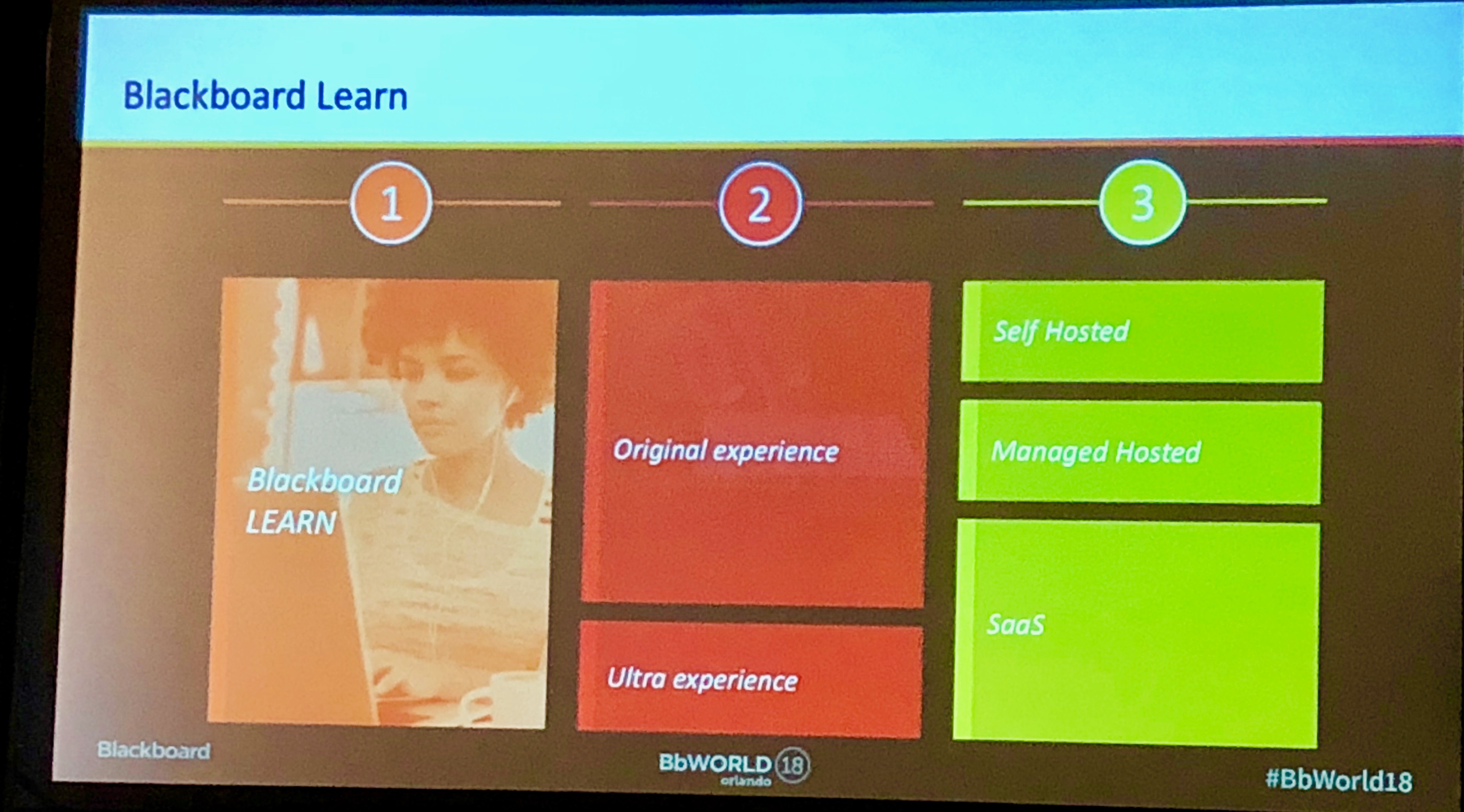
    The second issue is that Blackboard Learn has two experiences (Ultra and Original), three deployments (self-hosting, managed-hosting by Blackboard, and SaaS-hosting at using AWS), often resulting in three different dates for full delivery of new features.

    Slide from BbWorld18

    Keeping in mind that the Original Experience is available on all three deployment models but Ultra is available only in SaaS, here is the view of the final delivery groupings for the courses:

    • Learn Original on self-hosting and Learn Original on managed-hosting, which the bulk of their customers use, is the first case.
    • Learn Original on SaaS-hosting, which represents the bulk of their 383 customers on Learn SaaS announced at the conference, is the second case.
    • Learn Ultra, which represents some subset of the 62 customers announced as “Ultra in production”, is the third case.

    Of course there is significant overlap in terms of common code, such as the micro-services running in the SaaS environment for both experiences, or shared source code between deployment options. But from a feature delivery perspective, the full release often has three different delivery dates – Original SH & MH, Original SaaS, and Ultra.

    This is good news or bad news, depending on your perspective. For Blackboard’s customers, it means more options without forced migrations. Blackboard staff stated several times in presentations and in hallway conversations that none of the deployment options or experiences have any plans to go end-of-life or even into maintenance mode. But on the other hand, Blackboard will not achieve many of the benefits of becoming a cloud product company until they can move the majority of development purely onto SaaS.

    SaaS Better Indicator Than Ultra of Client Retention

    The third issue, which is related to the first two, is that we believe ((OK, OK. I admit that Michael should get credit for seeing this issue more clearly than I did. Not many people read footnotes, so I feel comfortable with this admission.)) that the migration to Learn SaaS might be a better indicator – at least in the short run – than Ultra adoption of whether a school plans to stick with Blackboard. Whether or not the school enables Ultra base navigation or any courses in the Ultra Experience.

    When a school moves to Learn SaaS, they tend to sign contract extensions for 1 – 3 years to cover the new services. And the migration to Learn SaaS does not suffer from the vague terminology issues – a school either uses Learn deployed on SaaS (through AWS) or they don’t.

    For now, just treat this as clarification on the complexities of Blackboard Learn LMS options that became more apparent at the conference.

    Update 7/23: Changed header and some text in second section to focus on dates of feature delivery.

  • What’s Important about the Blackboard Market Share News

    My last post on Canvas’ US market share surpassing Blackboard’s predictably got a fair bit of attention, including some follow-up press elsewhere on the internet. There were a few comments to the press made by Blackboard executives and industry experts that merit some further examination.

    But let me start by being crystal clear about one point: In and of itself, the fact that (by our count) Canvas now has two more primary systems than Blackboard Learn in the US market, is purely symbolic. It has historic significance for those of us who have been long-time watchers (or sufferers) in the LMS market. But if Blackboard’s number were ten higher or ten lower, it wouldn’t change the big picture.

    The more important question is this: If the crossing of the lines is purely symbolic, then what is it symbolic of? What actually matters about this story to colleges and universities, and why?

    Let’s see if we can separate the signal from the noise by working our way through a couple of well-sourced articles and the commentary that they contain.

    First, there’s Lindsay McKenzie’s piece in Inside Higher Ed. She chased down a number of customer reactions. Some of these were the usual pile-on of “we hate these guys and we love those guys.” ((See the comments on my original post; LMS personal commentary tends to be just a few steps removed from primal scream therapy. I’m not judging; just observing.)) But she also got an interesting pricing anecdote, which is helpful given how opaque LMS pricing tends to be:

    Now that Canvas is the “hot product,” Instructure has been trying to aggressively increase its fees, said [Emporia State University’s Rob] Gibson. A 5 percent increase per year for such services is not unusual, but Instructure has been asking for more. Gibson said his institution has had to push back against further increases.

    Blackboard, on the other hand, was “desperate to keep us,” said Gibson. They offered a 50 percent discount to stop Emporia from making the switch. “I think they could see the writing on the wall,” he said.

    Customers take note: Blackboard’s change in fortunes may affect the behavior of all the LMS vendors.

    The article also has a quote from Lou Pugliese who, in addition to being a current senior innovation fellow at ASU and CEO from Blackboard’s early days, was CEO of Moodlerooms when Blackboard acquired it. In other words, he knows something about the LMS market. He raised an interesting question:

    Pugliese said that the statement that Canvas is “now the primary LMS in more U.S. colleges and universities than Blackboard Learn” is misleading. “The real measurement metric should be akin to website traffic. Statistical data on number of unique users, not total ‘installations,’” he said.

    For a long time, Blackboard has been at the top of the LMS food chain not only in raw market share but in terms of having a high percentage of the largest customers. In fact, at one point the company killed off Learn Basic precisely because the company calculated that small colleges were not profitable enough to justify continuing to sell the cheaper, no-frills version of Learn.

    So, if we look at number of students served in the US market rather than the number of universities served, is the market share picture substantially different?

    USA Enrollement.png

    Nope. ((But the picture of Brightspace’s market share relative to Moodle’s does.))

    Second lesson: Blackboard’s customer loss is no longer contained to smaller colleges. Both the IHE piece and the Bloomberg piece that I will be commenting on next mention that Cornell, which is the birthplace of Blackboard, has announced that they will be moving to Canvas. This is another example of a milestone with more symbolic than literal significance. Blackboard’s loss of Cornell may sting from an emotional perspective, but it’s probably not material to the company’s balance sheet in and of itself. On the other hand, the loss of schools like Cornell is material. As is the loss of schools like Pugliese’s current professional home, ASU.

    Lastly from the IHE piece, there’s a substantial quote from Blackboard’s Chief Learning and Innovation Officer Phill Miller:

    Phill Miller, chief learning and innovation officer at Blackboard, said that the data shared by Feldstein were “not consistent with our own,” which show that “Blackboard remains the dominant ed-tech company around the globe.” He added that Blackboard Learn is not the only service that the company offers — “we have thousands of Blackboard Collaborate, Moodle and Blackboard Ally clients,” he said.

    Miller said that over the past year and a half, Blackboard has “taken a hard look as a company at what we need to do to better serve our clients.”

    In response to customer feedback, Blackboard has been working to improve existing products and develop new ones. Though Miller notes that development of Ultra “took longer than we anticipated,” he says institutions are reacting positively to the changes.

    “We’re in a much different and better place than we were a year ago,” said Miller. “We’re seeing that RFPs are slowing down, our renewal rate is strong and we’ve won in a number of competitive situations recently.”

    There’s a lot to unpack here. Let me preface my comments by saying that I’ve known Phill for well over a decade and have a high opinion of his integrity. I feel the need to say this because his comment about our data not being consistent with Blackboard’s own comes across in the context of the article as a dodge that I don’t believe Phill would make in regular conversation. Our numbers likely do differ modestly from Blackboard’s. Counting installations is more complex and requires more methodological decisions than you might think, such as the date when you officially register a switchover. But I don’t believe our numbers are different by much, and I don’t believe anyone can credibly deny that Canvas has achieved rough parity with Blackboard Learn in US market share.

    The comment about Blackboard having “taken a hard look…at what we need to do to better serve our clients” is the right thing for any executive at a company with declining market share to say, and I believe it is also true in this case. Blackboard has had a long reputation hangover from former CEO Michael Chasen, who was notorious for his disregard of customer satisfaction. For what it’s worth, Blackboard is not that company anymore. Emphasis added here because people still have strong feelings about the company’s behavior from that era and don’t always realize that there has been a complete turnover in company management since then. (Twice.)

    Case in point: To his credit, Miller owned up to the delays in Ultra. This isn’t new, but it is ongoing, so Blackboard needs to continue to be up front about the problem until customers are satisfied that it has been fully resolved. The company may be struggling to bring Ultra up to a level that customers consider “feature-complete,” but they have made a consistent and visible effort to take responsibility for their results.

    Miller’s point that Blackboard sells more than just Learn is a valid and important one, but has to be weighed in the context of the company’s short- and medium-term financial challenges. The real issue of concern is the potential behavior of their debt and equity owners. I’ll come back to the point about Blackboard’s total product portfolio in that conxt.

    Miller’s last comment, about seeing RFPs slowing down and a strong customer renewal rate, is the most consequential. Given that the market has been chasing Instructure on reliable SaaS, usability, and high-quality customer service, there has been (and continues to be) an outstanding question of how long Blackboard’s customer base will remain patient as it tries to catch up on these fronts. To be honest we at e-Literate are somewhat skeptical of Blackboard’s ability to forecast. Jay Bhatt, the company’s previous CEO, did enormous damage to the company’s sales force, which is an essential component of any company’s sensory apparatus. If customers are getting nervous and thinking about bolting, the sales reps should pick that up early. But it’s not clear that Blackboard’s early warning system is working properly at the moment. When the e-Literate team is at BbWorld next week, we’ll be looking for clues about customer sentiment.

    The second “Blackboard alert” article worth reading is the one by Katherine Doherty and Eliza Ronalds-Hannon at Bloomberg News. This one wasn’t a reaction to our piece but rather coincidental timing triggered by the same underlying concerns. I spoke with Doherty, whose beat includes companies with distressed debt.

    The debt is the real existential issue. Without it, Blackboard would just be a company that continues to struggle with its flagship product but which would have enough runway to turn itself around over time, one way or another. In the Bloomberg article, Blackboard CEO Bill Ballhaus repeats Miller’s reminder that the company sells other products and services. And as we have pointed out repeatedly here on e-Literate, the international markets are an increasingly large percentage of Blackboard’s financial picture. The fundamentals of the company may not be great, but they’re not dire either. Given time, good leadership, and low debt, a company in this position should be able to right itself.

    But because Blackboard has high debt, their situation potentially a lot more volatile. One major reason why the market share milestone matters is that it’s an apt metaphor for Blackboard’s financial waterline. At their current debt levels, the company can’t afford for their market share to continue to drop.

    Contract losses have sent Blackboard’s revenue and earnings sliding, according to people with knowledge of the matter, making it harder to carry more than $1.3 billion of rated debt. With some of Blackboard’s bonds selling at deeply distressed levels, Ballhaus is crafting a comeback, and possible options include the sale of its payment processing division, said the people, who asked not to be identified because the discussions are private.

    Even in this situation, the results for Blackboard Learn customers won’t necessarily be bad, or even noticeable—depending on how the finances are resolved. If Blackboard sells off Transact, gets a good price for it, pays down some debt, and otherwise sticks with the current management’s plan, that could buy them some time and some ability to survive further erosion of market share around Learn. If the company’s owner, Providence Equity, decides to take more drastic steps, then the potential impact on customers is unpredictable. And Providence’s calculations regarding how much drastic action is required must be at least partly driven by their assessment of how close Blackboard is to bottoming out in LMS market share loss.

    So what are the take-aways for LMS customers?

    • It is no longer the case the Blackboard is the big dog and Instructure is the underdog. And, as is suggested in the customer quote above about pricing, that may have consequences for the behaviors of all the vendors.
    • Blackboard is in a financially precarious situation in the short term. They have a number of options for getting themselves out of this situation, some of which are more impactful on customers than others. This is worth watching closely.
    • In the medium term, the fate of the company depends on them staunching the bleeding of market share, not because the loss of Learn customers is in danger of driving them out of business in and of itself, but because they need to buy time with their equity owners so that they can execute a turn-around strategy that will keep the company (relatively) intact. Ally may be a runaway hit in the market, but if its revenues aren’t growing faster than Learn revenues are shrinking, that will not go over well with equity investors.
    • The current situation is real trial by fire for Blackboard’s executive leadership, including some new players. Phill Miller in particular may have been in senior management for quite a while, but with the departure of Katie Blot, he is now very much in the hot seat now. And he’s not the only one. In the same company blog post that announced Phill’s promotion, Ballhaus announced a new Chief Portfolio Officer, Chief Strategy Officer, and Teaching and Learning product line lead. This is a particularly challenging moment to be an executive at that company.
    • All of this puts a lot of pressure on Blackboard to get customers migrated over to SaaS and convince the market that Ultra is ready for prime time now.
    • Blackboard may be in a tight spot, but don’t conflate that with behavior of the previous management in the bad old days. Schadenfreude may feel good, but it doesn’t help when you’re making strategic decisions. Evaluate Blackboard based on what they do today, not on what they did 10 years ago.

    Watch this space.

  • Canvas Surpasses Blackboard Learn in US Market Share

    As of July 6th, our data partner LISTedTECH informs us that Canvas is now the primary LMS in more US colleges and universities than Blackboard Learn. By a margin of two; Canvas has 1,218 installations, while Blackboard Learn has 1,216. Statistically speaking, the two companies are tied for US market share:

    % USA

    Still, this is a stunning development for a company that seemed to have established an unbreakable market dominance a decade ago. When Blackboard, the number-one US platform in early 2005, announced that it would be acquiring its closest competitor (WebCT) in early 2006, the combined company owned approximately 70% of the US and Canadian market. Their next largest competitors were far, far behind. A few platforms, most of which no longer exist, were vying with “homegrown” to become the Dr. Pepper of the LMS market at the time that the Coke acquired the Pepsi.

    qKArWlGQ

    Blackboard’s acquisition of WebCT hit the market like a thunderbolt. At the time, I wrote,

    Yes, yes, we’ve all heard the news by now. BlackCT Wednesday has hit. Will it be remembered as The Day the Music Died? I don’t think so. Unfortunately, it could be remembered as The Day the Music Was So Badly Wounded That It Became Barely Listenable for a Really Long Time.

    You know. Kinda like the ’80’s. Except with software.

    Blackboard was already viscerally disliked, both as a product and as a company, by a large segment of the market in those days. Customers responded to the merger by talking with their feet. Moodle, Sakai, and Desire2Learn—A.K.A. Brightspace—all surged in 2006 and 2007 as customers began fleeing the Blackboard behemoth.

    Blackboard responded by suing D2L ((D2L was called Desire2Learn at the time and shortened its name later.)) for patent infringement in 2006, acquiring ANGEL Learning in 2009, and acquiring Moodlerooms—the largest US Moodle support company—in 2012. It seemed like the US LMS market was done. Any time a competitor grew large enough to become a threat, Blackboard would acquire them and force migrate their customers to Learn. If they couldn’t acquire the company, then they would attempt to sue them into submission.

    Nobody would have predicted that a project started by two graduate students Brigham Young University and assisted by their professor, who happened to be a bored former executive from a pioneering cloud storage company, would become the product that could break through Blackboard’s dominance. Yet that is exactly what happened. The Canvas LMS was concieved, and Instructure formed, in 2008. The combination of a reliable, cloud-based offering, updated user interface, reputation for outstanding customer service, and brash, in-your-face branding, the company surpassed all of the more established contenders to take the crown (at least in the US).

    Not just symbolic

    Anybody who has paid attention to this market at all knows that Blackboard’s market share has been dropping while Instructure’s has been rising. But this symbolic end of an era marks more than just those two market share lines crossing. Bigger changes are afoot.

    Humans have a tendency to assume that what is true now and has been true for a while will continue to be true in the future. The LMS market was more vulnerable to change than we thought it was in 2006, and it is more vulnerable to change than many realize today. Blackboard in particular is in a precarious position. Their long-delayed Ultra user experience refresh has been dragging out for so long now that customers who have been hanging on waiting for it are in danger of losing patience. It’s not clear whether, as of the upcoming BbWorld conference this month, Ultra will finally be feature-competitive with either the original Blackboard Learn interface or the competition. And even if it is, it’s unclear whether that will be enough to prevent another mass exodus of Blackboard customers, nevermind attract new ones.

    Meanwhile, their private equity ownership has the company in financial peril. Even with a shrinking customer base, Blackboard has been a relatively well-run and financially healthy company—if you don’t count the pile of debt that their private equity owner has saddled them with. But they have big interest payments to make. When Providence Equity bought Blackboard, they paid for it by taking out something analagous to a massive mortgage on Blackboard itself, with the plan that Blackboard would pay off that debt with the profit that it generates. This is a classic private equity investment strategy, but sometimes it backfires. Blackboard would be doing OK financially, despite its shrinking market share, were it not for those massive mortgage payments. The LMS market is seasonal, which means that Blackboard sells more in some months than in others. During the better months, the company can still comfortably make its debt payments. During the slower months, debt ratings company Moody’s warns that Blackboard’s margin for error on being able to make those debt payments is worryingly thin.

    But it’s worse than that. Sticking with the mortgage analogy, some of Blackboard’s debt has what you can think of as very aggressive foreclosure terms, in the form of “lien covenants.” If the company’s cushion for making its debt payments drop below a certain level—even if it doesn’t actually miss a payment—then the bondholders can demand that Blackboard pay off the principle. If this were to happen, it would likely force the Blackboard into bankruptcy. (Keep in mind that bankruptcy doesn’t necessarily mean that the company disappears. But it’s not good.)

    So because of its financing, Blackboard’s continuing loss of market share is at the tipping point of changing from a serious problem to an existential threat.

    Lo, how the mighty have fallen.

    What might happen next

    Chances are good that we will see some fairly dramatic changes at Blackboard soon. Even if Ultra catches up with the competition this summer, and even if that is enough to prevent a major customer exodus, and even if all of that is enough for the company to avoid triggering the bankruptcy-inducing lien covenants, the company will have to take some steps to improve its financial soundness. The easiest place for them to start would be to sell off of some parts of the business so that they can pay down some of their debt. (Blackboard’s Transact commerce and security line of business is the most obvious candidate.) But that may only be the beginning. The next possible move would be for Providence Equity, the company that owns Blackboard, to sell them off—either as a whole or in pieces. Depending on how all of this plays out, it could be good, neutral, or bad for current customers. All we can say with confidence right now is that there will probably be some significant changes fairly soon.

    The other companies are not static either. Instructure lost much of its executive management team, and we are now hearing rumors of a second wave of departures in the Asia/Pacific region. Between these changes and Wall Street’s pressure on the company to show more growth in the corporate training side of their business, it remains to be seen how much past performance will be predictive of future behavior. Meanwhile, D2L has quietly been improving their core product.

    People tend to only focus on the top two competitors in any product category: Coke and Pepsi, Hertz and Avis, Uber and Lyft, and so on. And, as I noted at the top of the post, they also tend to underestimate potential for change. If Blackboard’s situation changes dramatically enough to shake up these default assumptions among customers, then that could open up all kinds of possibilities. Maybe Brightspace will rise, or Moodle will be resurgent. Maybe Instructure will continue to gobble up market share until it owns the market the way Blackboard did back in the day. Maybe a couple of kids in some university somewhere will come up with the next big thing. Maybe Blackboard will pull a rabit out of a hat. It’s hard to know right now. The market is approaching a tipping point, which means that a some basic assumptions about the LMS market that people could take for granted during the era of Blackboard’s dominance are not safe to assume anymore.

    We just released our Spring 2018 report for our LMS market analysis subscription service, which provides more context for these potential changes (including a more international view of the markets than I’ve provided in this post). As we enter LMS conference season, we will be providing increased coverage of the market, both here on the blog and in the monthly newsletter in the subscription service.

    Buckle up, folks.

  • Revisiting 2012 Post on Barriers That MOOCs Would Face

    Revisiting 2012 Post on Barriers That MOOCs Would Face

    Inside Higher Ed published an article today, titled “Free MOOCs Face The Music”, about edX quietly adding support fees for many of their courses. Dhawal Shah and I both commented that we were not surprised by the move.

    Writing about the introduction of the fee, Dhawal Shah, founder and CEO of Class Central, a review site for online courses, said the announcement was the latest in a phenomenon he termed “the shrinking of free.” Regardless of MOOC provider — be it edX, Coursera, Udacity or FutureLearn — “all have cut back on what was originally free in MOOCs.”

    Phil Hill, co-founder of Mindwires Consulting and an author of the e-Literate blog, agreed that the edX announcement was not surprising. Early MOOC providers like edX thought they would be able to “get really big for free,” said Hill. “Magic didn’t happen, and now they’re facing reality.”

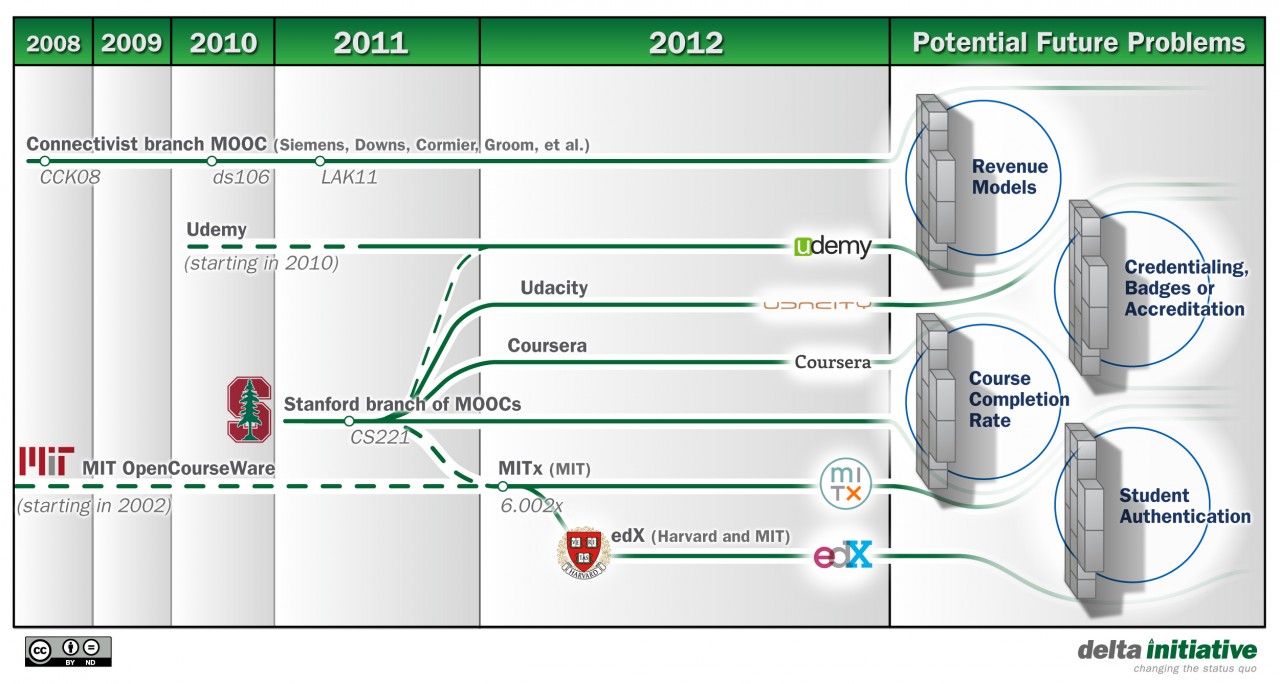
    There’s more information in the article worth reading, but I would like to revisit a post here at e-Literate from 2012 to help explain the point I made. In “Four Barriers That MOOCs Must Overcome To Build a Sustainable Model”, I noted:

    The current generation of courses has proven the feasibility of massive online enrollments, but the Kolowich article reveals that the result is based on a form of adult continuing education. The majority of students in the Udacity and Coursera courses analyzed were professionals in the software industry – hardly the target audience for those seeking a change in how we educate postsecondary students. The current MOOCs provide a nice proof-of-concept, but hardly solve significant educational problems.

    So what are the barriers that must be overcome for the MOOC concept (in future generations) to become self-sustaining? To me the most obvious barriers are:

    • Developing revenue models to make the concept self-sustaining;
    • Delivering valuable signifiers of completion such as credentials, badges or acceptance into accredited programs;
    • Providing an experience and perceived value that enables higher course completion rates (most today have less than 10% of registered students actually completing the course); and
    • Authenticating students in a manner to satisfy accrediting institutions or hiring companies that the student identify is actually known.

    Given this short timeline and the nature of investment-backed educational experiments, I think the real focus should be on whether and how MOOCs or successor models build on current scalability and openness while overcoming these four barriers.

    What have we seen since 2012?

    • Revenue Models: Coursera, FutureLearn, and edX moving towards an OPM business model, and Udacity focusing on corporate education;
    • Credentialing: All MOOCs offering some sort of verified certificates, and in the OPM cases offering actual degrees through their partner institutions;
    • Course Completion: MOOCs realizing that the two issues above lead to higher completion rates; and
    • Authentication: Verified certificates and OPM models requiring student authentication through webcams and approaches similar to online proctoring companies, and even partnering with proctoring companies.

    At this stage  pretty much everyone recognizes a blatant ‘I told you so’ post written while Michael is on vacation and unable to talk me out of it, so I’ll move along and cut off further commentary.

  • D2L Bets on The Cloud and Advances in User Experience

    D2L Bets on The Cloud and Advances in User Experience

    One of the arguments that we have made as part of our LMS Market Analysis service is that if you look beyond market share numbers, there has been a tectonic shift in the academic LMS market that started around 2012, moving from being Blackboard-centric to Canvas-centric. Meaning that the current market trends are largely driven by Canvas adoptions and market reactions to Canvas adoptions. This change has elevated the need for viable LMS solutions to have both a cloud-based deployment strategy as well as a more modern, intuitive user experience than what was acceptable just five years ago.

    Blackboard’s move to Learn SaaS (deployment) and Learn Ultra (new user experience) is a prime example of this market dynamic, and it has tended to get the lion’s share of analysis, including here at e-Literate. We have described that D2L has joined Canvas in “an emerging two-horse race for new implementations”, but we could do a better job of describing why we believe they are gaining in the market. ((Disclosure: D2L, Blackboard, and Instructure are subscribers in our LMS Market Analysis service and sponsoring participants in our Empirical Educator Project.))

    Short story – D2L has made fairly substantial bets on cloud deployment and a streamlined user experience, and the product design changes present the best explanation for the market gains.

    Head in the Cloud

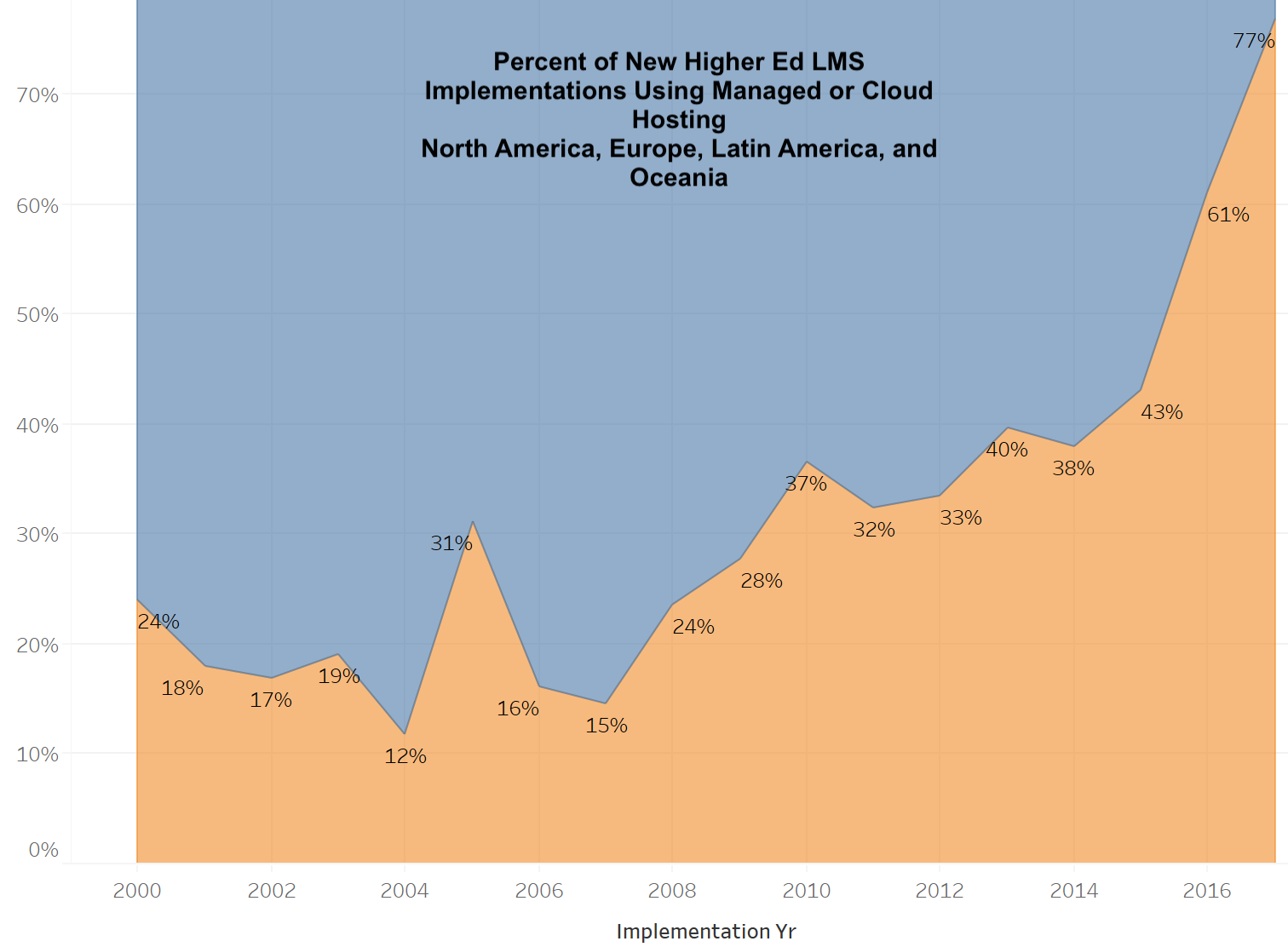
    The data looking at new LMS implementations (changing from one system to another) in higher ed across the four global regions we cover in our market analysis shows a remarkable movement away from self hosting, or on-premises hosting, towards a combination of managed hosting by the LMS vendor or cloud hosting designed by the vendor but running on AWS, in particular. From 15% external hosting to 77% in just one decade. Within the external models, there is another major shift away from managed hosting and towards cloud hosting.

    Growth of LMS external hosting

    D2L has long worked on managed hosting options, but in late 2013 the company introduced Continuous Delivery where software releases are pushed to customers incrementally, such that customers would jointly run the latest versions of Brightspace, their LMS. This move is important, as one primary benefit of cloud deployment is to remove the explosion of software configurations and versions that make it expensive and difficult to diagnose and fix bugs and to release new features.

    Three years later in 2016 D2L announced their move to AWS for cloud deployment.

    AWS Data Centers for D2L

    While we heard grumblings from multiple clients during the transition – especially thru early 2017 – D2L clearly made some hard choices and and is aggressively moving to the cloud, not just as an option, but as their primary delivery model. According to David Koehn, VP of Product Management at D2L:

    • All new Brightspace implementations are on AWS cloud;
    • Virtually all current Brightspace implementations use Continuous Delivery; and
    • Approximately 50% of current customers are already on the AWS version of cloud deployment; and
    • By the end of 2018, a large majority of customers will be on cloud deployment.

    Contrast this move to the cloud with Blackboard’s where they plan to continue offering self hosting, managed hosting, and their own AWS-based cloud hosting options at the customer’s choice, while they believe SaaS and Ultra will lead on new sales. The primary constraint being that to go to Learn Ultra experience, you must first be on Learn SaaS, the cloud hosting option. But the key point is that Blackboard has tended to view the cloud as one deployment option among others, and the numbers show it. According to a company blog post this week from CEO Bill Ballhaus:

    As of today, more than 50 clients are running Ultra, with dozens more planning to start using the Ultra experience and courses in the second half of the year. Also, 361 clients around the globe have moved to SaaS deployment for Learn.

    Our data show more than 2,000 higher ed customers on Learn, but if you add in K-12 and corporate customers, this roughly equates to just over 10% on or moving to Learn SaaS and 2% on Learn Ultra. These are generous numbers, but more on that in a separate post.

    The point is that D2L is making a much more aggressive and focused bet on the cloud than is Blackboard, for better or worse. Canvas, of course, is designed natively for the cloud, and essentially 100% of their customers are on the AWS cloud.

    Run to Daylight

    David Koehn also pointed out that the real driver for the AWS cloud move by D2L is to enable a redesign of the user experience and to provide improved scalability and reliability. In other words, the cloud deployment is a means to the Daylight end.

    Daylight is the name for D2L’s redesign of the user experience and its streamlined user interface. When it was first announced just over a year ago, I was somewhat skeptical as the initial changes were evident in different fonts and cleaner look-and-feel, but not significant improvements in the workflow for faculty and students.

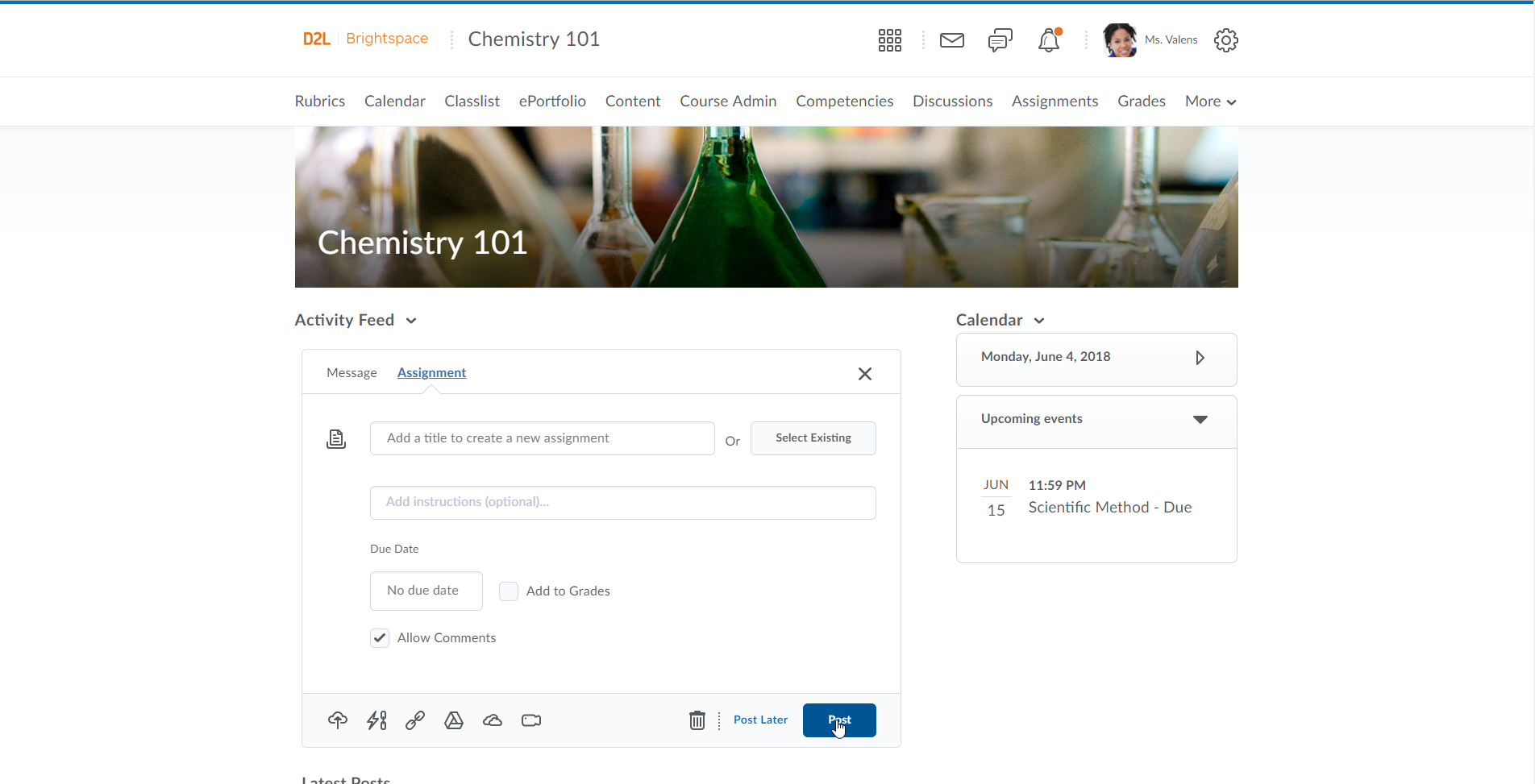
    As time goes on and I see more advanced demos, my view is changing. The Daylight Experience does have some real improvements not just in look-and-feel but in fewer and more intuitive clicks to get the same job done. A major focus on the release this summer (in time for D2L Fusion users conference) is more fully encouraging usage of the activity stream for higher ed clients (this feature was initially targeted at K-12 market but has been adapted for colleges and universities).

    Brightspace add assignment

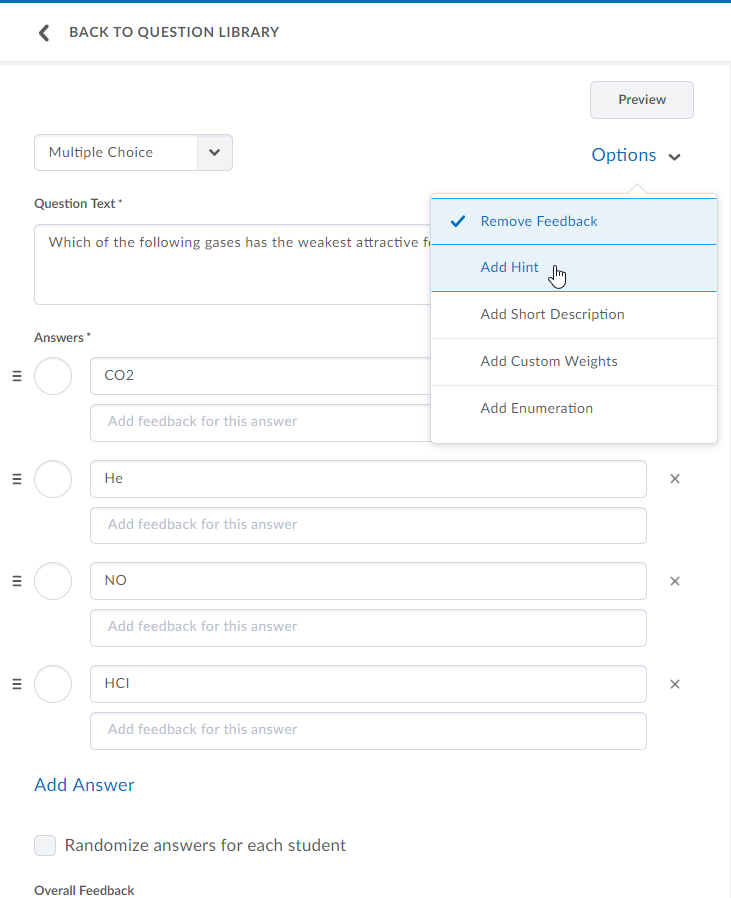
    D2L has long played the Mutually Assured Destruction game of features, targeted at cumbersome procurement processes. D2L (along with Blackboard and Moodle) has a deep set of features which contrasts with Canvas and its streamlined set of features that rely on third-party integrations to solve some of the more specialized use cases. For D2L, it is important to maintain these features as a competitive differentiator with Canvas, and the design approach guiding them is Progressive Disclosure. This design technique relies on progressing from simple to complex, showing the user the information and options they need when they need it or request it and not before.

    Consider adding a multiple choice quiz, where the desire is to make this process very simple, but to then have a page or area that exposes more and more options as requested by user or in context of the quiz setup.

    Brightspace details on quiz

    As D2L further implements this design approach within the Daylight Experience, we are seeing a more modern and intuitive user experience for Brightspace customers, yet one that is showing real promise to also tap into deeper feature sets. And these changes are being used in production.

    Again by way of contrast, Blackboard’s user experience redesign for Learn Ultra has had a bumpy ride, with multi-year delays of getting any customers to use in production. They took more of a big bang approach to releasing Learn Ultra, and when customers pushed back saying that Ultra wasn’t ready, this led to additional delays and eventually a change in the design team. D2L’s Daylight has proven to be a more iterative release of their new user experience.

    What to Watch

    This year it is becoming difficult to separate LMS products from company finances. Instructure is trying to balance Canvas and Bridge growth to satisfy public markets along with a new executive team. Blackboard is dealing with corporate debt challenges while needing to fully release Learn Ultra. As mentioned in this post, D2L is moving strongly to the cloud with a new user experience while managing expenses. Schoology is trying to grow higher ed market under the radar. Moodle HQ took investment for the first time. There are a lot of open questions on the future of the academic LMS market, and we expect much to be revealed at the big summer (and fall) events.

    As for D2L Fusion, we plan to get a better read on how customers and prospects are reacting to the cloud deployment move and streamlined user experience. We are seeing real changes in the Brightspace design and deployment model, but do paying and prospective customers value these changes? Furthermore, will D2L be able to improve its customer service and delivery on promises made for new customers as well as it has improved its product design?

    As for Blackboard, Learn Ultra now has D2L’s Brightspace as a major user experience to compete with as well as Canvas. There is a lot more changing in the LMS market than what is obvious on the surface.

    Update: Clarified D2L numbers to be specifically for AWS cloud deployment. Also changed several instances of “cloud hosting” to be “cloud deployment” to make terminology more accurate.