
e-Literate

Present is Prologue

Tag: ALEKS

  • Personalized Learning is Hard

    Paul Fain has written a really good, nuanced article at IHE covering the update that Essex County College gave of their developmental math adaptive learning pilot at a recent conference in Washington, DC. We did a twopart case study on ECC in our e-Literate TV series). The headline results are as follows:

    • In the first year, the pass rate was worse than  in the traditional classes. (The first semester was “disastrous.”)
    • This year—the second year—the pass rate is coming closer to the traditional class but is still underperforming.
    • The article seems to imply that students who earn a C in the personalized learning class do better than students who earn a C in the traditional class, but the article is not explicit about that.

    There is no magic pill. As Phil and I have been saying all along—most recently in my last post, which mentioned ECC’s use of adaptive learning—the software is, at best, an enabler. It’s the work that the students and teachers do around the software that makes the difference. Or not. In ECC’s case, they are trying to implement a pretty radical change in pedagogy with an at-risk population. It’s worth digging into the details.
    (more…)

  • Worth Considering: Faculty perspective on student-centered pacing

    Over the weekend I wrote a post based on the comment thread at Friday’s Chronicle article on e-Literate TV.

    One key theme coming through from comments at the Chronicle is what I perceive as an unhealthy cynicism that prevents many people from listening to students and faculty on the front lines (the ones taking redesigned courses) on their own merits.

    Sunday’s post highlighted two segments of students describing their experiences with re-designed courses, but we also need to hear directly from faculty. Too often the public discussion of technology-enabled initiatives focus on the technology itself, often assuming that the faculty involved are bystanders or technophiles. But what about the perspectives of faculty members – you know, those who are in the classrooms working with real students – on what challenges they face and what changes are needed from an educational perspective? There is no single perspective from faculty, but we could learn a great deal through their unique, hands on experiences. (more…)

  • Worth Considering: Students can have their own perspectives on edtech initiatives

    Triggered by Friday’s article on e-Literate TV, there have been some very interesting conversations both in the Chronicle comment thread and on the e-Literate TV site. The most, um, intense conversations have centered on the application of self-regulated learning (SRL) in combination with adaptive software (ALEKS) to redesign a remedial math course at Essex County College. Michael has been wading in very deep waters in the comment threads, trying emphasize variations of the following point.

    But that debate should be in the context of what’s actually happening in real classrooms with real students, what the educational results are, and what the teachers and students involved think of their experiences.

    Right now, the “sides” are having a fight–it’s not really a debate because the sides aren’t really talking to each other–in near total absence of any rational, educator-evaluated, evidence-based conversation about what these approaches are good for. One side says they will “fix” a “broken” education system, while the other side says they will “destroy” the education system. Well, what are the students saying?

    (more…)

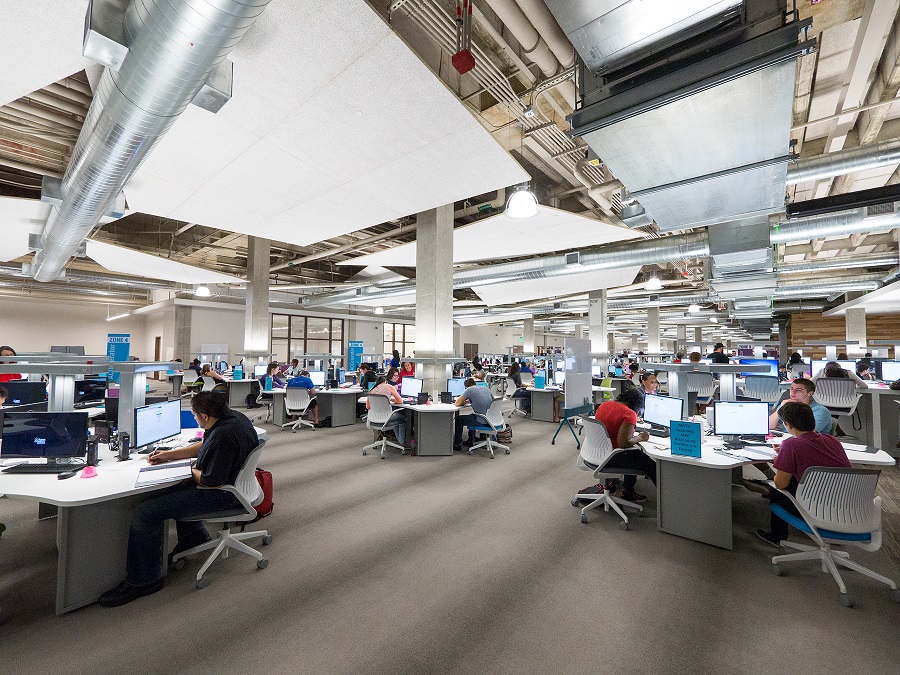
  • Austin Community College’s ACCelerator: Big bet on emporium approach with no pilots

    While at SXSWedu, I was able to visit Austin Community College’s ACCelerator lab, which got a fair bit of publicity over the past month. While the centerpiece of ACCelerator usage is for developental math, the 600+ workstation facility spread over 32,000 square feet also supports Tutoring in a variety of subjectsFirst year experienceGroup advisingAcademic CoachingAdult EducationContinuing EducationCollege readiness assessment preparation, and Student skills workshops.

    ACCelerator

    But it is the developmental math course that has received the most coverage.

    Austin Community College welcomed second lady Dr. Jill Biden and Under Secretary of Education Dr. Ted Mitchell on Monday, March 9, to tour the Highland Campus’ ACCelerator and meet with students and faculty of the college’s new developmental math course, MATD 0421. [snip]

    “I teach a lot of developmental students,” says Dr. Biden. “The one stumbling block does seem to be math and math anxiety and ‘Can I do it?’. This (course) seems to be so empowering and so positive. Students can see immediate success.”

    (more…)

  • e-Literate TV Preview: Essex County College and changing role of faculty

    As we get closer to the release of the new e-Literate TV series on personalized learning, Michael and I will be posting previews highlighting some of the more interesting segments from the series. When we first talked about the series with its sponsors, the Bill & Melinda Gates Foundation, they agreed to give us the editorial independence to report what we find, whether it is good, bad, or indifferent.

    In this video preview (about 4:18 in duration), we hear from two faculty members who have first-hand experience in using a personalized learning approach as well as a traditional approach to remedial math. We also hear from students on what they are learning about learning. In our case studies so far, the real faculty issue is not that software is being designed to replace faculty, but rather that successful implementation of personalized learning necessarily changes the role of faculty. One of our goals with e-Literate TV is to allow faculty, staff and students to describe direct experiences in their own words. Take a look.

    Stay tuned for the full episodes to be released on the In The Telling platform ((ITT is our partner in developing this series, providing video production as well as the platform.)). You can follow me (@PhilOnEdTech), Michael (@mfeldstein67), or e-Literate TV (@eLiterateTV) to stay up to date. You can also follow the e-Literate TV YouTube channel. We will also announce the release here on e-Literate.

  • Adaptive Learning Market Acceleration Program (ALMAP) Summer Meeting Notes

    I recently attended the ALMAP Summer Meeting. ALMAP is a program funded by the Gates Foundation, with the goals described in this RFP webinar presentation from March 2013:

    We believe that well implemented personalized & adaptive learning has the potential to dramatically improve student outcomes

    Our strategy to accelerate the adoption of Adaptive Learning in higher education is to invest in market change drivers… …resulting in strong, healthy market growth

    As the program is in its mid stage (without real results to speak of yet), I’ll summarize Tony Bates style with summary of program and some notes at the end. Consider this my more-than-140-character response to Glenda Morgan:

    Originally planned for 10 institutions, the Gates Foundation funded 14 separate grantees at a level of ~$100,000 each. The courses must run for 3 sequential semesters with greater than 500 students total (per school), and the program will take 24 months total (starting June 2013). The awards were given to the following schools:

    (more…)