
e-Literate

Present is Prologue

Tag: ASU

  • Release of ASU Case Study on e-Literate TV

    Today we are thrilled to release the third case study in our new e-Literate TV series on “personalized learning”. In this series, we examine how that term, which is heavily marketed but poorly defined, is implemented on the ground at a variety of colleges and universities.

    We are adding three episodes from Arizona State University (ASU), a school that is frequently in the news. Rather than just talking about the ASU problems, we are talking with the ASU people involved. What problems are they trying to solve? How do students view some of the changes? Are faculty being replaced by technology or are they changing roles? For that matter, how are faculty members involved in designing some of these changes?

    You can see all the case studies (either 2 or 3 per case study) at the series link, and you can access individual episodes below. (more…)
  • ASU, edX and The Black Knight: MOOCs are not dead yet

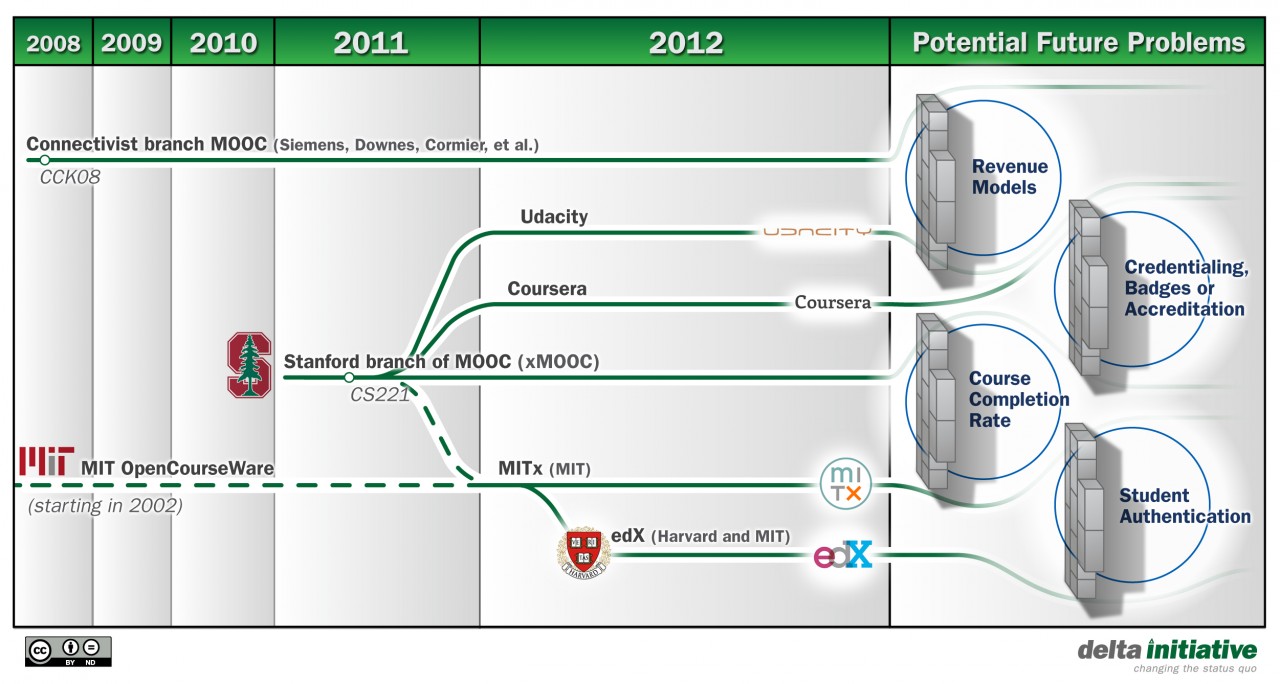
    In 2012 I wrote a post during the emergence of MOOC mania, pointing out some barriers that must be overcome for the new model to survive.

    So what are the barriers that must be overcome for the MOOC concept (in future generations) to become self-sustaining? To me the most obvious barriers are:

    • Developing revenue models to make the concept self-sustaining;
    • Delivering valuable signifiers of completion such as credentials, badges or acceptance into accredited programs;
    • Providing an experience and perceived value that enables higher course completion rates (most today have less than 10% of registered students actually completing the course); and
    • Authenticating students in a manner to satisfy accrediting institutions or hiring companies that the student identify is actually known.

    Fig 3 EvolutionCombine20120927

    Since that time, of course, the MOOC hype has faded away, partially based on the above barriers not being overcome.

    Today, Arizona State University (ASU) and edX announced a new program, Global Freshman Academy, that takes direct aim at all four barriers and could be the most significant MOOC program yet. From the New York Times story: (more…)

  • GSV+ASU EdInnovations Conference: A proxy for ed tech’s big challenge

    Last week Michael and I attended the GSV+ASU EdInnovations conference commonly known as “Davos in the Desert”. This conference is growing in importance, especially in the effect on ed tech investment, as can be seen by the rising attendance. Just five years ago there were less than 300 attendees, and this year’s event had well over 2,000. Some of the notable articles covering the event:

    • Inside Higher Ed: “Let’s Make a Deal” – this article compares the rise of ed tech in general to the rise in the conference, but asks about lack of educators and lack of nationwide results (more on this later).
    • Huffington Post: “Is the American Dream a Dream Deferred?” – this article takes a positive spin on the conference, especially the focus on improving access and student success, but also questions the lack of diversity (more on gender lines than educator / non-educator lines).
    • EdSurge: “What Happened at ASU-GSV…” – this article presents an insider, booster view of the conference occasionally to accentuate the positive and defuse the negative, but it does describe the conference events quite well.
    • Getting Smart: “ASU+GSV: Education Dreaming” – ditto.
    • EdWeek: “Teachers at Summit Tell Ed. Companies What They Want–and What They Don’t” – this article covers one panel in particular, but this one is highly relevant to the following discussion on educator involvement.
    • Dusty World: “ASU/GSV Summit” – this article has a slightly humorous description of “the strangest education conference of my career”, noting that most discussions actually focused on politics and not pedagogical approaches.

    As for myself, I live-tweeted some of my observations, particularly focusing on pro-immigration reform, foundation influence, and the difficulty of interviewing Don Graham (former owner of the Washington Post and current family owner of Kaplan). (more…)