Michael and I have been at the MOOC Research Initiative conference in Arlington, TX (#mri13) for the past three days. Actually, thanks to the ice storm it turns out MRI is the Hotel California of conferences.

credit: Bailey Carter assignment for Laura Gibbs’ class
While I’m waiting to find out which fine Texas hotel dinner I might enjoy tonight, I thought it would be worthwhile to share more information from the University of Pennsylvania research that seems to be the focus of media reports on the conference (see Chronicle, Inside Higher Ed, and eCampusNews, for example). Penn has tracked approximately one million students through their 17 first-generation MOOCs on Coursera, which provided the foundation for this research.
Per IHE:
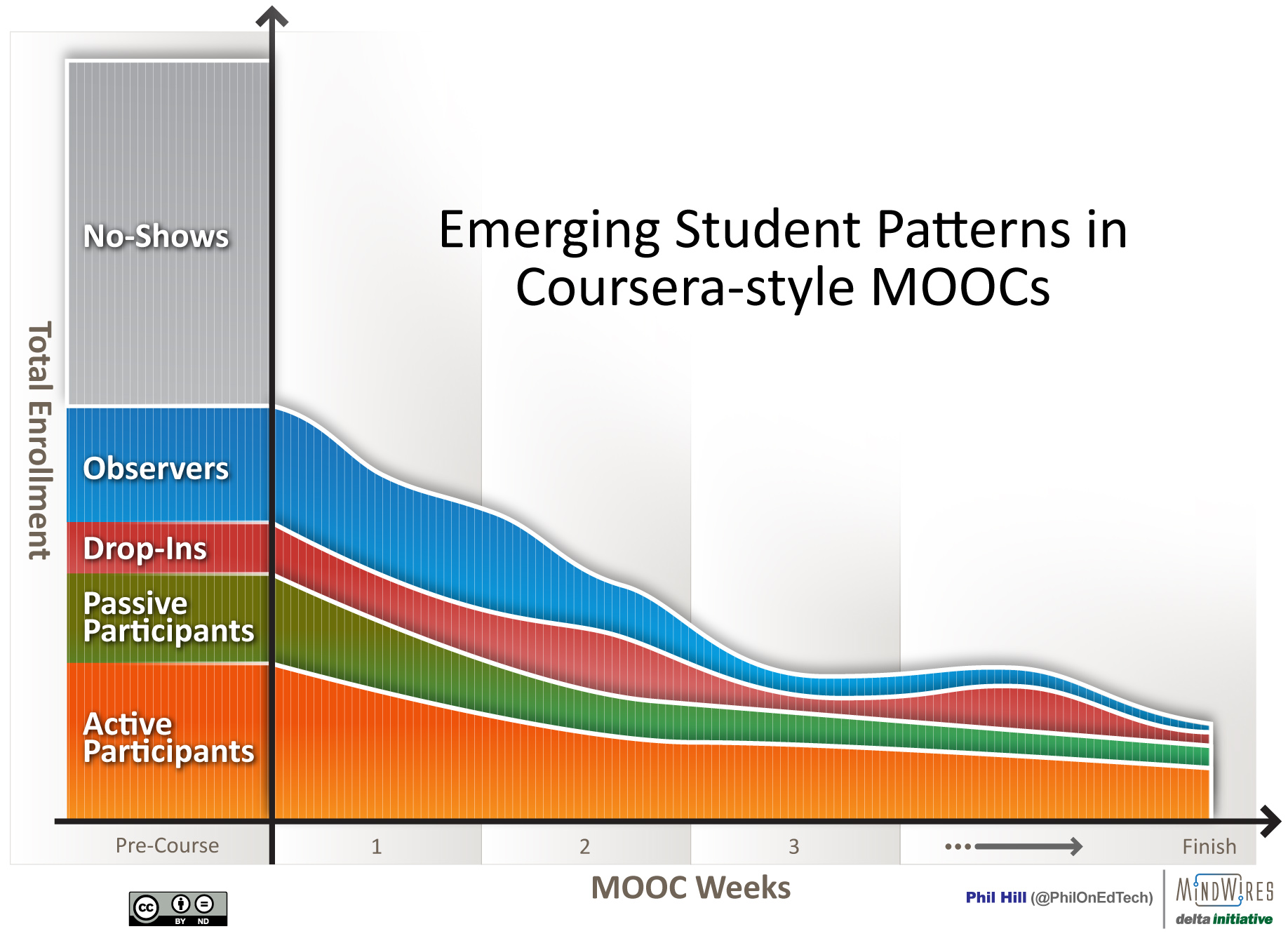
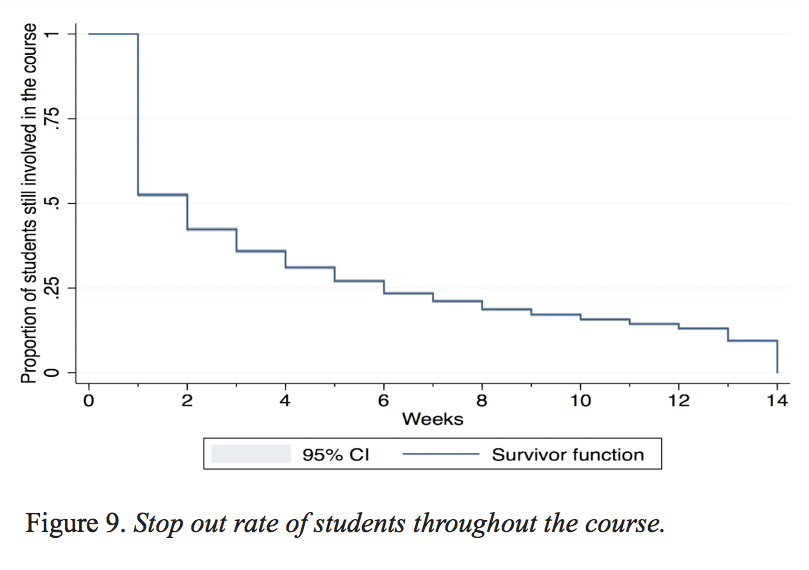
“Emerging data … show that massive open online courses (MOOCs) have relatively few active users, that user ‘engagement’ falls off dramatically especially after the first 1-2 weeks of a course, and that few users persist to the course end,” a summary of the study reads.
For anyone who has paid even the slightest bit of attention to the MOOC space over the past year, those conclusions hardly qualify as revelations. Yet some presenters said they felt the first day of the conference served as an opportunity to confirm some of those commonly held beliefs about MOOCs.
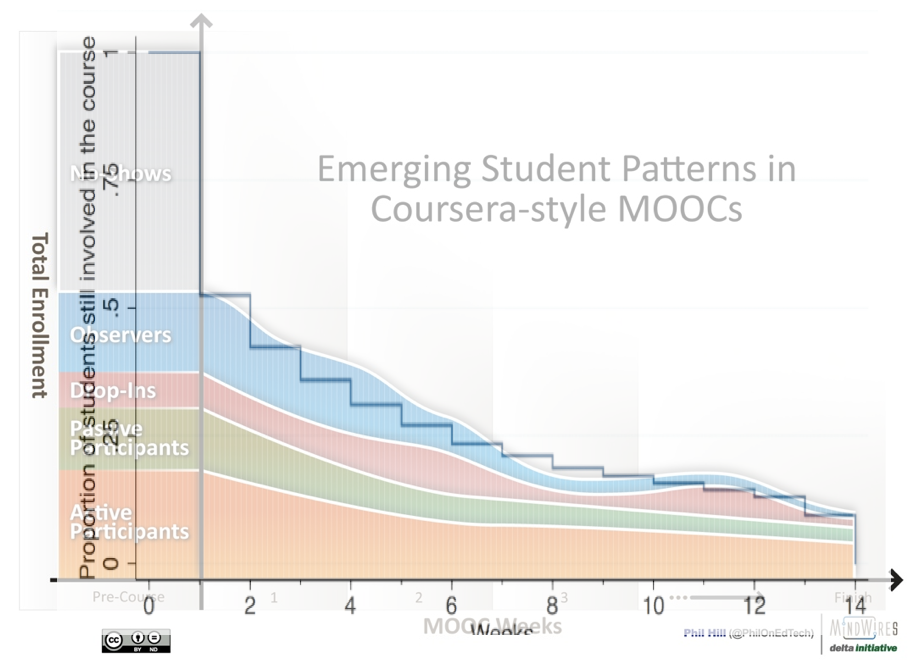
While it is accurate that these basic observations have been made in the past, there was some additional information from U Penn worth considering. The following slide images are courtesy of Laura Perna, a member of the research team.
(more…)