e-Literate

Present is Prologue

Tag: Gates Foundation

  • Adaptive Learning Market Acceleration Program (ALMAP) Summer Meeting Notes

    I recently attended the ALMAP Summer Meeting. ALMAP is a program funded by the Gates Foundation, with the goals described in this RFP webinar presentation from March 2013:

    We believe that well implemented personalized & adaptive learning has the potential to dramatically improve student outcomes

    Our strategy to accelerate the adoption of Adaptive Learning in higher education is to invest in market change drivers… …resulting in strong, healthy market growth

    As the program is in its mid stage (without real results to speak of yet), I’ll summarize Tony Bates style with summary of program and some notes at the end. Consider this my more-than-140-character response to Glenda Morgan:

    Originally planned for 10 institutions, the Gates Foundation funded 14 separate grantees at a level of ~$100,000 each. The courses must run for 3 sequential semesters with greater than 500 students total (per school), and the program will take 24 months total (starting June 2013). The awards were given to the following schools:

    (more…)

  • e-Literate TV Interviews from MRI13 Now Available

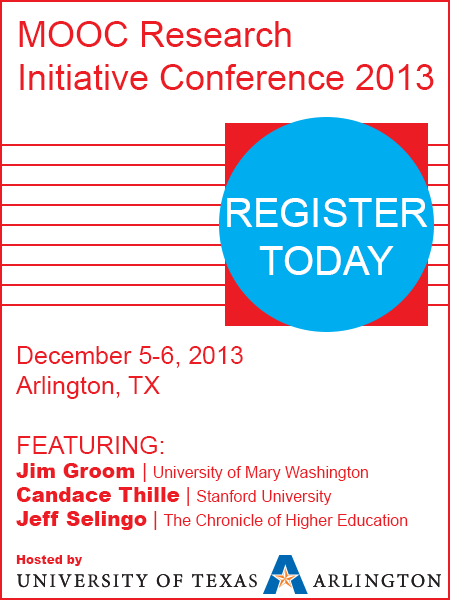
    In December 2013 Michael I attended the MOOC Research Initiative Conference (aka #MRI13 or “The greatest MOOC conference in the history of MOOCs”). Thanks to a grant funded by the Gates Foundation through Athabasca University, we are creating three episodes of an upcoming e-Literate TV series based on the conference. We expect to release these episodes in March.

    MRI

    As part of developing material for the episodes, we interviewed a number of research grantees and ed tech luminaries. We had some great guests who spoke about what we have learned from MOOCs, what the potential applications are, what the downsides are, and where open education could and should go in the future. It was a unique opportunity to get so many well-informed people in one place on a common topic.

    Today we releasing these videos through the e-Literate TV YouTube channel. These videos all carry a Creative Commons license to facilitate sharing and repurposing of the material.

    (more…)

  • Gen Ed and Competency-Based Education

    Inside Higher Ed has a write-up today on an effort by the Association of American Colleges & Universities (AAC&U) to develop a competency-based framework for general education called General Education Maps and Markers (GEMs), funded by a multi-million-dollar Gates Foundation grant. I am honored to report that I have been invited to participate on one of the GEMs committees.

    To be honest, I have mixed feelings about competency-based education (CBE). On the one hand, I do think that an earnest attempt to have a norming conversation and set some standards for what we hope students will learn at college is very important and badly overdue. On the other hand, it’s all too easy to apply CBE in a mechanistic and reductive way that ignores the important but hard-to-measure skills precisely because they’re hard to measure. It’s essentially the same worry that a number of readers expressed in the comments on my post about Pearson’s efficacy initiative. That said, AAC&U has a good shot at assembling the right stakeholders to grapple with this complexity appropriately. I do think there are models out there. For example, ASU’s Habitable Worlds class, which is both competency-based and mastery-based, is not at all dumbed down and could even be further expanded to include writing and similar open-ended analytic and communications skills. (I interviewed Habitable Worlds co-creator Ariel Anbar last year.) But there are many challenges.

    Anyway, the first meeting of the GEMs group is coming up in a couple of weeks. I’ll let you know what I think after spending a couple of days talking about the issues with the working group.

  • What Blackboard, Desire2Learn, and Udacity Should Learn from SJSU

    As Phil noted in his analysisof the SJSU report, one of the main messages of the report seems to be that some of what we already know about performance and critical success factors for more traditional online courses also seem to apply to xMOOCs. But how good is the ed tech industry at taking advantage of what we already know?

    Not very good, as far as I can tell.

    (more…)