e-Literate

Present is Prologue

Tag: OER

  • Hawai’i Senate Bill: Would mandate OER material for all U Hawai’i system courses

    Hawai’i Senate Bill: Would mandate OER material for all U Hawai’i system courses

    Thanks for update from Brent Auernheimer, I found out that the Hawai’i Senate Committee on Higher Education recently debated a bill regarding Open Educational Resources (OER) usage at the University of Hawai’i system of 10 campuses. Introduced on January 19th, SB2328 states:

    Beginning with the 2020-2021 school year, all courses at all campuses within the University of Hawai‘i system that require the use of instructional materials, including textbooks, shall use instructional materials from the open educational resources at the University of Hawai‘i; provided that the use of instructional materials, including textbooks, that requires a student to purchase or pay a subscription for the materials shall be prohibited; provided further that if open educational resources does not have relevant instructional materials available for a course, the faculty member or lecturer responsible with providing instruction for the course shall create the instructional materials and offer those materials free of charge to students through open educational resources.

    Read that carefully – OER for all courses, no commercial services around OER allowed, and if appropriate OER does not exist, the faculty member must create the material themselves, all mandated from the state legislature.

    When I first saw this news, I assumed it was a either a misguided effort that would quietly be killed in committee or a political statement. Predictably, and appropriately, the University of Hawai’i Professional Assembly actively opposed this bill, calling it “legislative overreach” and “infringement on academic judgement”, while also calling out the costs and support needed for faculty to create such materials.

    On January 30 hearings, the vast majority of testimony – much of it from faculty members – opposed the measure with only two statements supporting. Yet on February 6, the Senate Committee unanimously passed the bill on to the full Senate.

    The committee(s) on HRE recommend(s) that the measure be PASSED, WITH AMENDMENTS. The votes in HRE were as follows: 5 Aye(s): Senator(s) K. Kahele, Kim, S. Chang, Keith-Agaran, Kidani; Aye(s) with reservations: none ; 0 No(es): none; and 0 Excused: none.

    I have not been able to determine what the amendments are for the bill (or if that refers to future amendments coming from floor debate), and I also do not know how likely it is to pass the full senate or to become state law. I’ll keep looking for more information.

    Unless I’m missing something, this could be a jump-the-shark moment for portions of the OER movement. Comments appreciated.

    Update: From Twitter stream (sounds like some good changes):

    https://twitter.com/billymeinke/status/962127447171907584

  • Top Hat Marketplace: What is it and should we care?

    Top Hat Marketplace: What is it and should we care?

    When Top Hat announced their latest round of financing a year ago ($22.5m), I admit to having been skeptical, or more accurately cynical, about their stated purpose. The company was primarily known for its mobile and laptop-based classroom response system, but now it is claiming to be a digital content company.

    Top Hat, the Canadian education technology startup, completed a new round of funding to give it more firepower to go after textbook publishers like Pearson Plc. [snip]

    Top Hat is one of a handful of startups trying to find ways to disrupt the traditional textbook publishing industry, dominated by companies like Pearson, Cengage Learning Inc. and McGraw-Hill Education Inc., which is owned by Apollo Global Management LLC. All of these firms have added digital educational materials to their range of products, but the transition has been rocky.

    Then in the summer the company announced their new Marketplace.

    The Top Hat Marketplace answers the urgent need of professors and instructors to easily find and create educational content that is interactive, easily customizable and much more affordable for students than conventional textbooks. The educational content in the Top Hat Marketplace breaks the slow-paced publishing model by allowing educators to provide one another instant feedback. This collaborative community-sourced model means that the Marketplace’s content is continually being updated and improved upon.

    We at e-Literate have been covering the long-running and messy transition to digital curricular materials, including the search for new business models for content companies. But the announcements from Top Hat, to me at least, had the feel of a company pivot leveraging big, bad publishers as the bait for naive investors. Quite often it feels like the official greeting of ed tech entrepreneurs has either been “we’re going to beat Pearson” or “we’re going to beat Blackboard”. Top Hat and its products do not neatly fit into typical categories, but this may mean that we’re seeing a new model emerge, or at least a modernized and serious attempt to establish the self-publishing model.

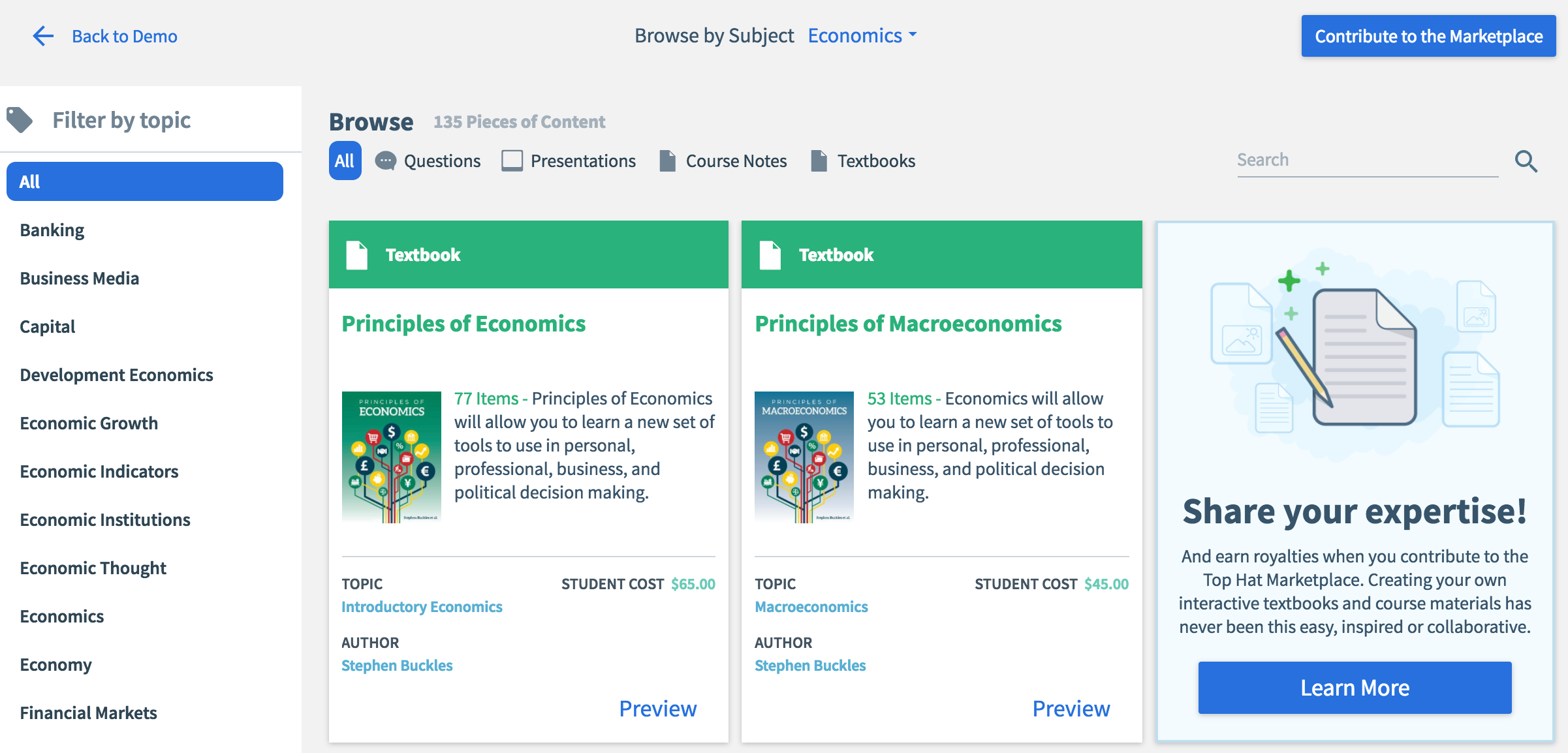
    The Marketplace provides a series of textbooks and ancillary material, (course notes, question packs, presentations, etc) that instructors can browse, adopt, modify, and share with students either as mandatory or recommended resources. Students pay fees between $0 and roughly $65 for the materials. A spokesperson for Top Hat clarified a recent change:

    As we’ve already discussed, 90% of the content in the Top Hat Marketplace is free for instructors and students to use. However, by the end of January, students no longer need to use the Top Hat engagement app to access this content—meaning, students will no longer need to pay the per-term app fee to use free textbooks and content.

    Other than reasonably low prices, nothing noteworthy so far. What is unique is that there are two primary sources for the content – self-publishing by instructors and open education resources (OER) from OpenStax. As described in the press release this summer:

    “We leveraged our existing relationship with educators already using our classroom engagement tools to test and launch the Marketplace,” said Mike Silagadze, co-Founder and CEO of Top Hat. “The Marketplace finally puts educators — the people at the forefront of learning — in charge of their course materials.
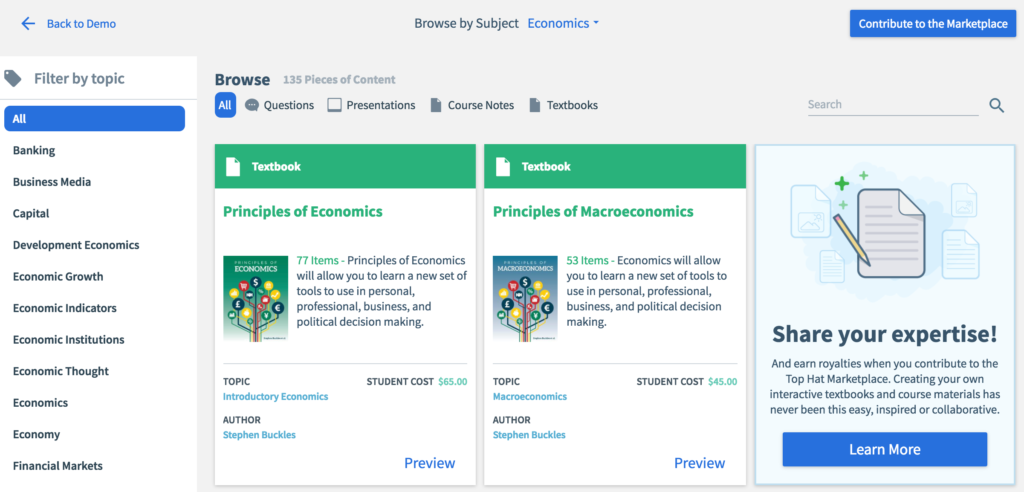
    Screen shot of economics materials

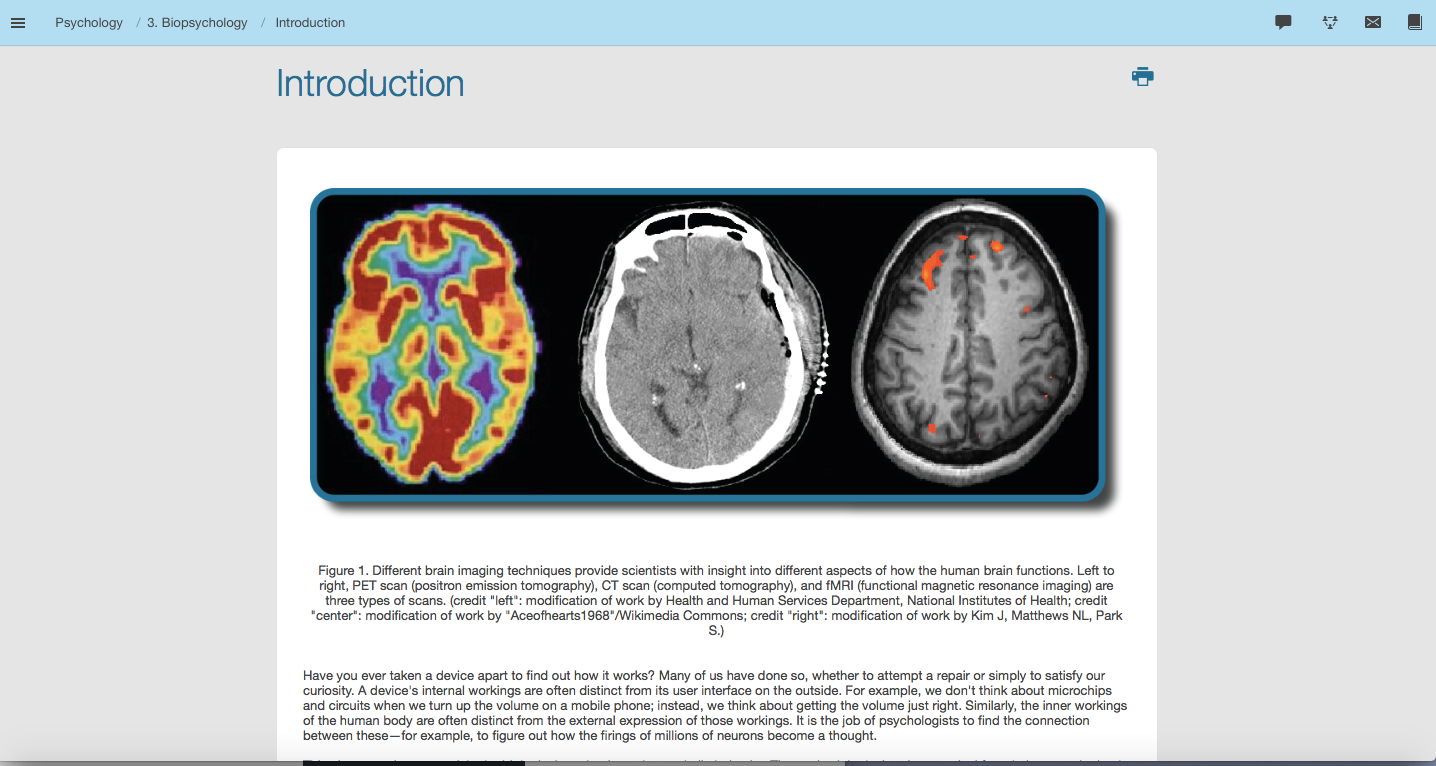
    The Marketplace has been designed as a self-publishing platform for educators designed around collaboration tools called Textbook. I interviewed Demian Hommel, senior instructor of geography at Oregon State University, and his experience helps explain the path that Top Hat is taking from classroom response systems to content marketplace. Hommel is an “an advocate for place-based and experiential education, service learning, and research-informed teaching” and has used the classroom response system for several terms. In the meantime, he has wanted to create a geography textbook but did not want to go through the traditional publishers. Since he already knew of Top Hat, when they announced Textbook and the Marketplace Hommel decided that he wanted to go with the self-publishing route.

    Hommel’s interest in publishing models does not seem to be driven by financial considerations, at least for himself, as he said he is not sure how well Top Hat will be able to scale usage of the Marketplace. One big driver for self-publishing was the interest in keeping the textbook current in a changing world of geography. Hommel views the Marketplace as providing a convenient platform enabling active learning techniques and the ability to control and update his textbook over time.

    There is another differentiator in how Top Hat provides content – the remarkably easy method to enable instructors to modify content, whether in the authoring process or as customizations to content that instructors choose to adopt. Basically, if you can author a post in Medium, you could create and modify content in the Top Hat platform.

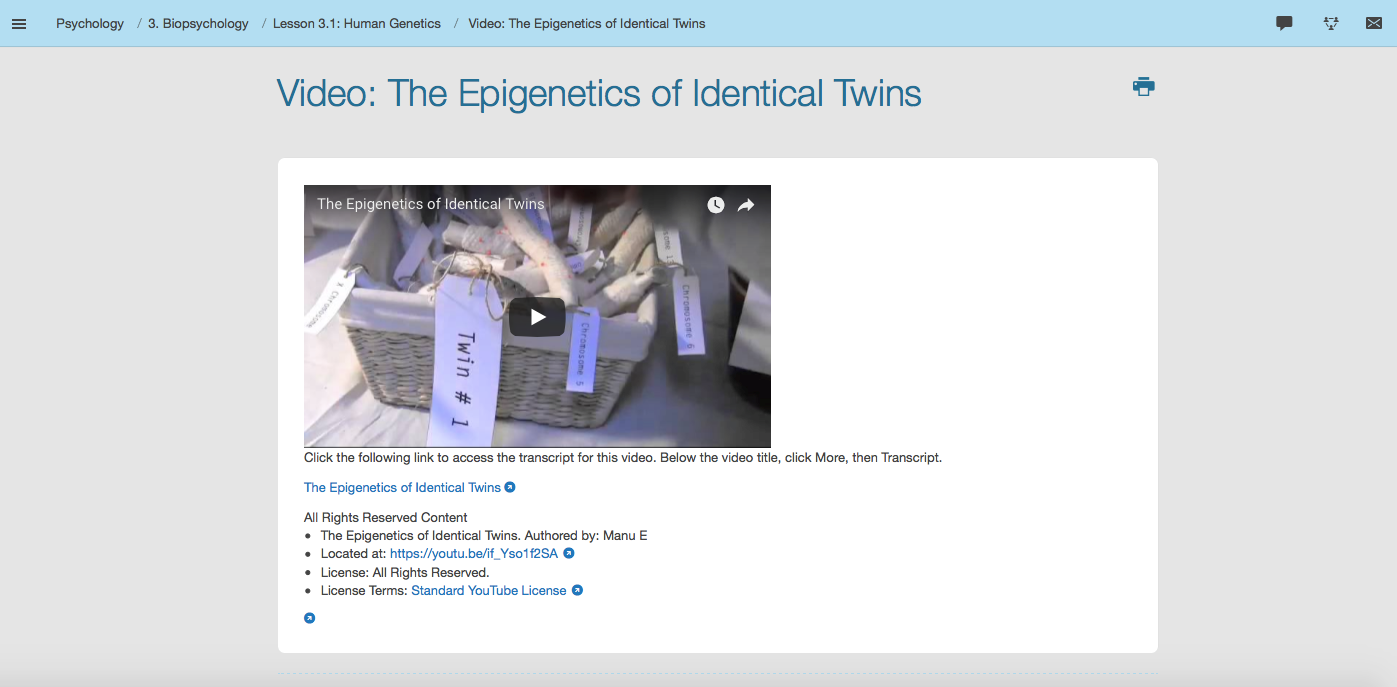
    Consider Hommel’s Geography textbook. Here I have added the book to my course and hit edit in one section. By placing the cursor between text and an interactive text discussion prompt, then choosing the pop-up “Add” icon, I get the choice to add any of the following elements:
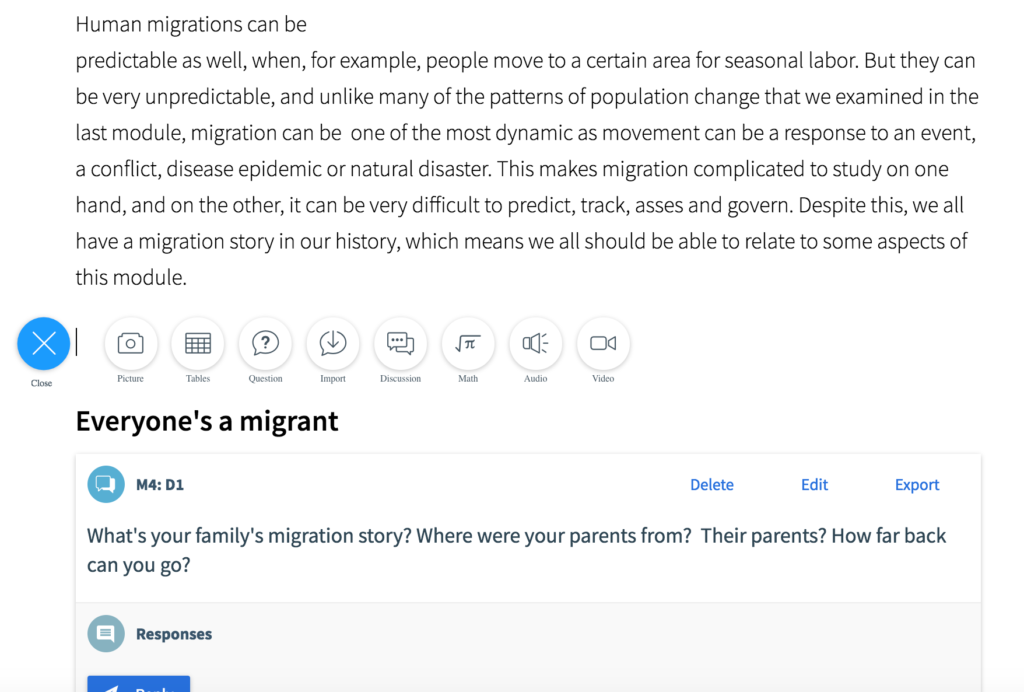
    Editing a textbook

    This is the same interface as originally used to author the textbook. Beyond the ease of editing (customizing for my class, adding my content) is the apparent ease of accepting updates from the content author, based on a new feature introduced in a limited trial in September. The instructor sees a notification about updated content, reviews the updates, and (if all works out) decides whether to update while maintaining any customizations made by instructor.
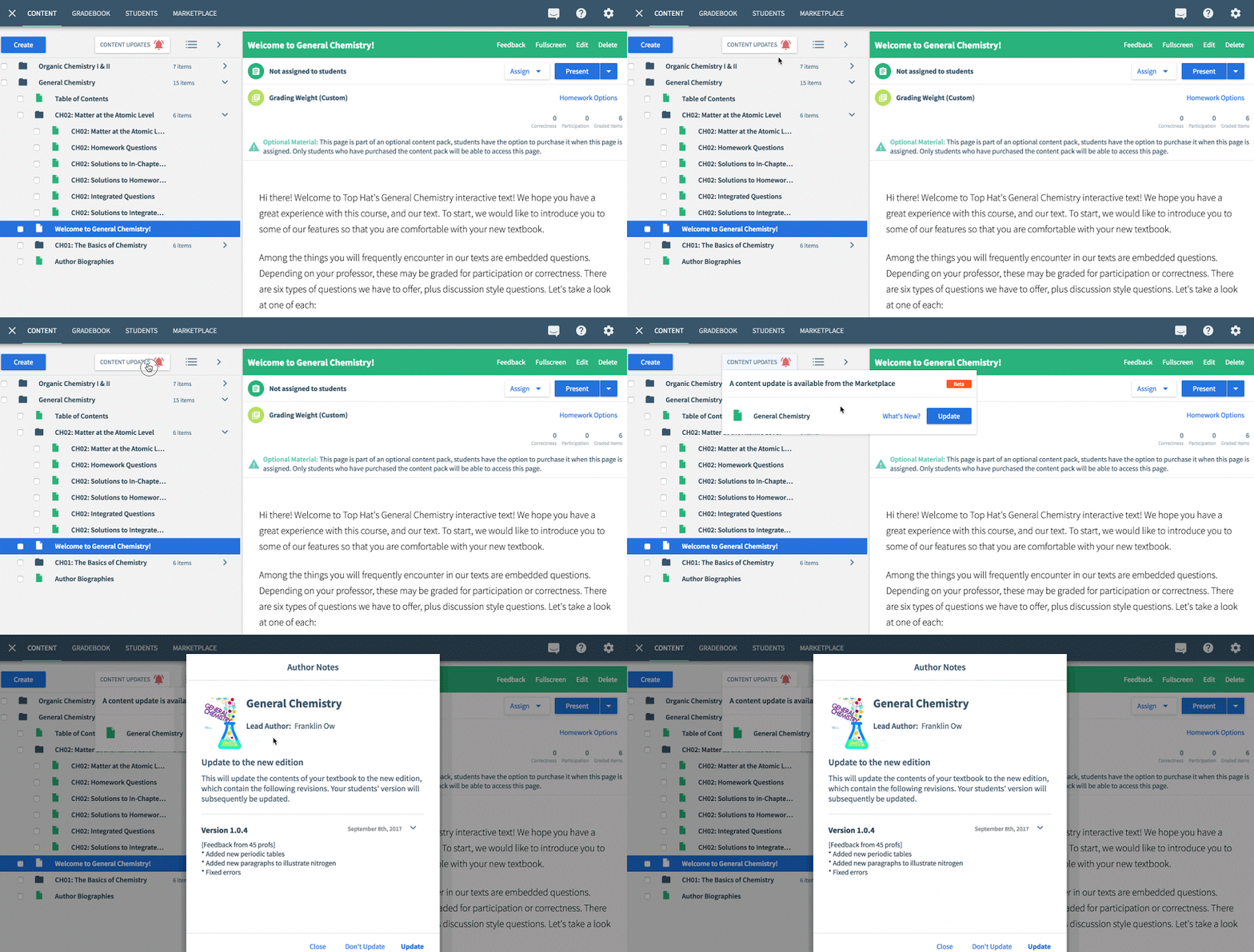
    Method to accept revisions

    The functionality also promises to allow an instructor to review and adopt  customizations made by others who are working on the same base content.

    This is not an easy problem to solve, but if Top Hat is able to resolve how to deal with conflicting updates and local customizations, the intuitive user experience could change how faculty members and course designers collaborate and update content.

    Top Hat does have some real challenges in establishing themselves as a full-fledged content provider. One was mentioned by Hommel, when he pointed out the lack of broad awareness of the Marketplace amongst faculty even at his university. Top Hat is known for its classroom response and presentation systems, and with the Marketplace acting as a two-sided market, it needs sufficient supply of self-publishing content and sufficient numbers of adopting instructors.

    CEO Mike Silagadze response when I asked him about the adoption challenge is that the Classroom adoption, which they claim to be used “at 75% of North America’s leading colleges and universities and reaches millions of students”, has established Top Hat’s direct relationship with thousands of faculty members. In this way, they are betting that Demian Hommel is a model – aware of company through Classroom, interested in textbook usage based on self-publishing model, and willing to extend their personal usage of the company’s products.

    One other challenge is that it is not a done deal that self-publishing has sufficient demand on the content creation side. Are there enough instructors in a broad array of disciplines who want to invest the time and effort to create textbooks without a clear model of possible financial reward? This is the bet that Top Hat is making, that the market can grow to the point that there are reasonable clear answers on financial rewards. And there is the hope that there are enough Demian Hommels who are willing to make these commitments without financial drivers.

    I do not know if this product will take off, but if it does the Marketplace would establish a viable self-publishing model for faculty willing to work within the Top Hat platform. Over the past year in particular, the landscape of digital curricular materials is adding new models, and the Marketplace is worth watching.

    There is also an OER angle based on Top Hat’s marketing and the OpenStax partnership, which I’ll describe further in another post.

    Update 1/8: Corrected timing on change to student access and fees.

  • Cengage OpenNow: Big news on the OER front hiding in plain sight

    Cengage OpenNow: Big news on the OER front hiding in plain sight

    In the week prior to the OpenEd conference, Cengage Learning made a fairly big announcement with OpenNow, a “suite of digital products for general education courses with open educational resources (OER) content”. In an article from Inside Higher Education, I noted that this news was not out of the blue.

    Phil Hill, the co-publisher of the blog e-Literate and a partner at MindWires Consulting, said he was not surprised by Cengage’s OER announcement. “If you’ve been paying attention, you’ll know that Cengage has been saying for at least a year that they wanted to get into this space,” he said. Hill says he was surprised, however, at how aggressively Cengage seemed to be promoting OER with this announcement. “We’ve seen other publishers dipping their toes in, but this seems as if it is central to Cengage’s strategy.” He noted that the announcement could cause other publishers to accelerate their OER strategies. “The movement is not going away,” he said.

    Rather than looking at this specific news in isolation, it would be helpful to put this in some historical context showing the interplay of the OER movement and changing strategies from the big textbook publishers. We advise a number of large and small publishers in our role as consultants, and they occasionally ask us to help them to better understand some of the points we’ve been making about OER in our posts over the years. Put another way, here comes a thread of historical e-Literate quotes.

    In response to a 2011 article in the Chronicle titled “Publishers Criticize Federal Investment in Open Educational Resources”, Michael (then an employee of Cengage) chastised his fellow textbook industry professsionals, writing:

    Many different open source-related business models have been tried with varying degrees of success. Some open source projects have become sustainable as pure volunteer efforts while others have needed commercial support.

    I see no reason to believe that open educational resources will be any different. Right now, we’re in the early days. It’s very hard to predict which sustainability models will work or who the winners and losers will be. But I think it’s reasonable to predict that, five years from now (a) there will still be for-profit textbook publishers (though their all-digital products probably won’t be called textbooks by then) and (b) most or all for-profit textbook publishers will be involved with the production, support, and/or distribution of OERs in some way or other. There will likely be some OER projects that will have achieved long-term sustainability without commercial support and others that will have achieved long-term sustainability because of commercial support.

    It’s more than six years later, but (a) note the burgeoning category of courseware, and (b) see Pearson, McGraw-Hill Education, and Cengage initiatives, among others. Put simply, it was apparent that publishers needed OER strategies at least as far back as 2011.

    Fast forward to 2014 when Michael had departed Cengage to enter the joyous world of market analysis and consulting, he offered the observation that many publishers actually like OER:

    For the most part, OER was just not something publishers thought a lot about.

    That has changed in US higher education as it has become clear that textbook profits are collapsing as student find more ways to avoid buying the new books. The traditional textbook business is clearly not viable in the long term, at least in that market, at least at the scale and margins that the bigger publishers are used to making. So these companies want to get out of the textbook business. A few of them will say that publicly, but many of them say it among themselves. They don’t want to be out of business. They just want to be out of the textbook business. They want to sell software and services that are related to educational content, like homework platforms or course redesign consulting services. But they know that somebody has to make the core curricular content in order to for them to “add value” around that content. As David Wiley puts it, content is infrastructure. Increasingly, textbook publishers are starting to think that maybe OER can be their infrastructure. This is why, for example, it makes sense for Wiley (the publisher, not the dude) to strike a licensing deal with OpenStax. They’re OK about not making a lot of money on the books as long as they can sell their WileyPlus software. Which, in turn, is why I think that Wiley (the dude, not the publisher) is not crazy at all when he predicts that “80% of all US general education courses will be using OER instead of publisher materials by 2018.” I won’t be as bold as he is to pick a number, but I think he could very well be directionally correct. I think many of the larger publishers hope to be winding down their traditional textbook businesses by 2018.

    This point is crucial, as OER is not just an opportunity to co-opt a movement but a potential strategy for publishers to solve an existential problem.

    In 2016 Cengage released a survey on OER adoption and attitudes, which to me signaled that they were getting quite serious about figuring out their strategy.

    According to [VP of Content Strategy] Costantini, the reason Cengage did this study is that in their view OER is another type of content, and there are high-level conversations at schools about adoption. Costantini described Cengage as making a move for a while to not be as proprietary, with the MindTap platform as an example where multiple content types – proprietary and OER – can be combined or used individually. Cengage views themselves as excellent curators, and OER content fits into this view. They want to accelerate this shift, and internally they need to better understand the dynamics of OER usage.

    By spring of 2017, Cengage put further meat on the OER bone with the release of a podcast series, where I noted:

    And this new podcast fits in the same mold. Cengage does not fully understand OER, but they seem to like it and see it as a way to help them out of a hole, and while they learn more, the company is sharing their learnings through surveys, resource pages, and podcasts.

    Given some mistakes in how the podcast was released, I suggested that Cengage learn and use David Wiley’s description of the 5 Rs of open (Retain, Reuse, Revise, Remix, Redistribute) in their material. ((Disclosure: David Wiley’s company Lumen Learning is a client of MindWires.)) With this historical context in mind, let’s turn back to the OpenNow announcement and the next stage of Cengage’s move into OER strategy.

    In an interview with Cheryl Constantini, she described how Cengage released MindTap ACE last year and learned some key lessons about OER. While many people want affordable solutions, the market feedback according to Cengage was that if you’re going to go OER, go all in with OER – mixing with proprietary doesn’t resonate. This led to OpenNow as a pure OER play, unlike MindTap ACE.

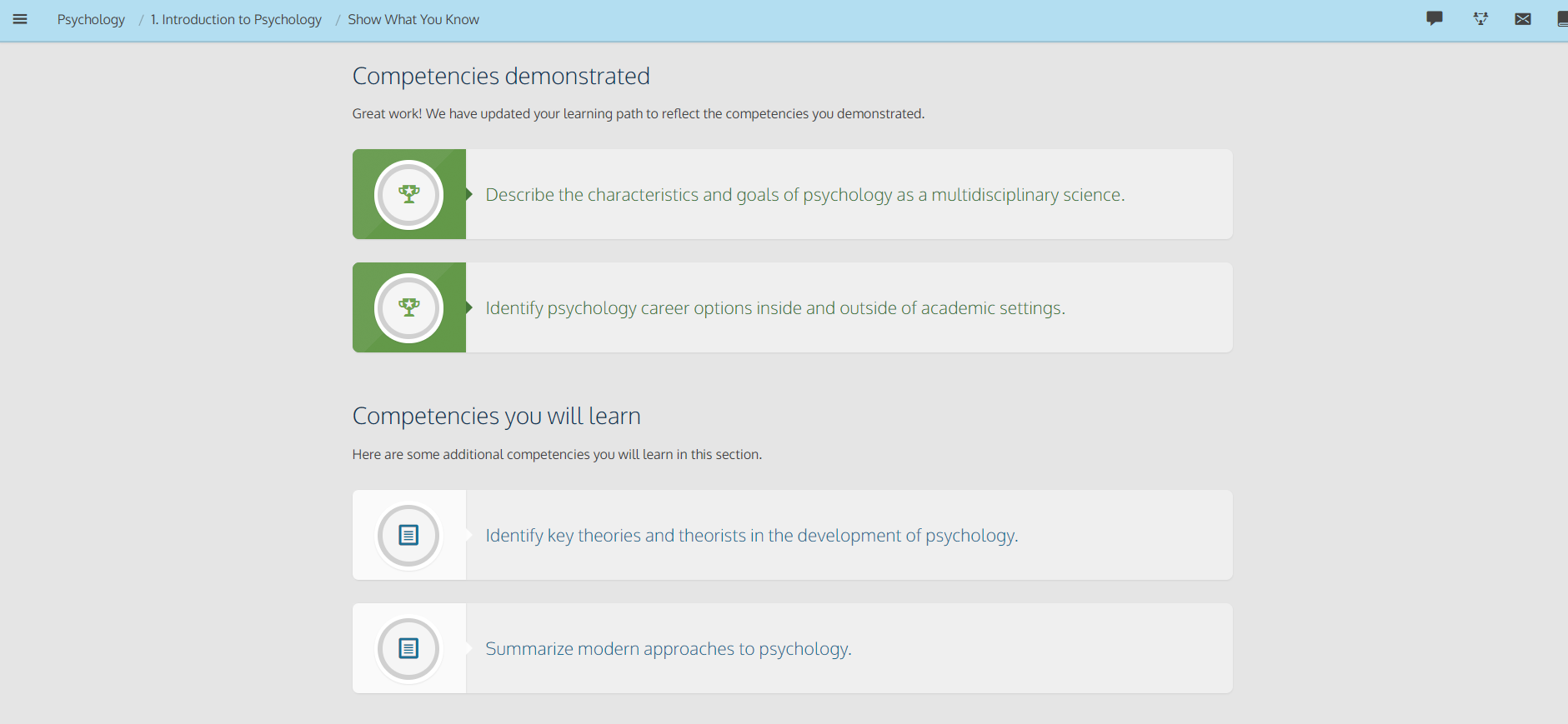
    Constantini also described the market feedback on the need for simplicity and that MindTap ACE had too many features. This led to the choice of using Learning Objects, a platform Cengage acquired in 2016, to be the base for OpenNow. The approach is to take OER standard textbooks, realign them as outcomes-based design along with associated assessments and added videos, and release everything with an open license. Nine of the 12 initial courses are from OpenStax, and three are re-licensed courses from Cengage now with CC-BY licenses. The videos use YouTube open licenses.

    For each course Constantini estimates that the modifications take $50k – $100k of internal work, including verifying of licenses for embedded elements. I would note a certain irony here in that OpenStax produces more-or-less traditional digital textbooks requiring publishers or OER services companies like Lumen to break apart and realign to competencies or outcomes.

    Cengage charges $25 per student per course for OpenNow.

    The assessments and instructor manuals raise a “burning issue” about whether they should be accessible by students or not. Initially Cengage is adopting the OpenStax pattern of licensing openly but controlling by passwords; however, this is a subject they need to think through and figure out over time.

    At the OpenEd conference last month, there was significant interest in the OpenNow presentation with people spilling over into the hallway. The movement of publishers into the OER space is real, and this release from Cengage should be viewed as part of a long-term shift in strategy. And one that attempts to fully embrace OER as seen by this interesting description:

    • High-quality, 100% OER narrative and assessment content from Cengage, OpenStax and other third-party sources.
    • CC-BY-licensed (5Rs), so instructors and institutions can adapt and reuse all narrative and assessment content as needed.

    Update: Added description of pricing model.

  • Some Notes On Lumen Learning’s $3.75 million Funding Round Led By Follett

    Some Notes On Lumen Learning’s $3.75 million Funding Round Led By Follett

    Today’s biggest ed tech news was Lumen Learning – co-founded by David Wiley and Kim Thanos and focused on getting deeper adoption of OER in higher education – and their new round of funding. And this news goes beyond pure investment, as Follett, the large campus retailer that “serve[s] over half of the students in the United States, and work with 80,000 schools as a leading provider of education technology, services and print and digital content”, led the funding round.

    First up a disclosure: Lumen Learning is a client of MindWires (the consulting side of e-Literate, or our capitalistic alter ego), and we have had a consulting relationship with Lumen for almost 18 months. We mostly don’t blog about our consulting work, and I do not plan to describe our advice to them, but we are not neutral observers on this one.

    As described in the press release:

    Follett will offer Lumen Learning’s OER solutions to more than 1,200 colleges and universities where Follett manages course materials delivery. Given Follett’s ongoing mission to improve access and affordability for students, the company has invested in Lumen Learning to help fund future growth and expansion of OER courseware.

    (more…)

  • Cengage and OER Podcast Series: Two steps forward and one step back

    Cengage and OER Podcast Series: Two steps forward and one step back

    Last fall I wrote about Cengage, one of the big three publishers for higher education, sponsoring and releasing a survey on Open Education Resources (OER). The survey headline:

    Open Educational Resources (OER) in higher education have the potential to triple in use as primary courseware over the next five years, from 4 percent to 12 percent, according to a survey of more than 500 faculty by Cengage Learning. In addition, the use of OER for supplemental learning materials may nearly quadruple in size, from 5 percent to 19 percent.

    But the hidden headline could have been viewed by skeptics as “a publisher fully interested in OER – what’s the catch?”. As time goes on, it is looking more and more like there is no catch other than Cengage promoting OER and trying to understand the nature of OER internally while sharing those lessons. Today’s news is that on the company’s OER resource page they have launched a new podcast series titled “Journey to OER”.

    (more…)

  • About The New Florida Virtual Campus Survey On Textbooks

    As long-time readers know, I strongly believe that the national discussion about the costs of textbooks and course materials is more productive when we focus on actual student behaviors and impacts, rather than artificial numbers used by many organizations. There may be short-term benefit from claiming or implying that the average college student spends $1200 or more per year on textbooks, but the reality is closer to $650. See “How Much Do College Students Actually Pay For Textbooks?” for more details, thanks in particular to information from NACS.

    The second-best source available on actual student expenditures on textbooks and course materials is the bi-annual survey from the Florida Virtual Campus (FLVC), which serves Florida’s state colleges, universities, and K-12 districts. Two weeks ago they released the third survey “2016 Student Textbook and Course Materials Survey”, a study of more than 22,000 students in the public colleges and universities. This report is particularly informative for asking questions about the impact of textbook costs – what do students end up doing. That is the interesting question.

    The whole report is worth reading, but I’d like to highlight two key points. The first is confirmation that the average actual spending on college textbooks is in the $600 – $650 per year range. In the FLVC survey, students spend just over $300 in one semester on textbooks. (more…)

  • About That Cengage OER Survey

    Last month Cengage Learning released a white paper titled “Open Educational Resources (OER) and the Evolving Higher Education Landscape” where the headline called out expected increases in OER adoption:

    Open Educational Resources (OER) in higher education have the potential to triple in use as primary courseware over the next five years, from 4 percent to 12 percent, according to a survey of more than 500 faculty by Cengage Learning. In addition, the use of OER for supplemental learning materials may nearly quadruple in size, from 5 percent to 19 percent.

    The 4 percent adoption of OER as primary courseware aligns with the Babson Survey Research Group (BSRG) finding of 5.3% using open textbooks (yes, we’re assuming the terms are interchangeable at least for the survey results). But the expectation that OER adoption may triple for primary usage and quadruple for supplemental is new. The BSRG did not estimate market growth – they just identified perceptions and barriers.

    There were enough causes for skepticism, however, that prevented me from taking the report at face value. A traditional textbook publisher touting OER growth while offering little data or methodology to back up their claims. The tendency for  some OER advocates to run with half-baked numbers. The question of open-washing and associated risk of redefining OER.

    I contacted Cengage and spoke to Cheryl Costantini, VP of Content Strategy to learn more about the study. Unfortunately, the deeper I dug the more credence I give to the results (unfortunate in terms of attention-grabbing blog post headlines). Long and short – the report seems like solid information despite a few flaws and need for broader sample size. (more…)