First, as a reminder, this week’s Blursday social is Blursday…er…Thursday at 4 PM ET. guest will be Jeff Young, Senior Editor at EdSurge, whose Pandemic Campus Podcast Series is a must-listen. (Register here.) We’ll be getting a real on-the-ground read from Jeff in an increasingly fluid and social environment provided by the rapidly evolving Run the World platform. (More on that in a bit.)
Next Blursday, 10/22, we’ll be talking with Doug Lederman, co-founder and editor at Inside Higher Ed. Doug is one of the people I most like to talk to when I want to find out what’s about to happen, or what’s happening that nobody is seeing yet. As both a great reporter and a great editor, he really has his ear to the ground. And in the times like the ones we’re living through now, where the waves of change come fast and furious, it’s important to have that sixth sense.
Doug Lederman, co-founder and editor of Inside Higher Education (sans COVID beard)
I’m really quite pleased with the kind of Blursday Social experiences that Run the World is able to support as it matures and adds features (and as I get better at using it). I’m increasingly able to create that fluid, social experience that we all miss and are craving.
We’ll kick off the conversations with a fifteen-minute(ish) conversation. In Doug’s case, he’s going to offer up a few trends he’s seeing that are potential discussion starters. The group will pick the one that most people want to talk about. We’ll then have a volunteer attendees join us in an impromptu conversation. I suppose you could call it a “panel,” but it really feels more like a more natural, organic conversation.
Starting this week with Jeff, and continuing on with Doug, we’re going to use a new feature that let’s us do one-on-one speed dating breakout groups on-the-fly. Once we have a nice, meaty conversation going, we’ll break off into a few rounds of one-on-one discussions and then reconvene for more conversation. It’s astonishingly easy and pretty natural (although you do have to get used to the hard cutoff for the speed dating sessions). So we’ll talk about a topic together, break out to have some one-on-one conversations, and then convene another volunteer group to come “up front” and talk some more about it.
Once it feels like the group has had enough group conversation, we’ll break out again into one-on-one conversations for purely social discussions. The joint closes at 5:30 PM ET, but leave when you want.
Dress code is COVID casual. BYOB. Bring friends; there’s plenty of room, and the social distancing safeguards are top notch.
Again, Doug’s session is next Blursday, 10/22, from 4 PM to 5:30 PM ET. Register here.
Back in July, I wrote an uncharacteristically clickbait-y post about the possibility that Elon Musk’s Space-X Starlink might deliver rural broadband everywhere in North America this year. I got mocked a little, which I expected. It’s usually hard to separate the hype from the genuine revolutions.
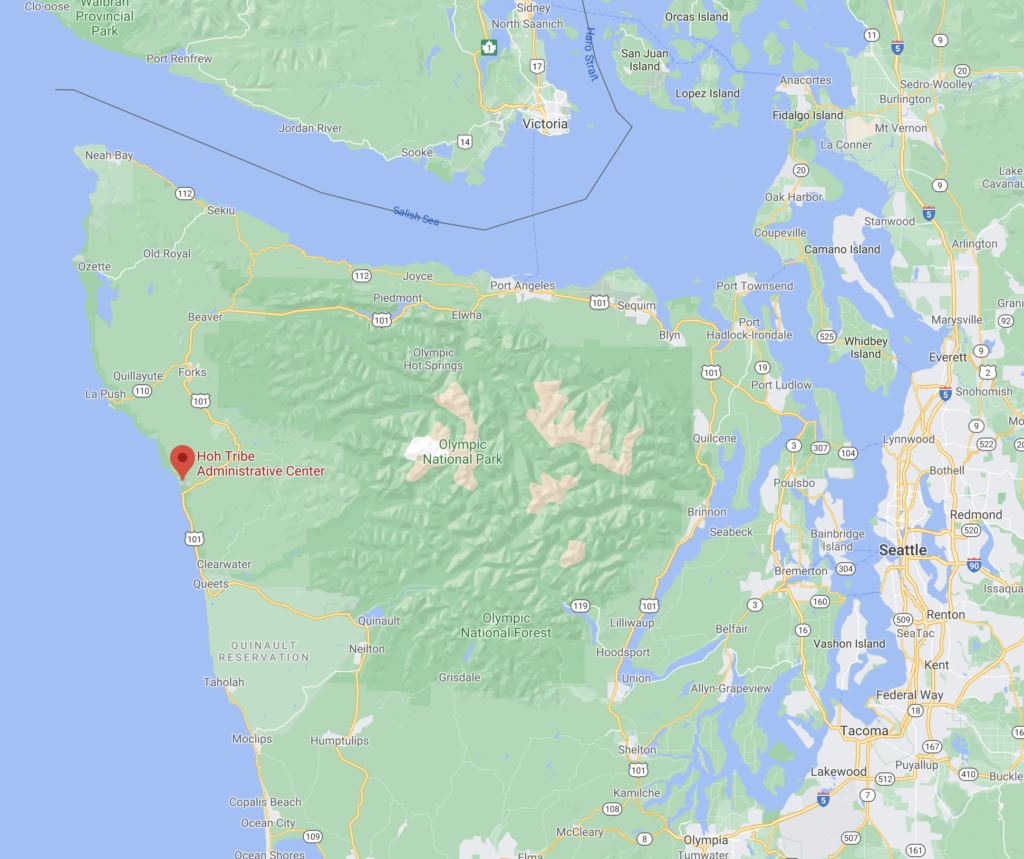
Well, here we are in October, and Starlink is delivering 100 Mbps broadband with latency below 30 ms to the Hoh Native American tribe in a remote part of Washington State (a few hours west of Seattle, just south of Vancouver Island). While there still are some hurdles to be crossed, it sure looks like rural broadband could be available everywhere fairly soon. The policy issue will not be funding new cell towers or cable lines to make rural service available but subsidizing the cost of that service for poorer Americans.
By the time life returns to post-pandemic “normal”—which, according to Dr. Anthony Fauci, will be “toward the end of next year”—the world will have changed permanently in some profound and unpredictable ways. In higher education, beyond any major changes due to budget crises and/or policy changes in a new administration, I think we are likely to see the effects of a massive de-urbanization trend over the next three to five years (and beyond). As white-collar workers—and some middle-skills office workers—no longer need to live near their offices, as progress toward infrastructure for remote working accelerates, and as the scare of the pandemic (and potentially post-election violence) encourage people to spread out, the implications for higher education, the future of work, politics, and life are incredibly hard to predict.
But a trend toward de-urbanization would almost certainly drive more online and blended learning as students are increasingly spread out. This won’t hit all segments equally; some traditional college-aged students will still want to “go away” to school. But the premium paid for that experience will become increasingly difficult to justify. Meanwhile, digital-forward pedagogy is likely to become a core competency for the majority of academics.
First, as a reminder, we’ll be kicking off our weekly e-Literate LIVE! Blursday Social event tomorrow at 4 PM ET. Our guest will be Andrew Owen, Head of Community at Run the World, the social web conferencing platform we’ll be using for our events. You can sign up for it here.
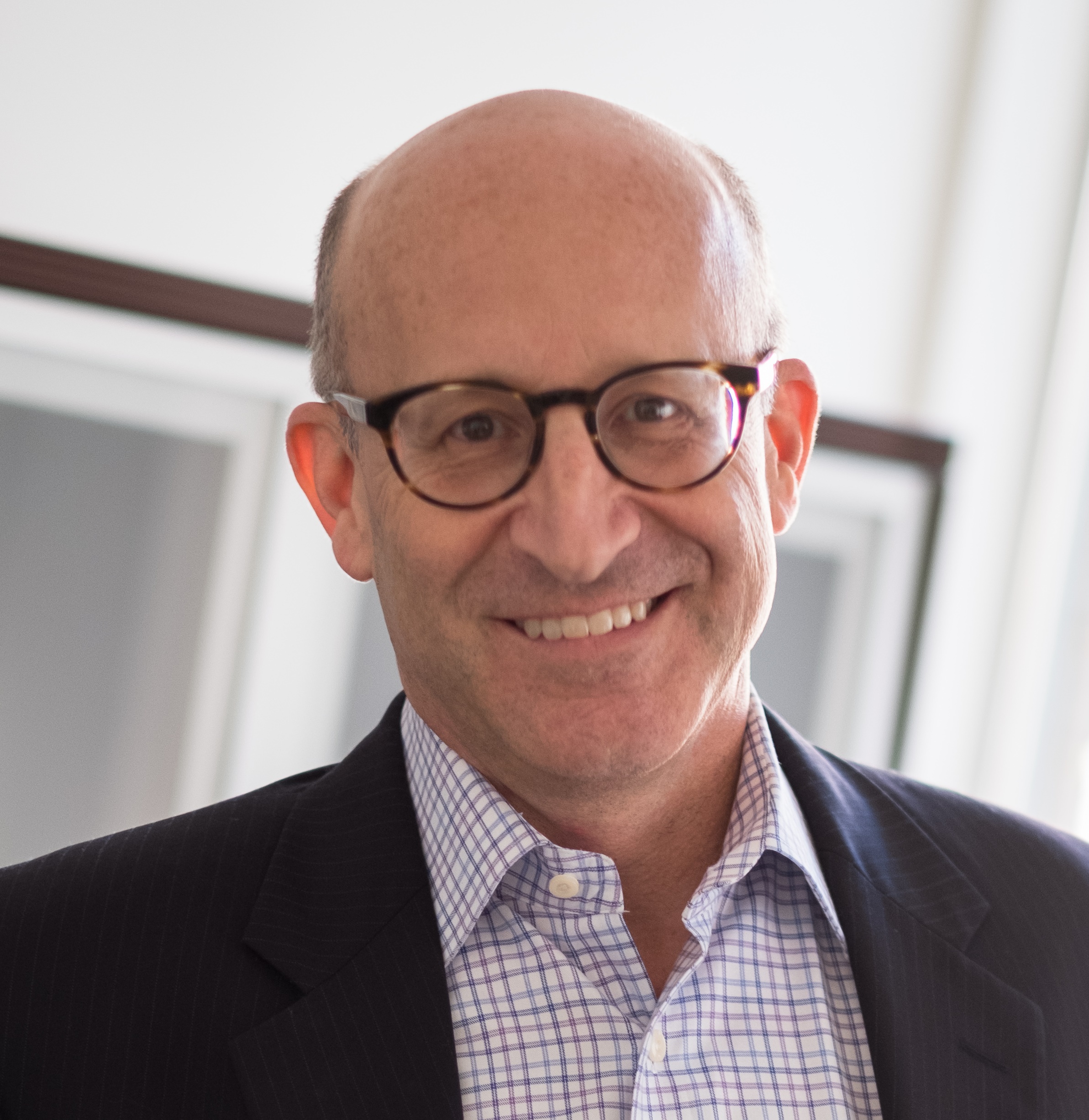
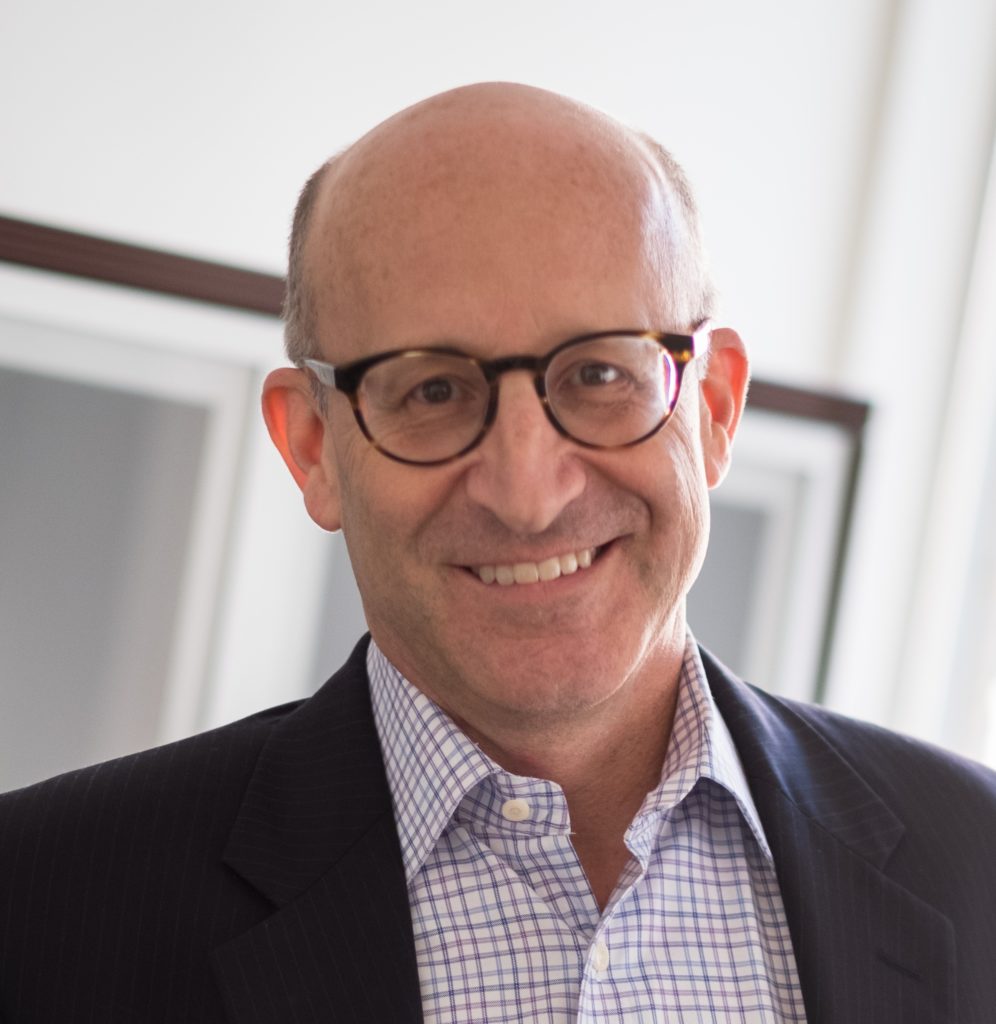
Next Thursday’s guest will be Jeff Young, Senior Editor at EdSurge. His Pandemic Campus Podcast Series is a must-listen. Because things are changing so rapidly, I’m going to be doing a periodic series of conversations with people who talk to lots of other people. Jeff is the first. He’s one of the best reporters covering higher education and really has his ear to the ground. We’ll chat a bit about what he’s seeing, and then we’ll all talk about what you’re seeing.
Jeff Young, Senior Editor at EdSurge
Remember, Blursday Socials are much more conversation and participation than broadcast. Think of it as being like trivia night at your favorite bar. There will be some organized activity, but a lot of it will be just connecting with friends. Some folks will be regulars, others will be semi-regulars, and still others will drop in occasionally. They start every Thursday at 4 PM Eastern Time. The bar closes at 5:30, but I expect many people will log off at 5. in future sessions, we will eventually use the networking time to do more formal problem-solving discussions and reconvene in the last half hour to brainstorm together.
The dress code is casual; BYOB.
I recommend that you also subscribe to the iCal feed, which you can do by going to this page and clicking on the “iCal Feed” button on the bottom. I have events tentatively lined up for the handful of weeks, which I will populate to the calendar as they are finalized.
Jeff’s session is next Thursday, October 15th at 4 PM ET. RSVP here.
For a while, I backed off of doing webinars because I got that many of you just didn’t have the bandwidth for it. We’re going to ease back into it now with something I’m calling “Blursday Social with e-Literate LIVE!” As you can guess from the title, it is open beyond the bounds of the EEP community. It’s meant to be a light-hearted event where friends can talk shop and catch up with each other. It will not be yet another broadcast-only or broadcast-mostly webinar series. As some of you know, I’ve been experimenting with a platform called “Run the World.” If you attended the recent ASU+GSV conference then you may have experienced it in the speed networking events. The platform is shaping up nicely.
We’ll be meeting weekly on Thursdays from 4 PM to 5:30 PM ET, starting this Thursday, October 8th. Think of it as being like trivia night at your favorite bar. There will be some organized activity, but a lot of it will be just connecting with friends. Some folks will be regulars, others will be semi-regulars, and still others will drop in occasionally.
For the inaugural session, we’ll have a chat with Andrew Owens, Head of Community at Run the World. We’ll have a chat about how to build connections in this crazy online synchronous world we find ourselves in. And when I say “we’ll have a chat,” I mean all of us. That will last for about 30 minutes, after which we’ll have some open one-on-one conversation time. We’ll give you a question to discuss, but think about it more as an ice-breaker than as a discussion prompt. Talk about whatever you like. The focus of the conversation will be “distancing socially,” or learning the lessons of COVID-19 to build engagement. We will be practicing what we’re preaching. The dress code is casual; BYOB.
The bar closes at 5:30, but I expect many people will log off at 5. in future sessions, we will eventually use the networking time to do more formal problem-solving discussions and reconvene in the last half hour to brainstorm together.
Again, the first session is Thursday, October 8th from 4:00 PM to 5:30 PM. Please RSVP here. I recommend that you also subscribe to the iCal feed, which you can do by going to this page and clicking on the “iCal Feed” button on the bottom. I have events tentatively lined up for the handful of weeks, which I will populate to the calendar as they are finalized.
There are two polar opposite narratives about the future of higher education that are both gaining traction at the moment. Apparently, either everything is going to change or nothing is going to change. Neither storyline is right, although neither one is completely wrong either.
One of these stories comes from a traditional academic perspective while the other comes from an EdTech perspective. Take a moment and think about the respective blind spots of each of those two perspectives. Guess which one arrives at “everything is going to change” and which one arrives at “nothing is going to change.” That’s the easy part. Too easy, in fact. That level of predictability is a strong indicator of motivated reasoning or some other cognitive bias.
But I digress. Here are the harder questions: How are each of these perspectives wrong and where are they each right?
The lasting effects of COVID-19
There’s a lot we don’t yet know of the effects of the pandemic on higher education beyond this year. But barring major policy changes at the Federal level, we can now begin to make some educated guesses.
First, some of the students who are taking the year off won’t come back. That could be a bigger change than it seems. While I haven’t yet seen reliable statistics on college deferments this year, the anecdotal reports I have heard range from 5% to 20%, depending on the type of college. (More expensive institutions that emphasize the value of their residential college experience seem to be getting hit a lot harder than access-oriented institutions that already had mature online programs.) On the upper end of the scale, twenty percent is a pretty big hit. We don’t know what the average will be.
But that’s not even the whole story. Deferment numbers only account for first-year students. They don’t reflect other types of gap years. Students in the middle of their college education may choose to take a year off for safety or financial reasons (or because they don’t believe they believe that they’re getting their money’s worth from COVID-disrupted education). The latter problem will end when the pandemic ends—if the students don’t become alienated from their college by the way it is handling the situation—but the former to problems will certainly have after-effects. The twin hammers of the pandemic and the recession have impacted the long-term wellbeing of college-going students and their families in ways that have yet to be reliably measured. We don’t know when these effects will tail off. The health crisis may be largely abated by fall of 2021—heaven help us if it isn’t—but the economic effects on many students and their families will almost certainly not be. Some students may have to delay or even cancel their plans for full-time college.
Second, many colleges and universities were already financially fragile and becoming more so before the pandemic hit us. Here again, there are polarized narratives, both of which are mostly but not completely wrong, and both of which look to be driven by motivated reasoning. For a good, level-headed, data-grounded analysis of the baseline situation, I recommend reading The College Stress Test, which was co-authored by my friend and colleague Susan Baldridge. The nub of it is that, while a significant number of colleges and universities are headed toward trouble, most were far from going out of business and had time to make course corrections before demographic changes put them in a financial position that would be hard to come back from. (I’ll have a little more to say about what “making course corrections means” later in this post.) But that was pre-COVID. These institutions have now experienced significant financial shocks, including both the loss of student tuition and the expense of trying to make their campuses as COVID-safe as possible. Many—though not all—are also likely to experience aftershocks as students and their families continue to grapple with the economic aftermath.
We don’t have the data yet on how much COVID will impact university budgets. It’s simply too early. (Also, there won’t be one global answer. Different schools in different niches with different management histories will be in very different situations.) But having talked to some friends who know a lot more about college finances than I do, I’m going to guess that the fat part of the bell curve of colleges will need to make budget cuts ranging from 15% to 30% over the next one to three years. (Institutions on the far left end of the bell curve were already financially unsound and will disappear, while those on the right end—the Harvards, MITs, and Stanfords of the world—will likely be OK.)
And what will be cut, exactly? Well, there’s really only one thing to cut at a college or university. People.
Having examined an unscientific sampling of annual college and university budgets, I estimate that between 60% and 80% of the total budget is payroll. (Teaching-oriented colleges tend to have a higher percentage than research universities.) It will be nearly impossible for institutions to make 15% to 30% cuts in their budgets without making painful decisions about laying off colleagues and shuttering or radically changing departments and programs. There just aren’t enough non-human costs to cut out of the budget.
But that’s a double-edged sword, because people are also the key to keeping the institution viable. People recruit students. People teach them. People keep them engaged and on track to graduate. If you cut the wrong people, then the programs which attract the most students may become less attractive. Or may not get seen by prospective students. Retention and graduation may rates drop. And trying to replace human support with software risks accelerating the decline if it is poorly conceived or executed. We are already seeing complaints by students in premium schools that they believe their online college experience is currently little different from for-profit colleges like the University of Phoenix (which is meant as a pejorative by these students).
“Sustainability” achieved through cannibalism is not sustainability.
While the majority of colleges and institutions are far from doomed, they are also far from safe. Hard decisions lie ahead.
“Scale” is (mostly) not the answer
The ugly truth is that colleges and universities have been avoiding difficult conversations about organizational design and sustainability—which would require talking about hiring and firing decisions—for decades. The focus has consistently been about growing revenues using whatever they already have (or can borrow from an OPM). Everybody wants to talk about revenue. Some folks want to talk about tuition pricing and discounting. Nobody wants to talk about cost.
So what happened instead? Academia produced about 397 different versions of “sell more degrees on the internet!!!” The first gold rush was asynchronous online degrees about 15 years ago. That hit its limit. Apparently, billions of people in India and China aren’t lining up to earn an online degree in turfgrass management from a mid-tier four-year college that nobody who lives more than 150 miles from the campus has heard of. In fact, there aren’t hundreds of students lining up to take that turfgrass management program 1,000 or even 500 miles from that college. Some colleges grew enrollments during this period. Some proved to be sustainable, while others less so. The aforementioned University of Phoenix looked like it might reach half a million enrollments in 2010 before deflating down to a third of that size in 2016 (which, let’s be honest, is still pretty big).
The second gold rush was the MOOCs.
I’ll say this in defense of MOOCs: They still exist. Enough people find them useful that they are still being created and run. But they have faded into the background, as any purported silver bullet tends to do when it turns out to be just one arrow in the quiver.
The third gold rush was the Online Program Management (OPM) companies. This really started as an offshoot of the first gold rush but then mutated into something else. And like the others, it grew for a while. But it turns out that there’s a limit to the number of students who are willing to pay $40,000 for an MSW degree. And for each university offering such a degree, their geographical reach of their brand is limited. Even if they are one of the top brands in the world. Maybe they can enroll students from 300 miles away rather than 150. But 3,000 miles…? It turns out that if you live on the West Coast, chances are good that you’d rather go to Stanford rather than Harvard, and the reverse is true for East Coast residents. And apparently, the fact that students don’t have to leave their homes to take online programs from any university around the world doesn’t change this fact. So the easy gold in that vein has been largely mined, at least in the US.
A parallel wave to these has been the rise and falter of the so-called “mega-university.” First it was supposed to be Western Governor’s University (although University of Phoenix could make a good case for pride of place). Then it was going to be ASU. Then SNHU. They’ve all done well and are likely to grow more as they fill needs left by colleges and universities that are faltering. I wish them long life and happiness. But there is no evidence in sight that we will have a massive consolidation with a million or more students attending one university. The mega-university phenomenon could happen, but so far there’s no strong evidence to suggest that it will.
Each one of these efforts added an arrow to the quiver of strategies for meeting all educational needs of all learners while boosting the sustainability of the colleges and universities. (In the long run, these two goals will tend to line up with each other.) Each was a significant innovation in its own way. But arrows in the quiver are not the same as silver bullets. There are no silver bullets and there will not be any in the days to come.
Why online classes won’t fade away
There is a growth path for many of these schools, but it is neither an easy solution nor a quick fix. The reality is that many learners who are within these institutions’ geographical brand reach have educational needs that have not been met. In fact, there always have been. Some were never able to complete college for a variety of reasons. Others need graduate degrees. Increasingly, still others need something significant that’s less than a degree to help them move up or on in their careers. They need some chunk of knowledge that may or may not be wrapped up in an official certification of some kind. And now, we will have students who miss their window to go to full-time residential college due to COVID and its economic impact on their lives. These would-be students have jobs and families and other obligations in their lives. They will need more flexible educational opportunities. But not the same opportunities. The students that I just described are very different from each other. They will need different educational experiences and supports.
If colleges and universities that want to minimize the pain of cutting good people—and make no mistake; there will be painful cuts no matter what many of them do—then they will have to reach these students where they are. Reaching more students means increasing enrollments, which means increasing revenue, which means at least a chance at saving (or recovering) jobs. To do that, colleges and universities will need to build, improve, and differentiate their online college experiences.
This is an opportunity to grow not so much by scaling as by diversifying, and by rebalancing the academic portfolio. Some programs will no longer be viable and will need to go. Others will be important enough to the sustainability and mission of the institution that they will merit additional investment. Still others will need to be re-imagined.
But if colleges and universities can think through what their institutions should look like to serve their enduring missions while meeting new educational needs in new ways, then they can survive this difficult period. Eventually, they can learn how to thrive again with their academic souls intact.
Tech-enabled rather than tech-driven
The scenario I’m describing is different from both the academic arcadia in which every rare gem of a program is preserved in amber for the sake of its intrinsic natural beauty and from the EdTech fantasy of disrupted everything taught by Professor Skynet, sponsored by your good friends at Tinder. ((I know, I know. I’m being unfair. Somewhat. But only to the side that you and I identify with. Those other folks are obviously captive to some kind of motivated reasoning. They’re the crazy ones.))
One challenge to this scenario is that delivering online education with quality is hard. Institutions that go this way will have to redirect a substantial portion of their limited and dwindling budgets to online course design experts, online student help and advising resources, various types of technology, and above all, to figuring out how all the pieces fit together into a journey that is navigable by the students.
Rather than aping the business world’s drive to “scale,” the imperative—and craft—that we ought to be copying from “industry” is their customer focus. Students aren’t exactly customers, but they aren’t exactly not customers either. I’m specifically thinking about the word “customer” as in “customer needs” and “customer experience.” What are the needs that would drive students the institution wants to reach to consider enrolling for a new credential program and/or a different educational experience? What educational experiences would fulfill those needs? How can those experiences be delivered so that they fit into those students lives, rather than forcing the students to contort their lives in order to accommodate their educational program?
How do students navigate from clicking the “buy” button (i.e, matriculating) to package delivery (i.e., being able to show up for the first day of class)? There is no USPS for them. ((Let’s hope there’s one for us.)) How do they navigate their online class experience, with pieces in the LMS, pieces in the digital textbook, pieces in various add-on tools the instructor uses, and so on? How do they get help, stay on track, or find a new track if the one they’re on isn’t working for them?
To survive and thrive in the 21st Century, every college and university should be literally designed by academic stakeholders around their answers to these questions. EdTech can help with all of these problems but solve none of them.
From a user experience perspective, the design of even the traditional on-campus college experience is probably worse than going to the DMV. A day getting your driver’s license renewed may feel like it sucks four years out of your life. A traditional residential college degree requires four actual years of persistence navigating dysfunctional bureaucracies, completing administrative workflows that nobody has ever actually ever thought of as workflows, and bushwhacking through mazes of administrative and academic software that was (often poorly) designed to make somebody else’s life easier. Some of the reasons that many traditional college-aged, middle-class students have made it through this mess anyway are (1) they had college-educated parents who could help them, (2) they were raised by college-educated parents who taught them the tricks and games that have nothing to do with education but everything to do with navigating this kind of irrational world, (3) at 18 years old, they have the highest probability in their lives of having nothing better to do, and (4) if they can make it through the bureaucracy, the rest can be pretty great. (Also, (5) many colleges are apparently willing to burn through great academic employees who will almost literally kill themselves to help students succeed in a system that can feel like a performance art project on Kafka).
One huge reason why achievement gaps exist is that post-traditional students are less likely to have the time, skills, or family support needed to navigate the non-learning-related aspects of their college’s user experience. Likewise, college-educated professionals who are trying to get a credential in their “spare” time often have limited headroom or tolerance for navigating poorly designed administrative or course experiences.
The online education experience is often a lot worse. But it doesn’t have to be. In fact, it shouldn’t be. It should be better in some ways. Yes, there is magic in being on campus that is lost online (although there are many kinds of magic in the world). Yes, it is harder to do…well…anything that requires serious and sustained concentration while working from home, where your family and your job responsibilities are constantly pecking at you (as we are all discovering). But on the other hand, digital gives us an opportunity to discover, analyze, and respond to student needs and student problems with clarity and speed that are simply not possible in the analog world.
We could have truly student-centric institutions—not just in intention, and not just in philosophy, but in the fundamental way that a college or university makes decisions about every aspect of what it does, from the design of its academic programs to sealing the many cracks that can trip students up during their academic journeys. There would still be professors teaching. There would still be disciplines and courses. There would still be a university. But the academic experience could be continually refined and improved with the level of obsession that a company like Apple puts into improving every aspect of their customer experience. Gaining that kind of reputation is how colleges and universities can attract students who otherwise might not come and keep them coming back for twenty or forty years instead of two or four.
We have to push through the current pain, through the hard decisions, through the reimagining, and through the redesigning and reimplementation if academia is going to survive with its soul intact. This is a lot like climate change. We have a little time, but not a lot of time. We won’t necessarily fall off a cliff, but we can start rolling downhill fast. And there is a cliff at the bottom of that hill. Technology is essential, but it is not magical and will not save us by itself. And pretending the problem doesn’t exist or will magically go away certainly won’t help. We all have to take responsibility and start changing the ways in which we go about our lives, both individually and, most importantly, collectively.
Most colleges and universities will not die off in the next three years. But many are unhealthy, will have to make painful cuts, and could put themselves into death spirals if those cuts are made without a clear vision of a healthy future state that their stakeholders can work toward together.
As we are being reminded every day by the news, the future is in our hands.
In my last post, I argued there are three factors that will permanently drive residential colleges toward more online and hybrid programs:
Value questions: COVID-19 may finally bring about the long-predicted “unbundling” and “rebundling” of the university. As many colleges and universities with annual price tags of $40K, $50K, or even $60K go online, students and parents alike are having their attention called to exactly what the residential experience adds and how much they are willing to pay for it. While I’m not predicting the death of the residential college, I do think we are entering a new era in terms of how students think about what they want from their college education and how much they are willing to pay for it.
Missing the window for the traditional educational experience: While we don’t have good data yet on deferral rates, the Boston Globereported four weeks ago that Harvard University is reporting a 20% deferral rate this year, and other numbers I’ve heard anecdotally tend to range between 10% and 20% deferrals. Not all of those students will come back, either to the university they applied to or to full-time college in general. Some will need to get jobs. Some will start their own companies. Life will move on. Their ability to invest four full-time years of their lives and $100K or more on an undergraduate education will diminish. Some will miss their window. This change, in turn, will force many colleges and universities to make permanent changes that were inevitable—though they may have felt somewhat distant—due to demographic changes, changes in the economy, and other sustainability challenges.
Deteriorating university finances and the drive for post-traditional students: Even as fewer students may attend full-time college straight out of high school, more will need continuing education throughout their careers to stay employable or advance in their careers. This COVID-accelerated trend coincides with the COVID-accelerated trend of deteriorating university finances. Institutions will increasingly need to meet working students where they are.
These trends will likely hold true for most colleges and universities. But they will be particularly acute for many institutions that emphasize residential education. And it raises an existential question for them: Without their climbing walls and dining halls, without students being able to run into faculty on campus and have a cup of coffee with them, how will these institutions differentiate online? How can they justify their price tags?
Remember, when MIT first began giving away its course materials in its much publicized OpenCourseWare effort in 2002, the university’s primary argument for preserving the value of an MIT education was that the real value of an MIT education was being on campus with MIT professors and students. While MOOCs have brought about some evolution of that view, MIT’s edX MOOCs are largely for people who are not MIT students.
So what will distinguish an online MIT education from OpenCourseWare or an MIT MOOC micro-master’s degree in a way that will justify a substantial price premium?
Not Zoom lectures and commodity textbooks
If we compare a well-designed MOOC to a thoughtful, if hastily executed direct-translation remote learning course today, the MOOC is the superior product. Is a live faculty lecture on Zoom better than a recorded lecture in the MOOC? Eh, maybe yes or maybe no, depending on how interactive the Zoom lecture is and how well produced the MOOC lecture is. What about the asynchronous portions? The readings, formative assessments, online discussions, and just plain course organization? A well-designed MOOC offers a more seamless experience where students are guided by the interface from one experience to the next, the materials are designed to work together, and they have the distinctive flavor of a unified class prepared by the professor who designed it. In contrast, a remote learning course that was cobbled together with the tools at-hand has students hopping between the online syllabus, their commodity courseware, their LMS discussion forum (where they will have to navigate to the appropriate discussion thread), and so on.
Another way of putting this is that, if instructors had the time to more carefully design their current remote learning strategies and wire together the navigation among the various technology platforms they use, the best they could aspire to achieve is something approximating a relatively generic MOOC.
Other popular models are also either inappropriate or incomplete. The access-oriented universities have gotten very good at teaching asynchronous classes. They’ve been refining their techniques for decades. But those approaches are optimized for access and affordability, where “affordability” means “much lower tuition.” I don’t see Swarthmore or Brandeis adopting this approach unchanged as part of their core undergraduate experience. Likewise, the high-end, all-synchronous methods employed by some of the MOOC providers won’t always fit either. Sure, they work for the kind of audience that might show up for executive education. But will they work for working 20-year-olds, particularly in survey-level undergraduate courses? Maybe not. And so far we’re only talking about the in-class experience, which is a small fraction of what “residential education” is supposed to be all about.
Increasingly, colleges and universities are going to have to develop their own, distinctive approaches to online and blended learning. They will have to differentiate in different ways. And without the same kinds of person-to-person serendipitous contact that happens when everybody is physically co-located full-time, they will have to create distinctive and valuable experiences that are just as meaningful and just as easy as bumping into your professor at the coffee shop or meeting your classmates for pizza at the dining hall.
This changes everything
Such a transformation won’t happen by accident, and it certainly won’t happen by cutting 30% of staff and hoping for the best. Colleges and universities will need to re-imagine themselves. What makes them distinctive once they remove the physical campus and everything that happens because of that campus? What is special that can translate to the virtual or the blended?
The implications for governance are deep and far-reaching. A lot of the magic of the residential campus arises out of creative chaos. It’s exactly the unplanned nature of residential college—the serendipity that results from taking a life-changing course you weren’t thinking about because your friend is in it or having a deeply meaningful and entirely unplanned conversation—where the magic arises. Translating some of that into online modalities while maintaining some sort of cohesive experience will not be accidental. It must be planned. The whole university community will have to be in on it.
Nor can that cohesive experience be outsourced piecemeal to a collection of disparate vendors without much thought about the learner journey. It will longer be adequate to have a generic LMS, generic courseware, and generic web conferencing linked in bespoke configurations by individual faculty, often leaving it to the students to navigate a disjointed set of experiences that in no way resembles the easy rhythm of going to class twice a week and meeting with a study group at the library in between.
Charlie Chaplin, Modern Times
This new vision and its implementation will need to be intentional, institution-wide, and enabled through active support from everyone involved. A vague sense of appreciation among faculty and staff for the character of the institution will no longer pass for a “shared vision.” The feeling at institutions that are successful in the cultural transformation will be more like an employee-owned company than “shared governance,” where latter of often means “mutual agreement to leave everyone alone and everything as it is.”
This work is going to require new levels of collegiality and shared imagination. It will also require enormous attention to detail. When serendipity works in residential education, one reason it does so is because the student is physically surrounded by people who can help. Students are less likely to fall through the cracks when their dorm mate or classmate or advisor or professor or random student on the quad can show them how to leap over a particular crack. Online, the opposite is often true. Randomness is an enemy more often than a friend because the cues for where to go and what to do have to be consciously created, as must be the environment that encourages the formation of social support networks. There will be no more closing the door to one’s office or classroom and ignoring the parts of the university that aren’t your direct responsibility. Everyone will be in the same boat, sink or float. At the moment, everybody is just bailing out the water. But pretty soon, they will need to start rowing in the same direction with a level of shared intention that they have never practiced before.
For academics, the future of work is here. Somebody needs to tell them that.
In my last post, I wrote about how hard it is to achieve good product-market fit in EdTech in general and with digital curricular materials in particular. In this post, I’m going to explore how the market for curricular materials is changing in ways that will likely change the kinds of solutions that will sell and the ways in which they will be sold.
Change is coming
One question that people outside of education repeatedly ask is why textbook publishing hasn’t been radically changed by digitization in ways that just about every other kind of content production and syndication has. The simplest answer is the switching cost for instructors. Changing from one textbook to another is a non-trivial effort. Instructors have to rethink readings, rejigger assignments, find the new holes—because every curricular materials solution has gaps that instructors need to fill with something different or better—and so on. It’s a lot of work. Most instructors have already done that work once, over a period of years, as they have gotten used to a particular textbook and learned to work around its flaws. Eventually, they reach a point where they feel that the solution they have cobbled together is good enough. Once they reach this point, instructors tend to stay put rather than go through all of that work again. They usually don’t go through the effort of a major course redesign effort—which switching out curricular materials generally entails—unless some major extrinsic event forces a redesign.
We are in the midst of the mother of all extrinsic events. Every course that wasn’t already online is being redesigned and then re-redesigned as campuses change their minds about whether they will be online, face-to-face, hybrid, or some combination thereof. If instructors have to radically redesign their courses anyway, that is generally a moment when they are more open to considering new curricular materials. Maybe not during a last-minute, whipsaw change that instructors are just trying to survive right now, but the academics who make it through the current cycle and finally catch their breath will want to think about how to do it better next time.
Make no mistake; this change will not be over in a term or a year. Even after the health crisis is over, the teaching landscape will look very different for many instructors in many institutions.
The Great Online Migration
“Horse-drawn wagon loaded with sacks of potatoes” National Archives and Records Administration
I can think of at least three major reasons why a substantial portion of the current shift to online will become permanent. First, the brand value of the residential college experience is being badly damaged right now. According to US News and World Report, the average cost for a year of private residential college in 2019 in the US was $41,426. “Average” means that some are higher. As we hear more stories about COVID-spreading back-to-school parties, followed by campus shut-downs week into the semester, followed by a hasty shift to online classes taught at institutions that had prided themselves on their residential experience and therefore had in no way prepared their instructors, staff, or infrastructure for a dramatic online shift, students and parents alike are beginning to question whether paying $160,000 or more for a four-year residential education is really worth the cash (or debt).
Even now, student deferral rates are going through the roof as students put off college and potentially reconsider their options. While I have yet to see reliable data, the numbers I have hearing anecdotally are 20% deferrals and no-shows or higher, with the bigger losses skewing toward the higher-end, costlier, residential-oriented institutions.
This brings us to the second big driver of a permanent move to online. As the health crisis abates and the economic crisis grows and lingers, some of those students won’t be going back to school full-time at all. They will need to get jobs. Predicting this sort of a trend is always a dangerous game. It’s possible, for example, that a lack of jobs will drive an increase in enrollments in the 2021-2022 school year. But if so, these may not be full-time enrollments and are not likely to be at the high-end residential colleges and universities. Regardless of overall enrollment trends, there is likely to be less demand for high-end residential education and more demand for affordable online education.
Third, COVID-19 will accelerate the need of colleges and universities to find ways of continuing to serve their graduates for 20 or 40 years rather than for two or four. Quite simply, they will need revenue at a time when the pace and breadth of reskilling needs in the workplace is accelerating. These students will need online or blended educational experience, which will mean that more instructors will be called upon to teach using new modalities.
By the time we reach a new point of punctuated equilibrium, it seems highly likely that most colleges and universities will have more online offerings and many instructors will be teaching more in new modalities. While I’m not predicting the extinction of the residential liberal arts college, I think it highly likely that many of these colleges will not be able to afford to resist change. They will have to expand their revenues via online and blended programs while reducing the costs of their physical plants (or finding creative ways of paying for them, like renting them out).
There will be no turning back.
Major changes in the market
This shift online will drastically shift approaches to curricular materials at both the individual instructor and the institutional levels.
We know from experience that instructors who shift online very often shift their pedagogy because many of the tricks that they learned for teaching face-to-face either have to be translated in order to work in the digital environment or flat-out fail. Instructors often feel like they are flying blind as they lose methods of getting student feedback that they are used to having in the classroom. Meanwhile, many experience higher student drop rates. Suddenly, the digital affordances, feedback they supply, and novel teaching methods that they enable become much more valuable. And since the instructors are already experiencing the upheaval and stress of having to redesign their courses anyway, adopting a new “book” in order to get new capabilities that will help them with their new teaching challenges has a much better cost/benefit ratio.
Meanwhile, institutions will face two pedagogy-related challenges. First, they will have to work very hard to retain students who are under increased financial stress and may struggle in an online environment more than they would in a residential program. Since the colleges will also be under financial stress, they will need to retain every student possible. They will no longer have the luxury of simply letting faculty teach however they like and accepting that some of them are not good at helping their students to succeed.
Second, colleges will no longer be able to differentiate themselves and justify massive price tags based on climbing walls and dining halls. Nor will the quality and value of the educational experience be automatically carried by their brand. Online, it’s not clear that an Amherst University education is so much better—or more prestigious—than a University of Massachusetts at Amherst education that it justifies the difference in price tag. High-priced universities will increasingly need to differentiate themselves on the demonstrable quality and distinctiveness of their online educational experience. And they will need to do so quickly, while starting well behind their less august peers at building a complex institutional skill set.
Product-market fit
There will be many far-reaching implications of this shift, some of which we will explore in future blog posts. For now, I want to focus on the key-in-the-lock aspect of product-market fit for digital curricular materials.
There will be pressure on both the faculty and university sides to reduce the variability in how these products are used. Faculty who are fiercely protective of their right to teach as they see fit in a traditional classroom will often eagerly grasp a life preserver when they are thrown into the deep end of the online education pool. A kind way of describing the reason is that they feel less pressure of expectation that they should already somehow know how to teach well in the new environment (even though it is almost equally unfair to expect professors how have had no formal instruction in pedagogy to know how to teach well in a traditional classroom either). They tend to be much more open to partnering on course design, whether with curricular materials providers or with university instructional designers. There is a mounting body of evidence on effective teaching using the affordances of well-designed digital curricular materials, but that evidence usually assumes something about the “implementation model,” i.e., the teaching practices employed by the instructor. Moving online opens up new possibilities for dialog with faculty about evidence-based pedagogy.
At the same time, universities will feel more pressure to demonstrate the quality of their education in an online format. They will have to develop a new story to tell about what a “University of [Brand Name] experience” is like. That means administrators will need to become more actively involved in conversations about teaching practices. For reasons that I described in the previous paragraph, I expect that fights with faculty over academic freedom—which was originally intended to protect controversial academic positions rather than ineffective teaching practices—will become more muted in many places as faculty and institutional needs become more aligned around creating effective and transformative educational experiences in the new context that the academics will find themselves in.
The degree to which educators and universities continue to feel that it is in their interest to do so using commodity products sold by major publishers is a more complex question. But it is also a different question for a different post.