e-Literate

Present is Prologue

Category: Big Picture

The “Big Picture” category covers larger trends and topics that influence both the problems that technology can help address in education as well as the barriers to implementing high-quality technology-supported education. This includes research-based topics such as learning science and program effectiveness studies, philosophical discussions such as outcomes definitions, and macro-forces such as government policy, markets, and business models.

  • Announcing Argos Education

    Announcing Argos Education

    Those of you who have been paying close attention to my LinkedIn profile have known that something has been up with me. I have quietly been working with friends and colleagues toward building a start-up. As we have been building the company, we have been collecting a group of Angel investors who are, almost universally, people we respect and turn to for advice. We’ve been very lucky that way.

    Yesterday WGU Labs announced that they are our first institutional investor. I am deeply satisfied that our we are starting off with support from a fund that is affiliated with an access-oriented university. It sets the tone for who we want to be and what we want to accomplish.

    This post is the first in a series about what Argos Education is. The truth is that I’ve been writing about aspects it for a while without mentioning the startup angle. My post series about the open-source collaboration on a courseware platform between Carnegie Mellon University’s OLI group and Arizona State University’s ETX group was about the software and the collaboration that forms the heart of Argos. If you’re impatient with the meandering Feldstein style and want to get a concise summary of what we’re up to, one of our Angel investors, the wise-beyond-his-years Matt Tower, has written up his own thesis about us. Matt is far more succinct than I am.

    Here on e-Literate, I feel compelled to tell the story e-Literate-style. This first entry will be a very personal one. I’ve been lucky to have long-time readers who have traveled my EdTech journey with me for as long as sixteen years. I’m going to take some time to explain how this latest change fits into that journey. You won’t learn much about what Argos actually does in this installment, but if you’re an e-Literate reader, you’re used to my George R. R. Martin style. I promise you, The Winds of Winter is coming and it won’t suck like the TV show.

    Argos is very personal to me. It has to be. I walked away from a very comfortable consulting practice during my peak earning years to take on a level of risk and hard work that frankly don’t make sense at this stage in my life. The reason I’m doing it is that I believe I have a once-in-a-lifetime opportunity to make an impact. If it succeeds, it will be the culmination of everything I’ve tried to accomplish in my professional life. Beyond my wildest dreams.

    So today I’m going to write about the personal mission and values that led me to this step as well as how it will affect my continuing work here on e-Literate and on the Empirical Educator Project. Later posts in this series will delve more deeply into Argos’s mission goals and how we aspire to accomplish them.

    I believe in teachers

    If there’s one statement that has guided my life choices, including the co-founding of Argos and even a major reason why I fell in love with my wife, it’s that I believe in teachers. This is not a bromide. It means something very specific and nuanced to me.

    I grew up in a family of educators. Both my parents and both of my sisters are in the family business. My father, who is my role model in many ways, was an elementary school principal for much of my life. To this day, the highest compliment he can pay to person is to call them “a good teacher” or “a real teacher.” When he says that, he is making a holistic statement about the person’s character, values, intelligence, and skills. Real teachers change people’s lives, not just through their inspiration and dedication but also through their acuity and ability to solve complex problems. Dad reveres reading teachers for their diagnostic skills. I come from a family of real teachers and aspire to live up to their excellence and accomplishments.

    When I went to college, I thought I wanted to teach philosophy. My very first week at Rutgers, I met a senior who was a philosophy major and, importantly, had a very impressive beard to prove his bona fides. He told me he was interested in something called “cognitive science.” I had never heard of it before but instantly decided that was what I wanted to study. Since Rutgers didn’t have a cognitive science major, I made my own unofficial one. In philosophy, I gravitated to courses in topics like epistemology, philosophy of mind, and philosophy of science. Outside of my (official) major, I took a lot of courses in linguistics, cognitive psychology, cognitive anthropology, and any other subject I could find that seemed related. I even managed to talk my way into a couple of graduate courses that were genuinely interdisciplinary studies of cognitive science frontiers at the time, like learnability theory.

    At first, I thought I was doing it to acquire knowledge of the subjects I would teach. But the more time I spent sitting in graduate classes, the more I realized that I wasn’t passionate about studying how humans learn. No, I wanted to apply that knowledge. My studies were my way of figuring out how to be a real teacher.

    I have always been deeply troubled by the lack of recognition of the skill and knowledge required to teach well. I still remember vividly how a well-meaning advisor at Rutgers reacted when I told her I wanted to be a teacher.

    “Well, we need good teachers, but you’re too smart to be a teacher,” she said.

    I was too stunned to respond, but I thought, “Who do you want teaching your kids, lady? Who do you want to be in the room with them when they get stuck or when it turns out they have an undiagnosed learning problem? Or are going through a personal or developmental crisis? Do you think that any idiot can do diagnose and help your kid and 25 others simultaneously in one class?” To this day, it make my blood boil to think about it. And yet, she was just saying what so many people think. She was trying to help me fulfill my potential. In her world, smart people couldn’t possibly make full use of their intelligence by becoming teachers.

    That lack of understanding of teachers as skilled professionals is endemic to our society. It infects the way we talk about, think about, and implement EdTech. While I take every opportunity I can to mock the former CEO of Knewton’s statement that his product was a “robot tutor in the sky that can semi read your mind,” the truth is that he mostly just said the quiet part about EdTech ambition out loud. Sometimes our society seems more ready to entrust the education of its youth to unproven and poorly understood technological gadgets than it is to trust human educators. When people talk about products or strategies that are “learner-centric,” they often implicitly or even explicitly denigrate the role of the educator. So-called “personalized learning” products are often designed to do end runs around the teachers.

    This attitude is by no means confined to the start-up world. I’ve heard smart, well-intentioned people working at highly influential organizations talk about “instructor-proofing” courses with technologically enhanced content.

    Some of the most robust longitudinal findings we have confirms the personal experience that’s so pervasive it’s become a cliché: real teachers change lives. To accept those finding while believing also believing that educators cannot be trusted to decide how to teach their students…I don’t know how you square those two beliefs. I don’t know what teaching is in a world in which both of those statements are true. I don’t know what teachers would actually do.

    I believe many college instructors are—and/or aspire to be—”real teachers”

    There’s a popular notion that most college instructors don’t really want to teach or care about their teaching. I will write more about the evidence base that contradicts this in a future post, but for now, just think about it for a minute. Most professors found their career path because some teacher or teachers sparked their passion. Ask a few. They can usually tell you who it was. They had an encounter with somebody who set their lives on a new course.

    That course will have them spending the greater portion of their week…teaching. Very few of even the most talented, elite young professors are able to avoid teaching between six and ten courses every year for at least their first five years (if they’re lucky) until they get tenure. The overwhelming majority of college professors are destined to spend the overwhelming majority of their professional time teaching for their entire careers. And even the ones who are elite enough to be able to spend more of their time researching went through the crucible of teaching. Working really hard for mediocre to lousy pay relative to their level of education. Do you believe that the majority of people who are willing to endure seven years of graduate school to become college instructors genuinely dislike the main job they know they’re going to be spending a large percentage of their lives doing?

    Or let’s approach this from another angle. If you’re reading this, there’s a good chance that you have a weird job which is hard to explain. Maybe you’re in EdTech. Maybe you’re a venture capitalist. Or an administrator. Or a learning scientist. You’re probably not a police officer or family doctor. You don’t have a job that most people know a lot about and can picture what you do without you having to explain it. My family mostly doesn’t understand what I do for a living despite us all trying really hard to remedy that situation. I have mostly given up trying to explain it and they have mostly given up asking about it. That’s true with many of my friends, too. Including close ones. When I find somebody who actually gets my explanation and is hungry to learn more, it’s the best feeling in the world. It’s crack cocaine for geeks.

    When you’re a college instructor, you have an opportunity in every class to inspire students the way that you were inspired to dedicate your life studying bugs or irrational numbers of some long-dead poet. You get to let your freak flag fly. Students are self-selecting. They come to you. Sometimes it’s to fulfill a graduation requirement, but even then, you have a window of opportunity. You spend a lot of time carefully crafting your 15-week journey with them to invite them into your world.

    Again: We know from solid longitudinal research that educators who genuinely want to share that passion for their subject with their students improve students wellbeing for the rest of their lives against a variety of measures, including financial, physical, mental, and social metrics. But if you’re a college professor, you don’t need to read the Gallup-Purdue research to know this. Somebody already changed your life. That’s how you ended up in that classroom. Now you have a chance to be that person who changes people’s lives.

    Are there college instructors who hate teaching or just don’t care about it? Sure. Name me one profession in which nobody hates their job. There’s no reason to believe that college instructors are worse than average on this score.

    On the other hand, there’s plenty of reason to believe that college instructors are actively discouraged from caring about their teaching by their institutions. At an elite university I know that offers one—one!—course in effective pedagogy for all graduate students, they have to deal with potential enrollees being told by their graduate advisors that “every minute you spend not working on their dissertation is a minute they spend harming your career.” We know about the pressure to publish and research for tenure and promotion even at institutions that pull in fairly little grant money and are primarily teaching institutions. We know that college instructors are not trained to teach, not supported well in their teaching duties, and not rewarded for their excellence in teaching.

    This is finally beginning to change for reasons that have to do with the changing nature of college and university funding sources. Worcester Polytechnic Institute has pioneered the tenured position for non-research teaching faculty. I don’t believe they will be alone in this for long. Again, this is a topic for another post. The point for today is that if you want college to be more student-centric, then you have to make it more teacher-centric. I’m not talking about pandering to faculty and letting them do whatever they want in the classroom. I’m talking about cultivating the sense that their excellence and accomplishments as educators should be part of their professional identities that they promote rather than hide in order to advance in their profession and in the eyes of their peers.

    And let’s please cut the crap about the word “teacher” being “too K12.” That just perpetuates the problem. If we want our college instructors to teach well, then they have to think of themselves as ones who teach. As teachers. We should embrace that term with pride.

    I continue to work in higher education because I believe that it is full of real teachers, in the way my father means it, whose potential is underdeveloped and underutilized.

    EdTech is about education, not technology

    Given the above, I have always believed that that the principal value of EdTech is to enable, promote, and disseminate the craft and science in teaching. When I first starting designing educational software, it forced me to think consciously about teaching moves that I made instinctively in the classroom. They didn’t work the same online. I had to rethink some, abandon others, and invent some new ones. I learned to control my craft better. The name of this blog, “e-Literate,” was meant to be self-deprecating. I considered myself to be illiterate in using technology for teaching. That was a good thing. I was raised to believe that ignorance is an opportunity to learn, which is one of the best things in the world.

    Later, when I helped college teachers learn to teach online, I saw it help them become more mindful of their craft the way it had helped me. This, by the way, is further evidence of my point of view about college instructors. Ask a handful what they learned when they were forced to teach online during COVID. The ones with thoughtful, interesting answers—and I guarantee you will find some—have some natural teaching ability.

    EdTech could and should be a vector to enable, test, refine, and propagate effective teaching practices. And yet, we almost never think about it that way. Run through your head the list of EdTech product categories you know of. It might be a short list or a long one, depending on your role and experience. It doesn’t matter. However long your list is, think about the product categories in it. How many can you say put meaningful emphasis on the priorities I’ve articulated here? How many are good at it? And on the other hand, how many actively undermine teaching skill by trying to replace educator judgment rather than improve it? Or by focusing on solving other problems, making the exercise of the educator’s teaching craft problem harder in the process?

    I care about EdTech because I care about improving education. And one of the best ways I know of to do that is to improve teaching.

    Teaching in isolation is a bad idea

    My first year teaching middle school, I used to go into the teachers room and ask for help with my latest challenge. In the early months, this would happen at least once a week. Later that year, one of the veterans there told me she thought I was brave for doing that. I thought that was a weird thing to say. I needed help solving a problem. There was help in the teachers room. I got help. Problem solved. How did bravery play into it?

    Oh yeah. Because we’re somehow supposed to know what we’re doing. This is even more true in higher education than it is in K12. As a college instructor, even though nobody has ever given you a single lesson in how to teach, you’re just supposed to know. These are scholars who spend their lives exploring the edges of the known in their respective disciplines. But somehow there isn’t supposed to be anything new for them to learn in teaching. If they admit their ignorance, they fear it will reflect poorly on them.

    I remember toward the end of my first year teaching, I went back to my favorite high school teacher. Mrs. Galligani. She asked me how it was going. I told her I was a terrible teacher. She asked me why I thought that. I gave her a twenty-minute litany of everything I had done wrong. I mean, everything. She just nodded sympathetically and listened until I wound myself down.

    Finally, she said, “You’re going to be great.”

    “How can that possibly be true?” I asked. “I just told you a million things I did that were obviously wrong.”

    “Michael, she said, “All first-year teachers are bad. The good ones know it. I worry about the ones who tell me that everything is going great. Teaching is hard.”

    That fear that you’re a terrible teacher is a core barrier to change. It’s not that college educators don’t care about their teaching. It’s that there’s so much fear and shame.

    The irony is that, once you get past that, real teachers love to share. Remember, crack cocaine for geeks? It’s a wonderful feeling to find somebody who understands the challenges you choose to grapple with and an even better one to find somebody who wants to help. Or somebody who wants your help. I started the Empirical Educator Project partly on this belief: If I could just get people talking, great things would happen. And they did. Argos Education would not exist were it not for the spirit of academic collegiality and collaboration between some friends at Carnegie Mellon, some friends at ASU, and some friends at Unicon, none of whom knew each other at the beginning but all of whom are friends with each other now.

    So…what’s the point already?

    You’ve read all this way and I still haven’t told you what Argos Education is. I could give you some slogans. A sample of the 10,000,000 different elevator pitches we’ve tried.

    It’s a floor wax AND a dessert topping!

    The short version is that we’re bringing all the values I articulated above to rethinking curricular materials and, more holistically, course design. I’m gonna do me and tell this story my way. There will be more posts in the coming days.

    For now, there are two points to keep in mind. First, everything you’ve learned about me in the past 16 years of e-Literate posts is relevant to Argos Education. This isn’t a pivot. It’s not a sellout. It’s a culmination. It’s a big bet on everything I believe in. If you keep that in mind, then my narrative about the company will make more sense.

    Second, Argos will let me keep doing what I do. I will keep writing e-Literate. It will not change into a company blog. I will write about the big themes of my current work, as I always have. And I will write about other things, as I always have. I will be inviting some of my great colleagues to write occasional posts about e-Literate–appropriate topics here as well. You’ve already met my co-founder and dear friend Curtiss Barnes. My other teammates are also brilliant.

    If you want to read Argos-specific posts and updates, I and my colleagues will eventually be blogging at the Argos web site. We don’t have much there yet, but if you enter your email in the signup form on the site we’ll keep you updated.

    This week’s Blursday Social will also be a chat about Argos. So you can come to that if you’re curious. Sign up here.

    The Empirical Educator Project (EEP) is also still very much a thing. Consider Argos to be a permanent sponsor of it now. We’ll have a big announcement coming up in less than two weeks. It will evolve, as it should, but the mission goals are the same and I’m as committed to it as ever.

  • The Future of Higher Ed Viewed from Cape Town, South Africa

    The Future of Higher Ed Viewed from Cape Town, South Africa

    A while back, I had the pleasure of being interviewed by friends at the University of Cape Town about the future of higher education as part of a short video they were compiling for their senior leadership. Here’s what they came up with:

    #unleash​ teaching and learning to create the UCT of the future – Vision 2030

    I love this. Their aspirational mindset and movement toward a shared, positive vision is should be an example to universities everywhere.

    Naturally, the video was created by taking snippets from longer interviews. (Honestly, Dear Reader, do you think me capable of being succinct without heavy editing?)

    Here’s my full interview:

    Me talking a lot

    I talk about the Empirical Educator Project and much more.

    You can find the full interviews with some of the other panelists as well as more great content on UCT’s Center for Innovation in Learning and Teaching (CILT) YouTube channel.

  • Podcast Interview by VC Matt Greenfield

    Podcast Interview by VC Matt Greenfield

    I was delighted to be the inaugural guest on Rethink Education‘s podcast series, The Rethinking Education Sessions. My hosts were Rethink’s Managing Partner Matt Greenfield and Associate Amanda Beaudoin.

    I love talking with Matt for a few reasons. First, he’s a deeply humane person who shares my values and puts them front and center in his business practices. Second, he’s a former English professor, so he really gets teaching and the magic of the classroom in a way that many VCs don’t. And finally, he asks great questions. Toward the end of the episode, Amanda jumped in and we had a really interesting three-way conversation about how pro forma spreadsheets can be forms of personal expression, what that tells us about the definition of “liberal arts,” and also what it tells us about the nature of learning.

    We covered a lot of ground and yet left a lot to be explored (perhaps partly because I seem constitutionally incapable of giving a short answer to a question). It was truly a delight.

    https://rethinkingeducation.buzzsprout.com/1542958/7743028-what-s-working-in-education-and-what-isn-t-a-conversation-with-michael-feldstein

  • There’s a Layer in Between Learning Content and Learning Analytics

    This post is the third in a series about the collaboration on a new courseware platform between Carnegie Mellon University’s Open Learning Initiative (OLI) and Arizona State University’s Center for Education Through eXploration (ETX). (The web version of this post has a clickable table of contents up at the top.) I’ll be writing about the platform periodically on a variety of topics ranging from nuts-and-bolts questions like what features it will have by when all the way to very broad and deep topics like architecture, interoperability standards, and hoped-for impacts on the educational ecosystem. As a reminder, I’ll also be holding a Blursday Social webinar with OLI’s Norman Bier and ETX’s Ariel Anbar on this Thursday, 2/4 at 4 PM ET.

    Today I want to review a fundamental aspect of the collaboration that I discussed in my previous post in this series from a slightly different angle. Not too long ago, I had a conversation about this angle with a new friend. After we had waded into it for a while, she said to me, “Everybody wants to talk about content and learning analytics. You’re saying that there’s a layer in between.”

    Exactly. She expressed it perfectly.

    And yet, two aspects about that moment surprised me.

    First, even though I have been writing about this idea almost since I started this blog in 2005 and have involved in the design of multiple EdTech systems that rely on this principle, I had never thought about it in quite the way she had put it before she said it. Second, I don’t think she had either. For context, my new friend is a PhD candidate in experimental psychology who is only weeks away from defending her dissertation at Carnegie Mellon University. She has a history in EdTech that is as long as mine. Furthermore, she had to be working with this concept directly and intimately, given the subject of her dissertation. And yet, her formulation of this idea also seemed novel to her as she expressed it to me in that moment.

    If I am still finding new ways to wrap my head around this concept, and she is too, then chances are good, Dear Reader, that previous blog posts I’ve written about the topic have failed to fully communicate the idea to you as well. So I’m going to take another go at it in this post. First I’m going to talk about what, generally speaking, we mean by “in between” and then about why it’s important for us to understand the layer that’s “in between” learning content and learning analytics.

    Meaning is the meat of the sandwich

    Imagine I handed you a piece of paper with “8429971043” written on it. Take a moment and try to imagine contexts in which that act would make sense to you. What might that number mean? Why would I be giving it to you? Sketch out a few stories in your head.

    Now instead, imagine I handed you a piece of paper with “(842) 997-1043” written on it. What stories are you writing in your head now? Did I give it to you printed on a little piece of cardboard at the beginning of a business meeting? Scrawled on a napkin in a bar?

    Now go back and reread those last two questions. Notice how much insight you were able to extract from the context embedded in the questions once you recognized that string of numbers as a phone number, as opposed to just a string of ten digits.

    Without the meaning of the number, you had the content, and you were trying to perform your analytics, but you were severely limited. The enabling layer in the middle is the idea of a phone number. Given just a little bit of punctuation, your brain transformed a random string of numbers into a thing in the world that you can do something with. It also enabled you to extract new information value out of other contextual information, like the kind of paper the number was written on or the location in which the paper was exchanged.

    There was a moment in the history of software when computing machines were given this layer in the middle for phone numbers. On one day, a phone number in an email wasn’t clickable (or tappable). The next day, it was. Clicking on it now offers you several predictable options. Would you like to associate this number with a person in your address book? Would you like to dial it now?

    Software developers deal with this “in between” layer all the time. They call it an “information model.” Consider, for example, the address book which stores the phone number that you clicked on. It has an information model that knows that phone numbers can belong to people. It knows that people can also have email addresses, physical addresses, company affiliations, and other things. Emphasis is on things. John Smith isn’t just a string of letters; it’s the name of a person. (842) 992-1043 isn’t just a string of numbers, spaces, and punctuation marks; it’s John Smith’s phone number.

    Information models represent meaning, including relationships between things (such as the relationship between John Smith and his phone number). Software architects work very hard to replicate the relevant ways in which we parse and store meaning in our heads to perform tasks that are relevant to the software being built. Suppose John Smith lives in Europe, where phone numbers have different numbers of digits. Suppose he writes his phone number as 842.992.1043. Suppose he has multiple phone numbers which he uses for different purposes in different locations. An information model has to capture all of these nuances. It’s hard work, but it’s a well understood process. Software developers do it all the time. They are constantly mapping bits of the human world into their software.

    For some reason, humans seem to struggle when thinking about how to map learning and teaching in this way. Even experienced and formally trained humans who think about it all the time struggle with it. We could chalk that up to how incredibly complex the human mind is. And there’s something to that. Learning is comprised of an incredibly complicated and varied array of processes. I’m going to write about that problem and its implications for, say, adaptive learning in a future post. But I don’t think that’s the whole story because even basic building blocks seem hard for us to wrap our heads around.

    Hard, but not impossible. Let’s give it a try.

    The pedagogical meaning in the middle

    Imagine you’re in a literature class studying The Odyssey. Your professor asks you the name of Odysseus’ dog. You may have one of two common reactions to this question. One is to try to come up with a thoughtful answer. The other is to roll your eyes in frustration. The reaction you have is related to the meaning you believe is attached to the name of Odysseus’ dog. If the name has no meaning—if it’s the Greek equivalent of “Spot” or “Rex”—then you might roll your eyes because you don’t think this question is has value relative to its purpose, which is to help you understand The Odyssey. The instructor’s question is a thing that is supposed to have a use. Specifically, it is supposed to help you learn—or show what you have already learned—about the literature. You expect it to fulfill one or both of those functions. You expect that the question, answer, and purpose for asking are all related to each other and to The Odyssey. This is the information model in your head that drives your interactions with your instructor. When your instructor asks you a question that doesn’t lead to an answer that helps you better understand the literature, then you get frustrated. It’s a little like being asked to memorize a phone number without knowing whose phone number it is or why you need to know it.

    When we are designing a lesson, either in software or in an old-fashioned, human-to-human class, we are (consciously or unconsciously) drawing on this information model.

    A basic information model for teaching and learning

    Let’s see how this works with some more interesting questions about Odysseus’ dog. Suppose your instructor asked you, “Why does the author write about the dog at all? What is the function of the dog in the story?” That feels like meaningful question. If you’ve read The Odyssey, you may remember that the dog only appears in one scene and dies almost immediately. It’s not like the dog (whose name is “Argos,” by the way) is a major character in the story. It shows up exactly once, at a moment in the story that is very dramatic for reasons that seem completely unrelated to the dog dying. What’s that about?

    Now let’s try a similar mental exercise to the one we tried with the phone number. Imagine your instructor asking that question in different contexts. What would it mean if she gave you the question to think about before you read the passage? How would the meaning of the question—or maybe more more precisely, how would the purpose of the question change if your instructor asked that question in class discussion after you had already read the passage? How would it function differently if the question came as an essay exam question after the class discussion?

    In context, we can answer these questions fairly easily. The instructor is asking the student a question about a work of literature that is intended to stimulate or test the student’s understanding of some specific aspect of the literature. We can judge the nuances regarding stimulating versus testing understanding based on the context. That is our tacit information model. And yet, both educators and software developers, and even experts who study learning, can struggle to hold onto the model in the general case.

    This is an important problem to solve if we want to improve education in general and EdTech in particular.

    Making tacit educational knowledge explicit

    As humans, we have an enormous amount of experience with learning through questions or challenges. Why is there a dog in that scene? How do I calculate how steep a hill is? Why are my scrambled eggs so runny? What is the guitar chord in that song I love? What will happen if I lick a frozen flag pole? We try to answer these questions. The emphasis is on try. We learn by doing (even if the thing we are doing is in our heads, like imagining what might happen if we lick that frozen flag pole). If we don’t get the answer we’re looking for the first time, we may try again or try something else. These are goal-directed learning feedback loops. As animals, we understand these loops instinctively. It’s an essential part of what makes us human. One translation of the sapiens part of homo sapiens is “one who knows.” This knack for knowing is how humans survive as a species. For example, I want to believe that most people who lick frozen flagpoles once don’t do it again. On the other hand, people who are serious about making good scrambled eggs may experiment repeatedly with pan heat, scrambling technique, and other elements. Each of these, in turn, produces a question that leads us to construct a goal-directed learning feedback loop. “What if the eggs are runny because I’m not getting them scrambled evenly enough?” And so we try again.

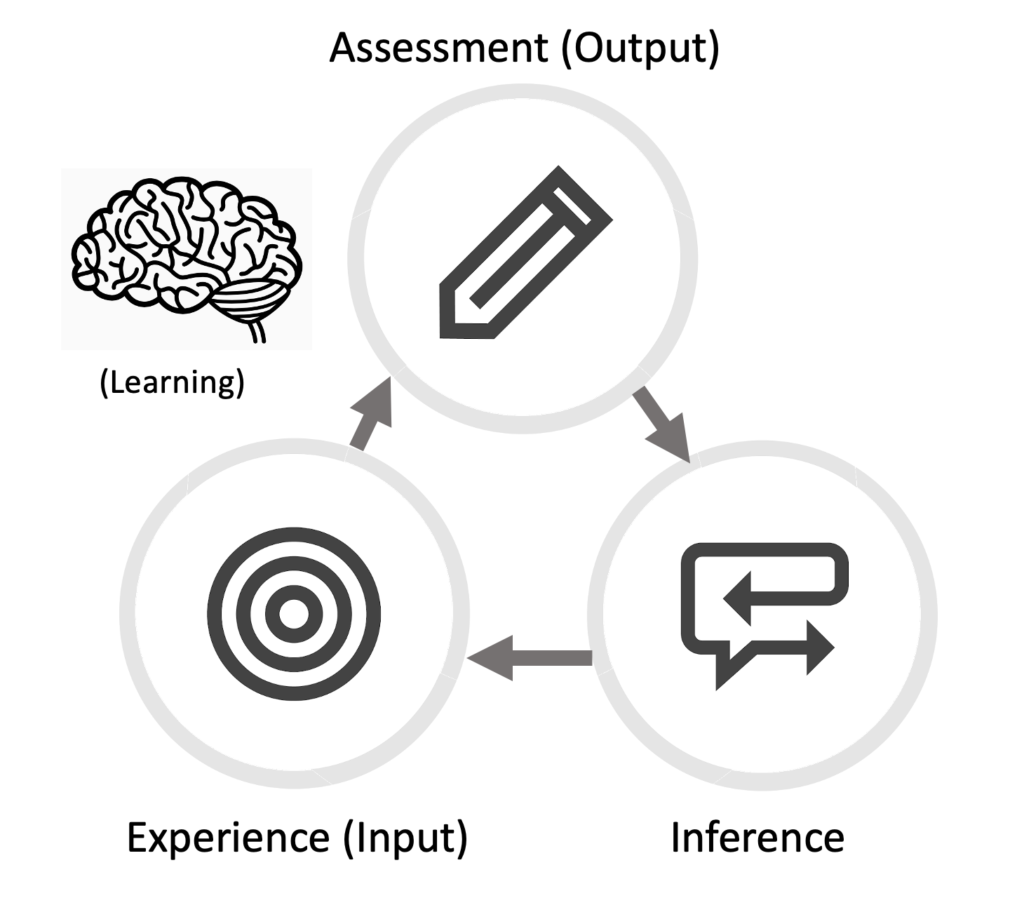
    Teaching is the craft of creating, optimizing, and sequencing goal-directed feedback loops that help learners learn. But because these loops are so intuitively available to us, we often don’t think explicitly about what we’re doing. Many of us don’t have a clear mental model for a fundamental task that we perform all the time. Even those of us who do can struggle to keep that model in our conscious minds and continue to refine it. It’s hard to refine your model if you can’t keep it front-of-mind as you’re testing it. And it’s really hard to translate it into a software information model.

    In my personal view, one of the most exciting goals of the OLI/ETX collaboration is the opportunity to work on this challenge of making a broad swathe of our tacit knowledge about educational processes explicit. On the software architecture side, the exercise of translating the very different learning experiences supported by OLI and Smart Sparrow into a common information model describing goal-directed learning feedback loops helps us generalize. I believe we are searching for the language of educational DNA.

    Let’s take that analogy seriously. In actual DNA, all of life in its infinite variety and complexity is encoded using just four letters in strands of DNA. I believe we can describe the basic, universal building blocks that encode learning in all its infinite variety and complexity. Of course, knowing those building blocks does not unlock all the secrets of life or learning by itself. But it’s a pretty big step in the right direction. An ambitious but achievable intermediate goal would be to be able to create and test any style of effective courseware design, including adaptive learning designs, using a single information design and architecture.

    The more important aspect of this aspiration is on the human side. If we can create a system that helps both educators and students translate the teaching and learning knowledge they apply instinctively into an explicit model, see the benefits that doing so gives them in terms of extracting more meaning out of educational contexts, and practice translating their tacit knowledge about teaching learning into explicit knowledge, that would be transformative. We would become better teachers and learners because we would be translating teaching and learning from arts to crafts and, when possible, to science.

    To sum up, I believe the software that is emerging from the collaboration between OLI and ETX can help educators and students become more effective at learning about teaching and learning while simultaneously creating an architecture that can implement almost any style of courseware on the market today and some that aren’t on the market yet. It can accomplish both of these goals by baking a model for the basic building block of teaching and learning—the goal-directed feedback loop—into every aspect of the platform, from the user experience to the deep architecture. This, in turn, will enable other capabilities that I will write about in future posts.

    If you want to talk about this (or any other aspect of the project), come to the Blursday Social webinar with OLI’s Norman Bier and ETX’s Ariel Anbar on this Thursday, 2/4 at 4 PM ET.

  • Next Blursday Social: Co-author of The College Stress Test

    Next Blursday Social: Co-author of The College Stress Test

    Last week on Blursday Socials with e-Literate LIVE!, we had the pleasure of chatting with Jeff Young, the creator of the Pandemic Campus Diaries podcast, which is still one of the best ways I know of to get a feel for the varied and changing impacts of COVID-19 on students and educators. (The latest episode dropped this week and I can’t wait to listen to it.) Over the next two weeks, we’ll be exploring topics of what’s coming and how to deal with it as campus communities.

    As I’ve written about in a previous post, we’ll have Inside Higher Ed editor and co-founder Doug Lederman this Thursday, October 22nd at 4 PM ET. Just about every major developing story about higher education crosses Doug’s desk. That puts him in an excellent position to talk with us about what he sees coming next.

    I’m delighted to tell you that next Thursday’s guest will be Susan Baldridge, former Provost and psychology professor at Middlebury College, co-author of The College Stress Test, and a strategy and change management consultant to college leaders. (You may have read one or two of her posts here on e-Literate.)

    Susan Baldridge

    Susan is in a great position to talk about how campuses are managing change—and how they should manage change—during these difficult times. She has a mastery of the financial, mission, and human aspects of the challenge. She is fascinating to talk to. So come talk to her!

    Remember, Blursday Socials are much more conversation and participation than broadcast. Think of it as being like trivia night at your favorite bar. There will be some organized activity, but a lot of it will be just connecting with friends. Some folks will be regulars, others will be semi-regulars, and still others will drop in occasionally. They start every Thursday at 4 PM Eastern Time. The bar closes at 5:30.

    The dress code is casual; BYOB.

    I recommend that you also subscribe to the iCal feed, which you can do by going to this page and clicking on the “iCal Feed” button on the bottom. I have events tentatively lined up for the handful of weeks, which I will populate to the calendar as they are finalized.

    Doug Lederman’s session is this Thursday, October 22nd at 4 PM ET. RSVP here.

    Susan Baldridge’s session is next Thursday, October 29th at 4 PM ET. RSVP here.

  • Some Changes will be Permanent

    Back in July, I wrote an uncharacteristically clickbait-y post about the possibility that Elon Musk’s Space-X Starlink might deliver rural broadband everywhere in North America this year. I got mocked a little, which I expected. It’s usually hard to separate the hype from the genuine revolutions.

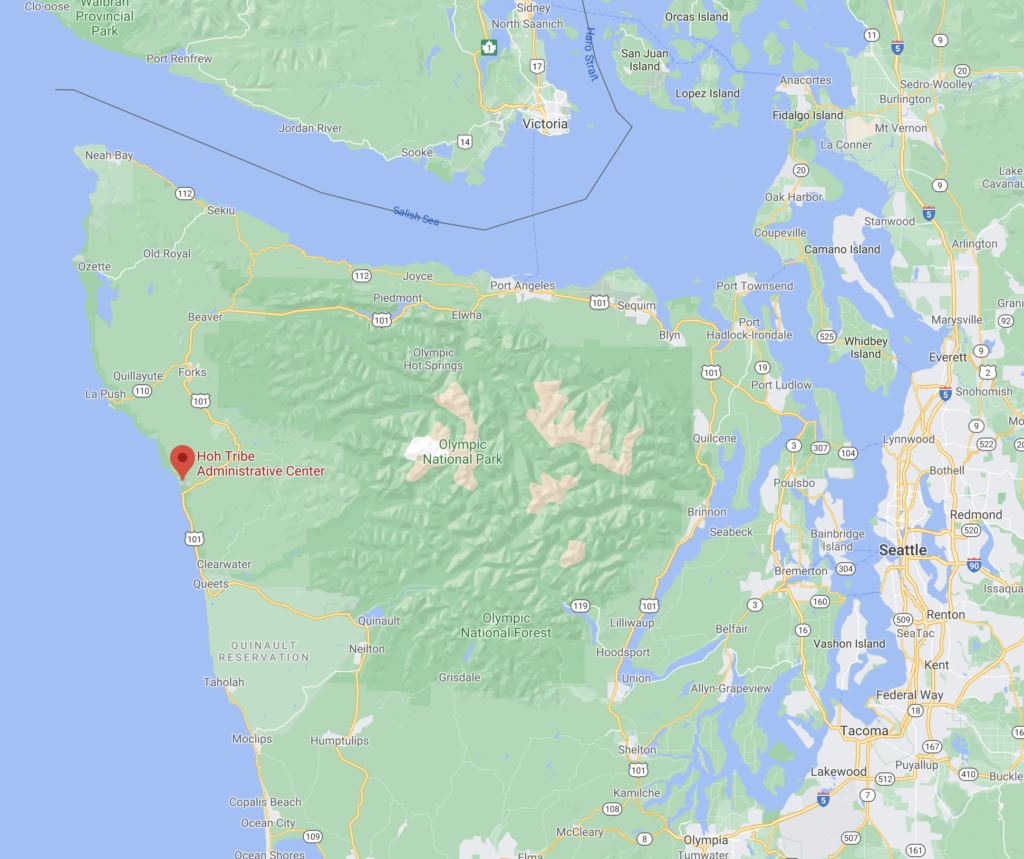
    Well, here we are in October, and Starlink is delivering 100 Mbps broadband with latency below 30 ms to the Hoh Native American tribe in a remote part of Washington State (a few hours west of Seattle, just south of Vancouver Island). While there still are some hurdles to be crossed, it sure looks like rural broadband could be available everywhere fairly soon. The policy issue will not be funding new cell towers or cable lines to make rural service available but subsidizing the cost of that service for poorer Americans.

    Meanwhile, Microsoft has announced that its COVID-induced work-from-home policy will become permanent for many employees. They will not be the last.

    By the time life returns to post-pandemic “normal”—which, according to Dr. Anthony Fauci, will be “toward the end of next year”—the world will have changed permanently in some profound and unpredictable ways. In higher education, beyond any major changes due to budget crises and/or policy changes in a new administration, I think we are likely to see the effects of a massive de-urbanization trend over the next three to five years (and beyond). As white-collar workers—and some middle-skills office workers—no longer need to live near their offices, as progress toward infrastructure for remote working accelerates, and as the scare of the pandemic (and potentially post-election violence) encourage people to spread out, the implications for higher education, the future of work, politics, and life are incredibly hard to predict.

    But a trend toward de-urbanization would almost certainly drive more online and blended learning as students are increasingly spread out. This won’t hit all segments equally; some traditional college-aged students will still want to “go away” to school. But the premium paid for that experience will become increasingly difficult to justify. Meanwhile, digital-forward pedagogy is likely to become a core competency for the majority of academics.

  • Reports of Higher Education’s Death Have Been Moderately Exaggerated

    Reports of Higher Education’s Death Have Been Moderately Exaggerated

    There are two polar opposite narratives about the future of higher education that are both gaining traction at the moment. Apparently, either everything is going to change or nothing is going to change. Neither storyline is right, although neither one is completely wrong either.

    One of these stories comes from a traditional academic perspective while the other comes from an EdTech perspective. Take a moment and think about the respective blind spots of each of those two perspectives. Guess which one arrives at “everything is going to change” and which one arrives at “nothing is going to change.” That’s the easy part. Too easy, in fact. That level of predictability is a strong indicator of motivated reasoning or some other cognitive bias.

    But I digress. Here are the harder questions: How are each of these perspectives wrong and where are they each right?

    The lasting effects of COVID-19

    There’s a lot we don’t yet know of the effects of the pandemic on higher education beyond this year. But barring major policy changes at the Federal level, we can now begin to make some educated guesses.

    First, some of the students who are taking the year off won’t come back. That could be a bigger change than it seems. While I haven’t yet seen reliable statistics on college deferments this year, the anecdotal reports I have heard range from 5% to 20%, depending on the type of college. (More expensive institutions that emphasize the value of their residential college experience seem to be getting hit a lot harder than access-oriented institutions that already had mature online programs.) On the upper end of the scale, twenty percent is a pretty big hit. We don’t know what the average will be.

    But that’s not even the whole story. Deferment numbers only account for first-year students. They don’t reflect other types of gap years. Students in the middle of their college education may choose to take a year off for safety or financial reasons (or because they don’t believe they believe that they’re getting their money’s worth from COVID-disrupted education). The latter problem will end when the pandemic ends—if the students don’t become alienated from their college by the way it is handling the situation—but the former to problems will certainly have after-effects. The twin hammers of the pandemic and the recession have impacted the long-term wellbeing of college-going students and their families in ways that have yet to be reliably measured. We don’t know when these effects will tail off. The health crisis may be largely abated by fall of 2021—heaven help us if it isn’t—but the economic effects on many students and their families will almost certainly not be. Some students may have to delay or even cancel their plans for full-time college.

    Second, many colleges and universities were already financially fragile and becoming more so before the pandemic hit us. Here again, there are polarized narratives, both of which are mostly but not completely wrong, and both of which look to be driven by motivated reasoning. For a good, level-headed, data-grounded analysis of the baseline situation, I recommend reading The College Stress Test, which was co-authored by my friend and colleague Susan Baldridge. The nub of it is that, while a significant number of colleges and universities are headed toward trouble, most were far from going out of business and had time to make course corrections before demographic changes put them in a financial position that would be hard to come back from. (I’ll have a little more to say about what “making course corrections means” later in this post.) But that was pre-COVID. These institutions have now experienced significant financial shocks, including both the loss of student tuition and the expense of trying to make their campuses as COVID-safe as possible. Many—though not all—are also likely to experience aftershocks as students and their families continue to grapple with the economic aftermath.

    We don’t have the data yet on how much COVID will impact university budgets. It’s simply too early. (Also, there won’t be one global answer. Different schools in different niches with different management histories will be in very different situations.) But having talked to some friends who know a lot more about college finances than I do, I’m going to guess that the fat part of the bell curve of colleges will need to make budget cuts ranging from 15% to 30% over the next one to three years. (Institutions on the far left end of the bell curve were already financially unsound and will disappear, while those on the right end—the Harvards, MITs, and Stanfords of the world—will likely be OK.)

    And what will be cut, exactly? Well, there’s really only one thing to cut at a college or university. People.

    Having examined an unscientific sampling of annual college and university budgets, I estimate that between 60% and 80% of the total budget is payroll. (Teaching-oriented colleges tend to have a higher percentage than research universities.) It will be nearly impossible for institutions to make 15% to 30% cuts in their budgets without making painful decisions about laying off colleagues and shuttering or radically changing departments and programs. There just aren’t enough non-human costs to cut out of the budget.

    But that’s a double-edged sword, because people are also the key to keeping the institution viable. People recruit students. People teach them. People keep them engaged and on track to graduate. If you cut the wrong people, then the programs which attract the most students may become less attractive. Or may not get seen by prospective students. Retention and graduation may rates drop. And trying to replace human support with software risks accelerating the decline if it is poorly conceived or executed. We are already seeing complaints by students in premium schools that they believe their online college experience is currently little different from for-profit colleges like the University of Phoenix (which is meant as a pejorative by these students).

    “Sustainability” achieved through cannibalism is not sustainability.

    While the majority of colleges and institutions are far from doomed, they are also far from safe. Hard decisions lie ahead.

    “Scale” is (mostly) not the answer

    The ugly truth is that colleges and universities have been avoiding difficult conversations about organizational design and sustainability—which would require talking about hiring and firing decisions—for decades. The focus has consistently been about growing revenues using whatever they already have (or can borrow from an OPM). Everybody wants to talk about revenue. Some folks want to talk about tuition pricing and discounting. Nobody wants to talk about cost.

    So what happened instead? Academia produced about 397 different versions of “sell more degrees on the internet!!!” The first gold rush was asynchronous online degrees about 15 years ago. That hit its limit. Apparently, billions of people in India and China aren’t lining up to earn an online degree in turfgrass management from a mid-tier four-year college that nobody who lives more than 150 miles from the campus has heard of. In fact, there aren’t hundreds of students lining up to take that turfgrass management program 1,000 or even 500 miles from that college. Some colleges grew enrollments during this period. Some proved to be sustainable, while others less so. The aforementioned University of Phoenix looked like it might reach half a million enrollments in 2010 before deflating down to a third of that size in 2016 (which, let’s be honest, is still pretty big).

    The second gold rush was the MOOCs.

    I’ll say this in defense of MOOCs: They still exist. Enough people find them useful that they are still being created and run. But they have faded into the background, as any purported silver bullet tends to do when it turns out to be just one arrow in the quiver.

    The third gold rush was the Online Program Management (OPM) companies. This really started as an offshoot of the first gold rush but then mutated into something else. And like the others, it grew for a while. But it turns out that there’s a limit to the number of students who are willing to pay $40,000 for an MSW degree. And for each university offering such a degree, their geographical reach of their brand is limited. Even if they are one of the top brands in the world. Maybe they can enroll students from 300 miles away rather than 150. But 3,000 miles…? It turns out that if you live on the West Coast, chances are good that you’d rather go to Stanford rather than Harvard, and the reverse is true for East Coast residents. And apparently, the fact that students don’t have to leave their homes to take online programs from any university around the world doesn’t change this fact. So the easy gold in that vein has been largely mined, at least in the US.

    A parallel wave to these has been the rise and falter of the so-called “mega-university.” First it was supposed to be Western Governor’s University (although University of Phoenix could make a good case for pride of place). Then it was going to be ASU. Then SNHU. They’ve all done well and are likely to grow more as they fill needs left by colleges and universities that are faltering. I wish them long life and happiness. But there is no evidence in sight that we will have a massive consolidation with a million or more students attending one university. The mega-university phenomenon could happen, but so far there’s no strong evidence to suggest that it will.

    Each one of these efforts added an arrow to the quiver of strategies for meeting all educational needs of all learners while boosting the sustainability of the colleges and universities. (In the long run, these two goals will tend to line up with each other.) Each was a significant innovation in its own way. But arrows in the quiver are not the same as silver bullets. There are no silver bullets and there will not be any in the days to come.

    Why online classes won’t fade away

    There is a growth path for many of these schools, but it is neither an easy solution nor a quick fix. The reality is that many learners who are within these institutions’ geographical brand reach have educational needs that have not been met. In fact, there always have been. Some were never able to complete college for a variety of reasons. Others need graduate degrees. Increasingly, still others need something significant that’s less than a degree to help them move up or on in their careers. They need some chunk of knowledge that may or may not be wrapped up in an official certification of some kind. And now, we will have students who miss their window to go to full-time residential college due to COVID and its economic impact on their lives. These would-be students have jobs and families and other obligations in their lives. They will need more flexible educational opportunities. But not the same opportunities. The students that I just described are very different from each other. They will need different educational experiences and supports.

    If colleges and universities that want to minimize the pain of cutting good people—and make no mistake; there will be painful cuts no matter what many of them do—then they will have to reach these students where they are. Reaching more students means increasing enrollments, which means increasing revenue, which means at least a chance at saving (or recovering) jobs. To do that, colleges and universities will need to build, improve, and differentiate their online college experiences.

    This is an opportunity to grow not so much by scaling as by diversifying, and by rebalancing the academic portfolio. Some programs will no longer be viable and will need to go. Others will be important enough to the sustainability and mission of the institution that they will merit additional investment. Still others will need to be re-imagined.

    But if colleges and universities can think through what their institutions should look like to serve their enduring missions while meeting new educational needs in new ways, then they can survive this difficult period. Eventually, they can learn how to thrive again with their academic souls intact.

    Tech-enabled rather than tech-driven

    The scenario I’m describing is different from both the academic arcadia in which every rare gem of a program is preserved in amber for the sake of its intrinsic natural beauty and from the EdTech fantasy of disrupted everything taught by Professor Skynet, sponsored by your good friends at Tinder. ((I know, I know. I’m being unfair. Somewhat. But only to the side that you and I identify with. Those other folks are obviously captive to some kind of motivated reasoning. They’re the crazy ones.))

    One challenge to this scenario is that delivering online education with quality is hard. Institutions that go this way will have to redirect a substantial portion of their limited and dwindling budgets to online course design experts, online student help and advising resources, various types of technology, and above all, to figuring out how all the pieces fit together into a journey that is navigable by the students.

    Rather than aping the business world’s drive to “scale,” the imperative—and craft—that we ought to be copying from “industry” is their customer focus. Students aren’t exactly customers, but they aren’t exactly not customers either. I’m specifically thinking about the word “customer” as in “customer needs” and “customer experience.” What are the needs that would drive students the institution wants to reach to consider enrolling for a new credential program and/or a different educational experience? What educational experiences would fulfill those needs? How can those experiences be delivered so that they fit into those students lives, rather than forcing the students to contort their lives in order to accommodate their educational program?

    How do students navigate from clicking the “buy” button (i.e, matriculating) to package delivery (i.e., being able to show up for the first day of class)? There is no USPS for them. ((Let’s hope there’s one for us.)) How do they navigate their online class experience, with pieces in the LMS, pieces in the digital textbook, pieces in various add-on tools the instructor uses, and so on? How do they get help, stay on track, or find a new track if the one they’re on isn’t working for them?

    To survive and thrive in the 21st Century, every college and university should be literally designed by academic stakeholders around their answers to these questions. EdTech can help with all of these problems but solve none of them.

    From a user experience perspective, the design of even the traditional on-campus college experience is probably worse than going to the DMV. A day getting your driver’s license renewed may feel like it sucks four years out of your life. A traditional residential college degree requires four actual years of persistence navigating dysfunctional bureaucracies, completing administrative workflows that nobody has ever actually ever thought of as workflows, and bushwhacking through mazes of administrative and academic software that was (often poorly) designed to make somebody else’s life easier. Some of the reasons that many traditional college-aged, middle-class students have made it through this mess anyway are (1) they had college-educated parents who could help them, (2) they were raised by college-educated parents who taught them the tricks and games that have nothing to do with education but everything to do with navigating this kind of irrational world, (3) at 18 years old, they have the highest probability in their lives of having nothing better to do, and (4) if they can make it through the bureaucracy, the rest can be pretty great. (Also, (5) many colleges are apparently willing to burn through great academic employees who will almost literally kill themselves to help students succeed in a system that can feel like a performance art project on Kafka).

    One huge reason why achievement gaps exist is that post-traditional students are less likely to have the time, skills, or family support needed to navigate the non-learning-related aspects of their college’s user experience. Likewise, college-educated professionals who are trying to get a credential in their “spare” time often have limited headroom or tolerance for navigating poorly designed administrative or course experiences.

    The online education experience is often a lot worse. But it doesn’t have to be. In fact, it shouldn’t be. It should be better in some ways. Yes, there is magic in being on campus that is lost online (although there are many kinds of magic in the world). Yes, it is harder to do…well…anything that requires serious and sustained concentration while working from home, where your family and your job responsibilities are constantly pecking at you (as we are all discovering). But on the other hand, digital gives us an opportunity to discover, analyze, and respond to student needs and student problems with clarity and speed that are simply not possible in the analog world.

    We could have truly student-centric institutions—not just in intention, and not just in philosophy, but in the fundamental way that a college or university makes decisions about every aspect of what it does, from the design of its academic programs to sealing the many cracks that can trip students up during their academic journeys. There would still be professors teaching. There would still be disciplines and courses. There would still be a university. But the academic experience could be continually refined and improved with the level of obsession that a company like Apple puts into improving every aspect of their customer experience. Gaining that kind of reputation is how colleges and universities can attract students who otherwise might not come and keep them coming back for twenty or forty years instead of two or four.

    We have to push through the current pain, through the hard decisions, through the reimagining, and through the redesigning and reimplementation if academia is going to survive with its soul intact. This is a lot like climate change. We have a little time, but not a lot of time. We won’t necessarily fall off a cliff, but we can start rolling downhill fast. And there is a cliff at the bottom of that hill. Technology is essential, but it is not magical and will not save us by itself. And pretending the problem doesn’t exist or will magically go away certainly won’t help. We all have to take responsibility and start changing the ways in which we go about our lives, both individually and, most importantly, collectively.

    Most colleges and universities will not die off in the next three years. But many are unhealthy, will have to make painful cuts, and could put themselves into death spirals if those cuts are made without a clear vision of a healthy future state that their stakeholders can work toward together.

    As we are being reminded every day by the news, the future is in our hands.