The “Ed Tech” category includes posts about educational technology products themselves, including LMSs and other learning platforms, adaptive learning and other digital curricular materials products, learning analytics, and educational apps of all types. It also includes technical aspects of ed tech products, especially interoperability.
In this post, I’m going to tease out some of the implications that Newton doesn’t talk about.
What we do and don’t know
Before I do that, though, it’s worth reiterating some of the basic facts and unknowns covered in Newton’s column. An author for Cengage whose book sold well enough to go through nine editions decided to take his tenth edition to OpenStax and publish it as OER. The author, John McMurry, characterized it as a tribute to his son who passed away. Cengage is outwardly supporting McMurry’s decision and is promoting the added value of WebAssign, which Cengage owns.
We don’t know the degree to which this decision was amicable and mutual. For reasons I’ll get into later in this post, it’s possible that both sides were comfortable with it. It’s also possible that McMurry’s contract came up for renewal and Cengage decided to make the best of his decision to bolt. We don’t know and probably never will. We also don’t know if other successful authors will follow suit. I mean no insult to McMurry when I observe that he profited from the first nine editions of his book before opening up the tenth. I don’t blame authors for wanting to be compensated for their hard work. That said, authors who have signed with a publisher more recently haven’t gotten anything like the kind of deal that McMurry likely had. So incentives are shifting.
The platform theory
Newton, following the cues from the press release, sees this as a movement of publishers selling their platforms as the underlying books commoditize. The problem with this theory is that publishers across the sector have been disinvesting in their platforms. WebAssign was built in 1997 and I don’t have reason to believe that it’s been significantly upgraded in quite some time. Cengage is far from alone in this. Pearson’s platforms are ancient too. I’m hearing and seeing that, by and large, all the publishers are backing off tech investment. Even McGraw-Hill and Wiley, which have been the most tech-forward of their cohort in recent years, appear to have slowed investment.
This is not to say that Newton is wrong or that Cengage is disingenuous about promoting the package. Rather, it should be considered a holding action. Cengage, like several of its peers, is owned by private equity. While these companies can support investment and acquisition, they tend to marshall their resources very carefully. Especially for assets that show a consistent trendline of shrinking businesses, like textbook publishers. By and large, the publishers are milking their aging platforms for as much revenue as possible while investing as little in new tech as possible. It is not a new strategy.
Yes, it’s true that prices have come down a great deal on textbooks in recent years. But $41 to rent a PDF?
Of course, that’s not the option Cengage wants students to choose. The first option on that page is a subscription to Cengage Unlimited, which is $69.99 for a four-month all-you-can-eat subscription. They’re trying to move to a model where they don’t care if they lose pricing power on individual items because they can charge for the bundle.
This is a challenging model for a publisher to make worthwhile for students. Either they have to ensure that the students’ professors are adopting several Cengage products every term, which is challenging due to academic freedom, or they have to provide more products that are direct-to-student, in which case they’ll be competing with the likes of Quizlet and, increasingly, Course Hero.
The bottom line
Cengage has a courseware platform called MindTap. They could have invested in creating a more seamless experience with more context by building on that platform. But they didn’t. That tells us something about their strategy. For them, this is all about the economics of Cengage Unlimited.
Publishers are struggling. All of their moves right now are defensive. (By the way, I predict that Pearson will sell off its higher ed business—possibly including their OPM—to private equity within six months.) The problem is that, given the natural path that the industry is taking, the student experience is still terrible and the cost, while better than a few years ago, is still hard to justify given the quality of these tech-enabled products.
And as far as I can tell, the sector is not moving toward replacing them with something better.
Correction: An earlier version of this post included references to Aktiv Chemstry, which also is working with the McMurry book. Those references were removed due to inaccuracies.
I was surprised my previous post on workplace learning got some attention from folks in the field. Apparently, I struck a nerve with problems that are still difficult some twenty years since I worked in that subfield. And yet, there are ways to tackle these problems. New tools combined with new approaches can address reusability, quality, and rapid update challenges in novel and more effective ways.
In this post, I will respond to a couple of comments on LinkedIn. I’d like to see if we can build a dialog.
What Michael Feldstein is saying gets to the heart of corporate learning and what I’m calling the “dark ages of training.” Its genesis begins with the simple fact that too many orgs won’t just say “training” anymore. Like somehow this became a bad word at some point. And for too long, people who aren’t training experts are involved in making decisions about what training interventions should be. The business has little to no clue about what, when, and where training should be. So, let’s get back to some fundamentals. We are chartered with helping to increase performance. We need to be selective in how we do that. And we need to say no when we know it won’t work. And we train employees. And hopefully, they learn how to perform better in their work. There’s nothing wrong with the word “training.” Now, don’t get me started on the whole skills movement.
Given how long I’ve been out of L&D, I can only speculate regarding what’s on Brandon’s mind for parts of this comment. For example, I wish somebody would “get him started” on “the whole skills movement.” I suspect we have a complementary problem with the competency movement in higher education, particularly where it claims to intersect with job skills. But I can only guess.
The distinction he draws between “training” talk and “learning” talk seems more legible to me. Higher ed underwent a roughly similar transformation when we stopped talking about “teaching” and switched our language to focus on “learning.” There was a lot behind this switch, some of which was good. For example, “teaching” focuses on the performative act—the intervention—while “learning” focuses on the outcome. “Learning” also encourages enlisting the learner as an active stakeholder with motivations, goals, and a need to participate for learning to occur.
But the switch led to a lot of fuzzy-headedness too. On the vendor side, textbook publishers began to realize that students who hate their products can be very creative in finding ways to avoid buying and using them. So they focused more on features that students might care about (including, reluctantly, price). But in doing so, they missed the core complaint that students were buying products their instructors weren’t using in meaningful ways. In other words, the textbook contributed to breaking the social contract between teachers and students about the value of the work that teachers are assigning but not meaningfully incorporating into their teaching. The real problem is that the products fail to provide the educators with tools they can easily make an essential part of what they believe to be their core teaching work rather than an ancillary and a necessary evil. They therefore don’t use them much or well in their teaching. Students, in turn, seeing them as a waste of time and money, don’t use them either and increasingly don’t buy them. Educators, seeing that students are not using the products they are assigning, rely less on them, for example by replicating the reading in class lectures. Which perpetuates the vicious cycle.
On the teaching side, the mess gets worse. Educators find themselves on a slippery slope from engaging with the students as active participants to catering to their needs. This is how I find myself on a stage at a major conference debating whether it is more critical for composition professors to teach students how to write well or to listen to their desires and teach them whatever they want to learn.
That’s a real thing.
I suspect the dynamics in corporate L&D have some differences. First, providing education as an HR benefit is back in fashion now after a few decades of corporate neglect. This is an important function but entirely different from training employees on essential and immediate skills they need to perform their jobs today. Second, mediocre, braindead approaches to Design Thinking seem significantly more prevalent in the corporate world than in higher ed. One lousy design thinking workshop seems capable of inflicting massive brain damage on virtually everyone exposed to it. Lost in a haze of corporate New Age-ism, the cultists seem to forget that the two key words in Design Thinking are “design” and “thinking.”
There are also nuances by industry and even department. L&D for manufacturing line workers is very different than L&D for pharmaceutical chemists. While most folks who a computer or robot can’t replace are knowledge workers these days, the degrees of freedom and need for consistency still vary pretty dramatically.
And finally, there is a legitimate and challenging trade-off between capturing the ever-changing workplace know-how and business processes that the frontline workers see most clearly and maintaining the effectiveness and quality control around knowledge and training interventions that professionals handle best. This is not entirely unlike the tension between the textbook publishers, who can only manage to update their editions every five years, and say, the biology professors whose knowledge of disease and the immune system has been evolving at an astonishing rate since the start of COVID. In the current higher ed system, either we accept the chaos of everybody teaching what they think is the latest understanding, or we drive the pace of updating education based on the ability of the centralized publisher to keep up, given their heavy processes.
The barrier is not technology in either the corporate world or higher education. We have the raw technological building blocks we need to create a system in which innovation is captured at the edge, pulled into the core for collaborative review and refinement by professionals when that is called for, and then pushed back out to the edge for use and adaptation when needed. It’s possible to create easy authoring, scaffolded by UX and AI/ML, that lowers the barrier for subject-matter experts to develop first-iteration learning experiences with some educational validity.
Imagine an authoring system that does something like the following:
A subject-matter expert (SME) creates some content.
The system says, “Hey, it looks like you’re trying to teach about X. Based on what you’ve written, here are some possible learning objectives. What do you think? Do you want to add them? Do you want to edit them?”
Then the system says, “OK, now that we know what you’re trying to teach, it would be good to assess the learners. Here are some suggested assessment questions. What do you think? Do you want to add them? Do you want to edit them?”
Finally, the system says, “OK, you have content, learning objectives, and assessments. Let’s look at them side-by-side. Do they look right together? Do you want to change anything? By the way, I have some additional content (or learning objectives, or assessments) that seem to fit with what you’re trying to do. Would you like to see some suggestions?”
These sorts of algorithms are in use at scale today in the textbook industry. They work pretty well. But they’re not being used in this way to help SMEs in the field.
Now imagine that the course draft could be shared with the L&D department. They could ignore it. Maybe it’s just fine as-is and doesn’t merit the attention of a professional learning designer. Maybe it can be improved. Maybe it’s OK to run for a while, but the learning designers (or learning engineers) want to look at data regarding how well the learners perform on the assessments over time to see if it needs fine-tuning. What if they could engage with the SMEs directly in the content, like comments on a Google Doc? Track changes? Make versions? Compare different versions? Do A/B testing for the effectiveness of the training? Only a subset of courses would need any of this, and a smaller subset would need most or all.
Let’s go a step further. Suppose the libraries of premade content L&D departments license were designed to work with such a system. Suppose you could edit a course you licensed to make more sense in your context. Suppose you could fork it. Test it for continuous improvement. I’m not talking about just moving around blocks of locked-down content. And I’m also not talking about writing your course with the help of a licensed library of little tiny bits. I’m talking about taking the 80% of pre-created content and creating or editing the 20% you need to be different, whether at the word, sentence, lesson, or module level. For example, maybe a course is good, but the terminology differs from your organization-internal vocabulary. Why can’t you change just that? It could make a big difference.
The existing tools seem to be designed to solve the wrong problems. A cursory scan of the leading corporate L&D authoring platforms and content libraries suggests to me that they still are designed for traditional training development workflows. Sure, they have easy authoring templates to lower the barrier to creating basic training. But what I’ve seen so far is skin-deep. I don’t see sophisticated workflows for creating real collaboration between the field and the learning professionals. I don’t see any serious effectiveness analytics or continuous improvement tools. The content might as well be SCORM packages or Authorware applications. As far as I can see—again, with the significant caveat that I haven’t seen much yet—neither the cloud nor AI/ML have changed the fundamental paradigm.
But they could.
Context
Mirjam Neelen, Head of Global Learning Design and Learning Sciences at Novartis, wrote,
One sentence that stood out for me: “the key missing ingredient is context.”
Before the term “reusable learning objects” came into vogue, I remember reading an article in Performance Improvement Quarterly called “Instructional Design Paradigms: Is Object-Oriented Design Next?” The idea was to take the principles of (then still relatively new and hot) object-oriented programming (OOP) and apply them to content. Instead, we got a whole bunch of tiny bits of content with “metadata.” Tags. Labels. You know the tools you could (at least theoretically) use to organize your email inbox? Yeah, that’s roughly what we’re talking about.
If you were writing a series of explanations (like a training manual, for example), you wouldn’t write one paragraph at a time, isolated from the others, and then decorate it with tags. That’s not how we craft explanations, never mind learning experiences.
Rather than composing, we should be thinking about decomposing. Suppose you started with the training manual, course, or whatever, and you broke it down into chunks that made sense. That you might reuse. Suppose you applied both human judgment and AI/ML to update your tags based on new usage contexts continuously. And suppose you expressed these relationships not just in tags but in a language designed expressly to describe relationships—i.e., context—like, for example, xAPI?
On the surface, we would have an authoring environment that feels…like an authoring environment; only it makes good recommendations about changes (like the ones I describe in the bulleted example in the previous section). Under the hood, it would have to be quite different. By tagging little bits in isolation, we’re losing 95% of the context that can help us understand where and how content is useful (or whether it is useful at all). Everything about the system would need to be designed to track context, relationships, and knowledge gained through using and reusing it in different learning contexts. I have yet to see much of that in the corporate market so far (and I’ve seen precious little of it in the higher education market, which I know much better). Where it does show up, it’s generally in highly specialized adaptive learning platforms that are more optimized for creating that magic “Netflix of education” than for reuse and continuous improvement. It’s hard to build these systems so they’re flexible and easy to author and edit in, even if that’s a primary goal (which it usually isn’t).
How you know when you’ve got it right
I don’t mean to slam the platforms in the market now. First, I don’t pretend to be current on today’s offerings. Second, when I do look at platforms, whether they’re mainstream authoring platforms like Articulate Rise, course delivery platforms like LinkedIn Learning, or more niche platforms, I see good work, and I see bits and pieces of what I’ve described above. Authoring and delivery have gotten easier in the past two decades. People are thinking about collaborative workflows and bringing SMEs into the creation process.
What I don’t see is a change in the gestalt. I see tools designed to optimize the same fundamental workflows and approaches that L&D departments had 20 years ago. You might be able to build much more polished training courses much easier with Articulate Rise than you could have with Authorware. But I don’t see how it would fundamentally change what kinds of courses you would build, how you would build them, or how you would figure out what to improve or what to build next. And I certainly don’t see how it helps to do more than incrementally improve the scaling problem by making authoring faster and easier. I don’t see how it fundamentally changes the dynamic.
That’s…odd. The old “If Hewlett Packard knew what Hewlett Packard knows” quote is more accurate than ever. We have the technology that can enable us to break out of this box now. We seem to have a failure of imagination. The same is true in higher education, of course. Different idiosyncracies drive it. But the higher education sector is caught in the same problem of being caught in a locked-down paradigm.
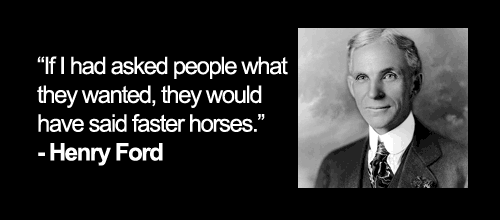
But it’s a bit of a chicken-and-egg problem. We get the tools we ask for, and then the tools nudge us toward specific ways of working—which were probably the same ways we were working when we asked for the better tool. Henry Ford famously (and probably apocryphally) said, “If I asked people what they wanted, they would have said faster horses.”
We’ll know we have it right when we see people work differently and ask for different kinds of improvements to their tools. The comments on the LinkedIn threads provide us with some clues in this regard. Let’s start with Ray Jimenez, Chief Architect and Founder of Vignettes Learning:
Thanks Mirjam Neelen we know all along, something is broken with L&D practices. When we focus on the workers’ context, almost always our L&D solutions, content, tactics become obsolete. Context will guide us, our north.
“Something is broken with L&D practices.” Yup. That’s one reason why I left. Twenty years ago. What is that something? It’s the ability to be responsive to context and real-world, ever-evolving needs of workers and teams. Bartlomiej Polakowski, Senior Learning Architect at Amazon, responded to Mirjam Neelen,
Totally agree. Most companies concentrate on tools and content instead of context.
I observe this trend with purchasing more and more ..and more of[f] the shelf training every 5 years. First there were content houses, then micro learning platforms, LXPs, recently I read about nano learning services (these are micro “microlearnings”). At the end employees go and ask a colleague for help or check Google.
When is taking a course more helpful than looking something up on Google or YouTube or asking a colleague, particularly when you’re looking for knowledge and not just a credential? That’s the bar.
So what options do L&D professionals have to respond to this need? Natalia Alvarez, a leadership and communication consultant, writes,
This is something that I consistently see. Solutions are not relevant because they don’t talk to the changeable scenarios that people are facing.
These days I tend to spend plenty of time trying to talk to the people who attend my workshops to truly understand their mindset, narratives and context. I’m becoming a student of the impact created by the learning experience that I’ve designed.
I used to think that I could learn, reflect, teach and get feedback and now I need to expand the circle and study feedback and impact using narrative, context and mindset approaches. Listening has never been more relevant than today, or at least to me. Thanks for all the great content that you share here Mirjam!
First, notice that she’s talking about face-to-face training sessions. In human-facilitated L&D, you can respond to learner needs flexibly. But even there, you’re often walking in semi-blind. You do your best to conduct a needs assessment and prepare for your audience, but you are still creating training somewhat in a vacuum. Getting it right is always a crap shoot. That’s not Natalia Alvarez’s fault; it is simply the best one can do with the available tools.
The fundamental problem is that L&D intervention development is treated as a separate, after-the-fact process divorced from actual business processes. With AI/ML tools like Microsoft Viva and SharePoint Syntex being incorporated into standard productivity tools, it is becoming increasingly practical to capture business pain points and important topics that identify continuous improvement opportunities and provide context for L&D needs assessment. Tools can then simplify the capturing and fleshing out of field knowledge into training modules by SMEs without demanding more time than they can give or more expertise than they can have. These first iterations can be worked on, curated, and improved, either in simultaneous collaboration or after the fact, by L&D professionals. This could be a continuous cycle.
In other words, we’ll know we’re succeeding when L&D becomes integrated with and inseparable from the business processes and knowledge work it supports in near-real time.
This long dreamed of vision among knowledge management and performance improvement geeks (of which I used to be one) is now finally practical, given the tools that exist today. It will not be easy. The design challenges of building the software and change management challenges within adopting organizations are both formidable. But they are, finally, surmountable.
The phrase “empowering educators” is a cliché that usually doesn’t mean much. We could use the language of business—as I have—to describe educators as knowledge workers and think about optimizing their workflows to reduce the amount of time they spend on low-value tasks and increase their opportunities to apply their expert judgment to high-value tasks. That formulation provides a more specific, testable, and potentially impactful description at the risk of turning off a lot of educators with the language. Having been both a classroom educator and a corporate knowledge worker myself, I believe these are two sides of the same coin. In my most recent post on the Argos blog (following my post that introduces what will be a four-post arc), I explore this topic with some concrete examples.
If I weren’t co-founder of Argos, I would be publishing these posts here on e-Literate. Argos, for me, is an effort to actually bring into the world some of the ideas that I’ve advocated for here on this blog for the better part of two decades. It’s an attempt to apply everything that my co-founder and I have learned about the barriers to change to make a real and lasting impact on education. Which is all I’ve ever wanted, professionally. I never had any inherent desire to run—or even work in—a start-up. It just turned out to be the best vehicle we could find for accomplishing something as important as it is hard to pull off. That said, because I am the co-founder of Argos, a commercial venture, I will maintain some separation between e-Literate, EEP, and Argos even as I try to keep all the plates spinning and bring these efforts together when doing so will further the mission.
Relatedly, I won’t be announcing Argos posts here on e-Literate for much longer. I want to get back to writing posts here while maintaining an appropriate level of separation. My current plan is to stop announcing my Argos posts here at the end of July. So if you like what you’re reading over there, please subscribe to that blog.
As we try to make sense of changing student enrollment numbers post-COVID and think about what “quality education” means in a pervasively blended education, part of that work requires us to think about “data” the way we would think about our senses and sense-making in a face-to-face class. My new post on the Argos website describes one way the platform enables our educator/publishers to do that and provides some eye-opening early data about how well that strategy is working.
The last year has been an interesting journey for me in the world of venture capital. I had come in contact with it in various ways before but not nearly as intimately as I have as the co-founder of a start-up. While I’m still very much a novice in the space, e-Literate has always been about sharing what I’m learning rather than what I know. At this point in my journey, I feel I have learned enough to take an earnest first stab at analyzing the changing EdTech venture capital market and making a few suggestions.
I freely admit that this post is motivated partly by my direct experience as a fairly new founder and that it is self-serving in the sense that it reflects the ways in which my partner and I have thought about building our company.
Context and trends
The venture capital world is currently experiencing turmoil similar to (and somewhat tied to) the turmoil in the public stock markets. Companies that VCs invested in are becoming less valuable. Since it’s not at all clear that we’re at the bottom of that trend, investing in new companies now is tricky. And many of the investors in the market now have never faced an environment like the one we’re in now. Venture capital has had a remarkable decade-long bull run. The mid-level VCs, and even some of the general partners, were not in the game 22 years ago during the dot-com bust.
At the same time, higher education is also in uncharted waters. The effects of the pandemic were weird. Enrollments were down. But not equally everywhere. Increased adoption of EdTech was enormous. But not necessarily the products that folks expected to be big hits pre-pandemic. We don’t know what will happen with blended and online learning. I personally expect that it is here to stay almost everywhere. But in what balance? Will the technologies remain the same, or will they shift as schools move out of emergency remote teaching mode and focus more on brand and quality? What does it look like on residential campuses? Will students still pay for housing? Is the answer to that question different in different segments?
We are facing an economic slowdown and possibly a recession. As unemployment numbers revert to historical norms, will we also see the normal historical trend of education enrollment increasing counter-cyclically? It seems like it should, but I’m not sure. And will we see a move to more alternative credentials? I don’t know.
All in all, it’s a challenging environment in which to make risky investment decisions.
In the larger VC world, the flight to safety means investing in more profitable and less risky companies. And trying to buy these companies at a bargain. I suppose it’s roughly equivalent to stock market investors buying large-cap value stocks that pay dividends. And also like investors in the public markets, VCs are holding onto more cash.
But every sector is its own world with its own investment risks. Does flight to quality mean the same thing here as it does elsewhere?
Yes and no
The universal rules are (1) play it safe overall, (2) keep your powder dry, and (3) be ready to jump on underpriced opportunities. These apply everywhere, including EdTech. But what does it mean to play it safe in this sector, and how does one identify underpriced opportunities?
It’s hard for VCs to pick good bets in EdTech even in normal times. The sector is incredibly complicated, the buying processes are not rational, and sales often take a long time and a lot of effort without any clear signals of how likely a company is to make the close in the end. It’s also hard to tell from the outside if a company that makes its first five customers happy will attract its next 50.
On the other hand, we’ve already seen some seismic shifts in education over the past few years and there are reasons to believe that changes will continue. A sector that was very static for a long, long time is suddenly changing at a pace I have not seen in my lifetime. There’s good reason to believe that changes will continue and may even accelerate. That’s how punctuated equilibrium works.
Later stage investments in EdTech, particularly in higher education, are often companies that have co-dependent relationships with universities that are desperately clinging to the status quo. So, for example, any company that helps a university sell more enrollments without requiring them to fundamentally re-examine how their current activities and expenses align with their mission have tended to do well up until now. But if external forces are creating a situation in which colleges and universities have to change anyway in order to survive, then those “safe” bets may become less safe, not only because of financial conditions but also because of fundamental changes in the needs and priorities of universities.
I won’t make too much of this chart here because doing it justice would require significant research and a separate post. That said, it’s worth noting for comparison that the NASDAQ composite is down about 13%, the price of Bitcoin—the currency, not the stock—is down about 30%, and the S&P Cryptocurrency Broad Digital Market Index is down about 53% in a one-year time frame. Every stock on this chart except Pearson and LTG has underperformed the NASDAQ. Instructure is down about as much as Bitcoin. D2L is performing slightly better than the broad crypto market, while Coursera, Chegg, 2U, and Zovio are all significantly worse.
The stock market chart isn’t an apples-to-apples comparison since this post is about VC investment rather than public stock trading. Nevertheless, Phil’s chart does raise more general questions for EdTech writ large: What does “flight to quality” mean in EdTech investing? What should (particularly higher ed) EdTech investors be looking at and thinking about as they try to make “safer” bets?
At the moment, most investment is on pause. Think about your own stock portfolio. Who is buying in this market? VCs have the same problem. The level of uncertainty is giving them pause. But that won’t last forever. How will VCs think about investment when they think it’s time to put money in again? And how should they?
Think about infrastructure
While investing in general—both public and private—always tends to be something of a fashion industry, EdTech has always struck me as being particularly vulnerable to fads and sex appeal. While I readily admit I have a poor grasp of sex appeal of any sort, this has always puzzled me. What are professional investors putting their money into right now in the public markets? Commodities. Nothing says “sexy” quite like copper and lithium, am i rite?
I understand that, in a market where the workings of the purchasing institutions are Byzantine and hard to analyze, thinking about macro trends is just easier. The intersection of micro-credentials and workforce seems like it should be a thing. Chatbots have a lot of general utility. Universities need help finding new revenue sources. But betting on these trends without understanding the underlying processes and obstacles is problematic. You can’t be a sophisticated investor in electric car stocks without understanding at least a little bit about the supply chains for the lithium used in the batteries, the microchips, and so on.
Educational infrastructure is as important as it is boring, particularly in times of rapid change. I’ll give you three examples.
First, before the pandemic, most people thought of Zoom as the thing they had hoped WebEx or Google Meet would be when they first tried those web conferencing apps. It wasn’t a revolution. Just a relief. Certainly, there was plenty of evidence in education that web conferencing wasn’t considered a big deal. Back in 2010, Blackboard CEO Michael Chasen acquired the two dominant education-specific web conferencing apps: Wimba and Elluminate. It was considered a bold move, buying up the only two major entrants in the product category. The two were rebuilt into one product, branded as Blackboard Collaborate and, eventually, rebuilt a second time. It sold…fine. To Blackboard customers. It certainly didn’t do well enough to change Blackboard’s fortunes. Not in 2010 and not in 2019. Fast-forward to the pandemic and Chasen decided the next big app is going to be…Blackboard Collaborate. Only built on Zoom. And in short order he was able to raise $164 million to fund it.
Note: I wrote the first draft of this post before Chasen’s new company, Class Technologies, announced that it is buying Blackboard Collaborate for $210 million. While that development merits its own post, the main takeaway for the purpose of this one is that Chasen was able to raise a new investment round to make that purchase.
Anyway, this story is one of buzz riding on a real infrastructure trend. Zoom is obviously the infrastructure. Reliable, easy, scalable webconferencing suddenly became a necessity in education. The trend was there. It was visible. Zoom’s education revenues soared. So Chasen’s new company, which adds Blackboard Collaborate-like features to Zoom, got tons of investment money. Because it’s the Zoom of education! Time will tell if his company turns out to be a good bet or just gilding the lily. The more important lesson here is that the underlying infrastructure—Zoom—which everybody thought of as a niche product—suddenly became incredibly important when circumstances changed rapidly. As painful as pandemic schooling was, it would have been vastly worse without webconferencing that mostly just worked.
The second story is alternative credentials. Universities have awarded certificates for a very long time now. You know who hasn’t kept up? ERP vendors like Oracle and Ellucian. It took them a decade to be able to handle both degrees and certificates. And when I say “a decade,” I mean the last one. Come to think of it, it was more like 15 years.
Were there upstart competitors that could handle alternative credentials? Yes. But they couldn’t handle all the other stuff that the traditional ERPs do and anyway, switching costs for ERPs are incredibly high. So colleges and universities with certificate programs often ran (and still run) two separate systems; one for regular degrees and one for alternative credentials. It’s incredibly expensive in dollars and person/hours.
Do you think that this state of affairs has slowed the pace of colleges developing alternative credentials?
I do.
Third—this one is top-of-mind for me and my Argos colleagues—there’s the textbook industry. Everybody loves to beat up on the big publishers and label them as failures. That is fair by several different measures. VCs are allergic to challenging them because of Knewton, which was a massively costly failure, and a generation of other courseware companies that didn’t produce the payoffs their investors were hoping for, including Acrobatiq, CogBooks, Smart Sparrow, FlatWorld Knowledge, and Boundless, among others. And yet, private equity seems to love this sector and is making a lot of money in it. Furthermore, whatever the failings of the incumbents may be, a lot of smart people have tried and failed to knock them off their pedestals. Their durability despite their flaws tells us something interesting about the strength of their value to their customers at some level. But again, a lot is changing quickly in the market. What is the essential function of these businesses that makes them infrastructure? Where are they failing to meet needs? And what’s changing that may open up new possibilities for providing infrastructure in a better form?
Whenever you see higher education institutions failing to do something that you think is obviously valuable or tolerating pain that they shouldn’t have to put up with, there’s a good chance that barriers exist under the surface that will not always be visible to VCs. Removing these barriers isn’t easy, isn’t sexy, and can’t always be solved with products and services. But sometimes it can. Not as a magic widget that suddenly makes everything work but as a communication or workflow tool—as infrastructure—that enables humans to work differently. Find the problem underneath the problem. You can only do that by talking with the people who throw themselves against that brick wall repeatedly, trying to crash through it. Talk to the university folks who are tasked with doing that which should be possible but apparently isn’t for some reason.
Quality EdTech companies show a deep understanding of how their customers work and the obstacles preventing them from achieving positive change at an inflection point for their sector. And this quality of thinking isn’t necessarily going to come through in a pitch deck because it requires a conversation about context that the investors often don’t have.
Think about the Great (college) Resignation
It’s hard to disentangle all the various causes of enrollment drops and assign percentages to them. But zooming out to the bigger picture, it seems clear to me that many students are engaging a kind of soul searching similar to people who are participating in the Great Resignation. For a long time now, workers haven’t been happy. Maybe their pay is too low. Maybe they live someplace they don’t want to live. Maybe their job is unsatisfying. But they have tolerated it.
Until they didn’t anymore. Some reached a breaking point. Others found unexpected opportunities in the new economic landscape. For still others, it was a combination of both.
I think a similar change is underway with college. Many more students are more practical-minded than my generation was. They think about cost. They think about value They think about job prospects. They think about balancing campus life against other things they care about.
They think about what they want from college.
When I was in high school, I didn’t think at all about alternatives to going directly to college and I didn’t think too deeply about what I wanted from my college experience other than…a college experience. I thought a little bit about big versus small, far away versus close, and price. But not too much about any of those things.
Today’s students want effective, affordable education. And we know many of them need a sense of connectedness to succeed, even if they are in a physical classroom less often (or not at all). In the new world, only the very top tier of college brands will hold up without some re-imagination (and even they won’t be completely immune to the pressure to be seen as innovators). My evidence for this claim is admittedly anecdotal; I hear it from family, friends, and colleagues. While I’ve been skeptical about this trend until recently, the level of noise that I’m hearing convinces me that we’re finally entering the early stages of a turn.
Moving forward, quality EdTech companies will increasingly focus on efficacy, affordability, and quality of connection for students as central to their value proposition, because these features are rapidly becoming central to the value propositions of colleges and universities. Quality companies will also recognize that the Great Resignation is hitting faculty and staff too. Any product that can make their work experience more humane and increase college workers’ connectedness with their colleagues is a win. It makes the product sticky.
Think about company health benchmarks differently
I’ve already addressed one dangerous assumption: The EdTech companies—and business models—that have done well in the past will continue to do well in the changing environment. A second one is that risks go down as companies reach seven-figure revenues and become profitable (or at least show strong cash flow). These benchmarks go hand-in-hand with VCs’ high comfort level with enterprise sales models. All else being equal, it seems likely that investors will double down on these metrics during this time of uncertainty.
Here’s the problem: Enterprise EdTech has a massive growth gulf that most EdTech companies—and product categories—fail to cross. Most get stuck in the range of between $10 million and $50 million in annual revenues. Think of lecture capture companies. ePortfolios. Learning Object Repositories. Clickers. Learning analytics. Courseware platforms. [Fill in the blank.] Yet these product categories got funding before either plateauing or fizzling out.
If an EdTech entrepreneur starting a company today wants to live long enough to get to sustainability, what’s the best strategy for getting there with VC money? You pick a trendy niche where you can quickly get a few early adopters. You don’t go for anything that addresses deep problems or is complex to explain. Instead, you solve an immediate and obvious pain point. You don’t take time to think too deeply about the differences among institutions that make the market you can actually reach much smaller than it appears to be. You choose an enterprise license model to generate significant revenues from your first customers, even if it means slower growth later. Meanwhile, you under-invest in your product so you can afford to live on those revenues for a while. Instead, you focus on sales. You try to get pilots and small license deals. You do whatever you have to in order to win those deals, including building features that only one client wants. (But you build them cheaply because even enterprise licenses don’t pay much in EdTech.)
It’s hard to avoid building an EdTech startup with these parameters if you want to live long enough to hit the benchmarks for venture funding, particularly in today’s environment. But to reach those benchmarks, the chances are very high that you’ve designed your business in a way that will never, ever cross the chasm.
Investors need better quality signals. There is no magic bullet, of course. Part of the solution—it pains me to write this as a founder—is lower valuations. But another part is to think about the counterproductive incentive structures in the current system that discourages practices that enable companies to build for real growth. Pattern matching may not serve you as well as you think, particularly in a time of rapid change. Investors could benefit from getting a little outside their comfort level and looking for different signs that a company will continue to have legs, three, four, five years after closing their A round.
Quality EdTech companies design and build for the long haul. They think deeply enough that their solution should surprise you at least a little bit. They show their work with stories about a demonstrated need from customers and prospects that suggests product/market fit across multiple segments and stakeholder groups. (This requires a balance between focus and growth potential that is often non-obvious.) They think about how to avoid, or at least mitigate, the enterprise sales model’s pitfalls that are particularly difficult in education. And they have a plausible story about how they’re going to get enough cash flow and growth to get to profitability, even if it will take a while.
There will likely be significant burn rates early on, but not out of a push for revenue growth over profits. Rather, quality companies push for proof of scalable product/market fit over profits. That’s even more true today than it has been in the past. The big winners in a changing educational market will have to play the long game, particularly if they intend to help universities improve affordability, effectiveness, and connectedness for today’s (and tomorrow’s) students. It’s a structural characteristic of this particular market. While investing in early-stage companies carries inherent uncertainty, the complexity of the EdTech market means that underinvesting in early-stage ventures dramatically increases poorly visible risk at the growth stages that are traditionally viewed as “safer”. The data in A- and B-round EdTech companies, like revenues and customer growth, can be misleading because of product/market fit scaling challenges. Certain sectors, like energy and pharmaceuticals, are obviously capital intensive from early on. EdTech is (incrementally) more capital-intensive than may be obvious from the outside.
At least, that’s my sense of the situation. I’ll be curious to hear how much of this rings true to the professionals.
I’ll be writing a series of long-form, e-Literate-style posts about the thinking behind my company, Argos Education. Since I’m trying to keep e-Literate ecumenical, I’ll be writing these posts on the Argos site. You can read the first of them here.
I’m trying to maintain some separation between my writing on e-Literate and content about Argos (the startup I co-founded with Curtiss Barnes). It won’t be perfect because I write about what I think about and right now I’m thinking about Argos-related stuff a lot. But I’m going to post about Argos-centric topics—the design, the thinking behind the company, etc.—on the new Argos blog. You can read my posts, posts by my colleagues (like the great one by Anita Delahay that’s up now), and news updates.