e-Literate

Present is Prologue

Category: LMS & Learning Platforms

Everything you want to know about Learning Management Systems and whatever comes after them.


  • Upcoming WCET Webcast: “Why the RFP Process Doesn’t Work in Today’s LMS Market”

    I have written several articles (posted here at e-Literate, here at the Delta Initiative website, and as a guest post at WCET) about the significant changes that the LMS market is undergoing, moving from an enterprise-class, mini-ERP, system to a learning platform. The folks at WCET provide a great set of resources for the higher ed community, and the asked me to set up a webcast on the subject, to allow a more interactive discussion. As part of this webcast, I will be joined by Patrick Masson, Chief Technology Officer at UMassOnline. Patrick and his team have created a Needs Identification Framework for Technology Innovation (NIFTI) that is a much more robust approach to technology selection and innovation that the standard RFP process.

    The webcast is scheduled for May 22. You can go to the WCET site here for more information or to register.

    From the description:

    (more…)

  • More on the Sakai/Jasig Merger

    As I have mentioned here before, the Sakai and Jasig foundations are in the process of evaluating a merger to create a kind of Apache Foundation for higher education. The new organization would be called the Apereo Foundation. The two communities will be voting on the merger some time in the next month or so. Documentation and discussion can be found here.

    I’d like to tell you why I think this merger is vitally important for higher education in general and Sakai in particular.

    (more…)

  • Google Apps for Education: When Will It Replace the LMS?

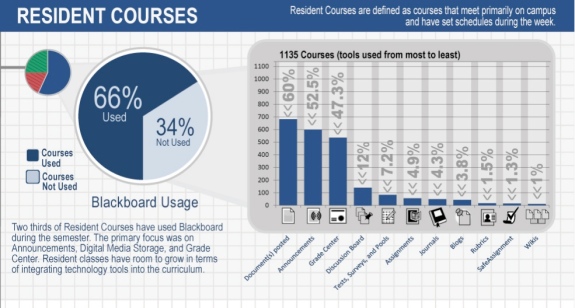
    History professor Jonathan Rees called it an “uncharacteristically subtle post.” When he posted an excerpt from his university’s report on its Blackboard usage, he didn’t have to say much: “I think all I want to do here is point out that all the things professors use Blackboard for here most (as well as a few of the things that not many people use Blackboard for) can be done for a lot less money than whatever our Blackboard license costs. Sometimes they can be done for no money at all.”

    Rees asks a really important question: why would a school opt to spend so much money on an LMS when many of its features go unused? Why pay when you can find cheap or free alternatives elsewhere?

    (more…)

  • The Blackboard Announcements, Part 2: Can Open Source Be Bought?

    I have gotten a lot of email from folks who moved to Moodle (often from Blackboard CE) because they wanted to get away from Blackboard and they thought that open source was “safe.” In my first post on the announcements, I noted there are reasons to believe that Moodlerooms customers may do just fine under the new corporate ownership. But still, what does the announcement mean? Did Blackboard buy Moodle? What about open source can be for sale? What protection does it afford from corporate acquisition, and what are the limits of those protections?

    I’ll try to outline some of the ins and outs in this post.

    (more…)

  • Summary of Statements by Key Players in Blackboard Announcement, Including Competitors

    Given all the news and discussion surrounding Blackboard’s strategy change last week, I thought that it would be useful to collect the public statements from Blackboard and their competitors in one place. No analysis, no interviews, just statements. I have a feeling that this might provide a rich source of analysis 6 – 12 months from now.

    Blackboard Official Announcements

    On March 26th, Blackboard made four simultaneous announcements through press release. They also released two additional press releases based on these four announcements.

    Blackboard / Moodlerooms / NetSpot / Moodle / Severance Key Blogs and Interviews

    Subsequently, several of the key players in the Blackboard announcements made statements through their own blogs or through media interviews. (more…)

  • My Blackboard Open Source Post: A Correction

    I screwed up.

    My recent post about Blackboard’s moves into open source was a particularly challenging one to organize coherently. While wrestling with that, I failed to give my usual attention to the tone. As a result of that oversight, I communicated a substantially different message than the one that I intended to communicate. I don’t believe in rewriting my posts after they are published (unless it’s on the level of a typo fix), because I believe in being accountable for what I have posted. So instead, I have inserted a short correction notice into the original post and will issue a longer one here.

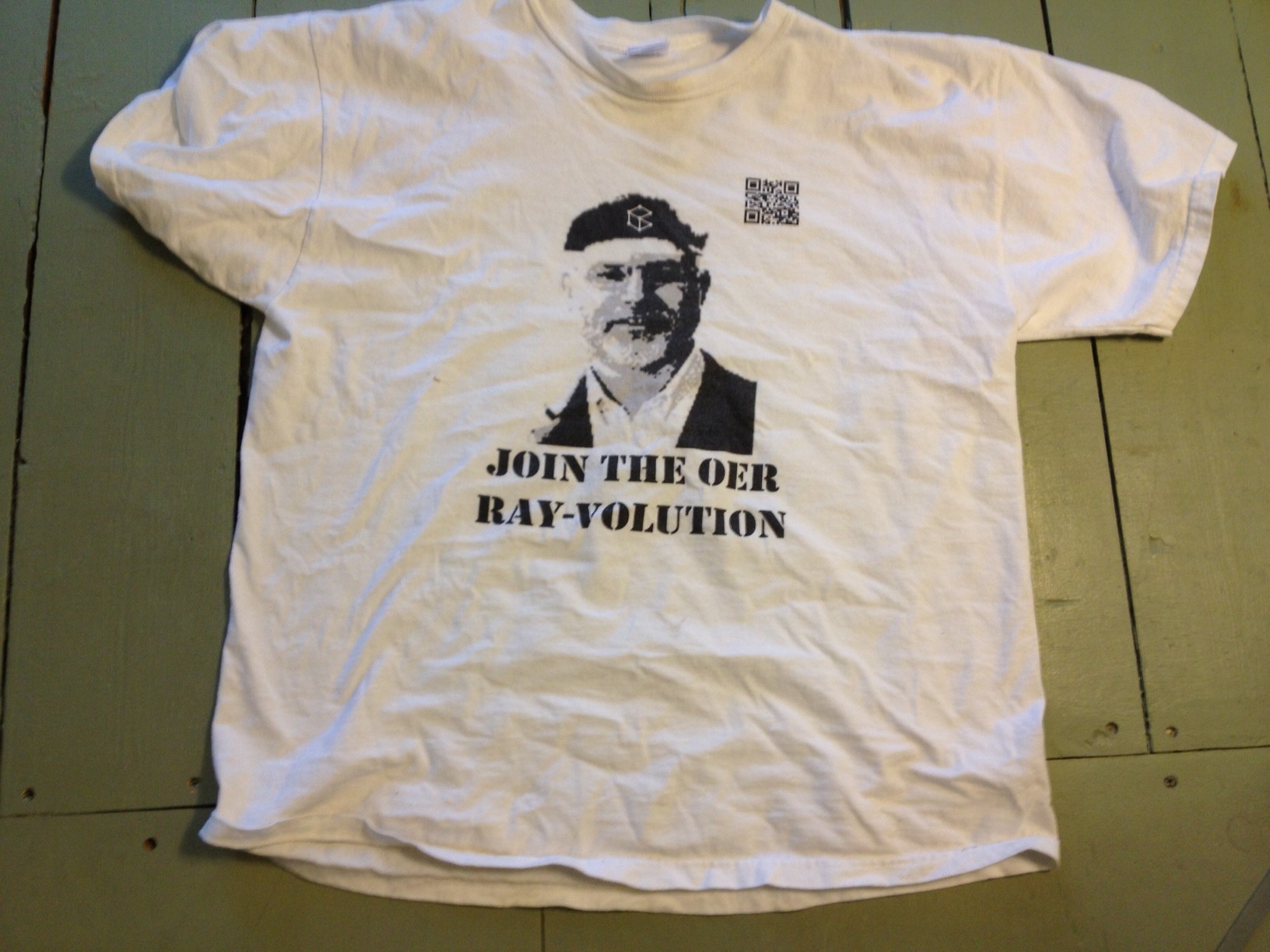
    The problem can be best illustrated with the T-shirt that I placed into the post:
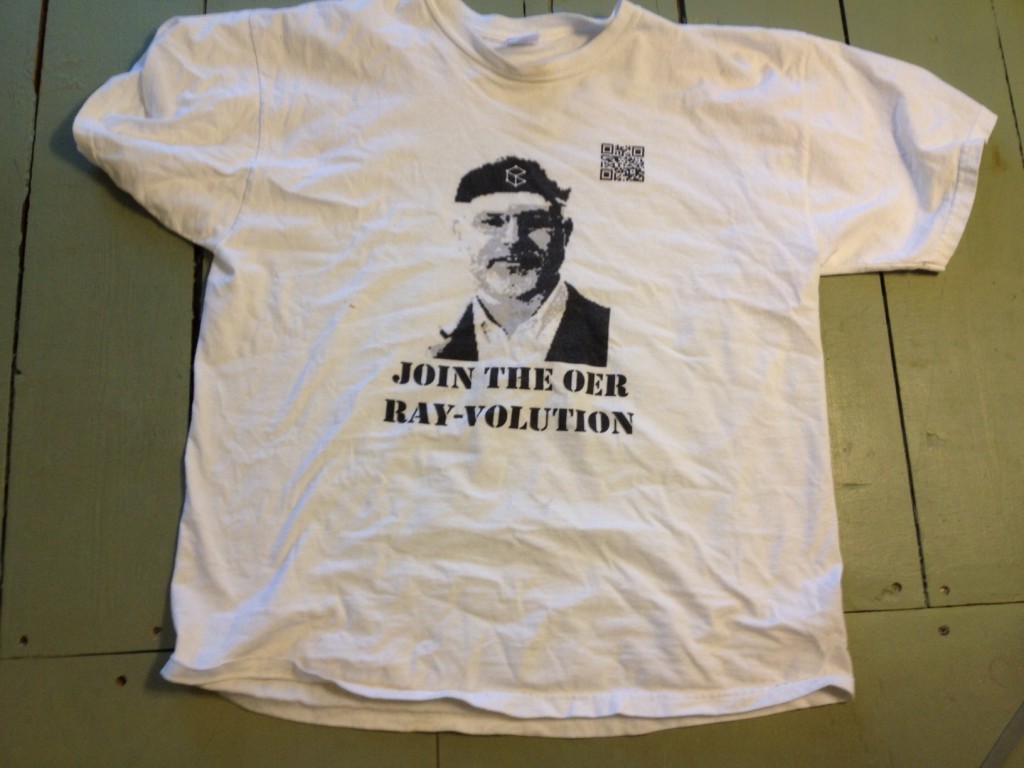
    There is a story behind that shirt. It was a gift. While at the Open Ed conference, Blackboard employees George Kroner and Jarl Jonas generously offered to walk me through the details surrounding some recent announcements about Blackboard’s support for OER in CourseSites. As I wrote in a subsequent blog post based on the information I got from George and Jarl, my conclusion was that Blackboard had made a sincere and substantial contribution to the advancement of OERs. At the end of the conversation the two gentlemen, I mentioned that I have a T-shirt from every major LMS except Blackboard. The one pictured here was kindly sent to me by George in response. Even a casual glance at it shows that it is not an official Blackboard T-shirt. I interpreted it as something created by the employees as an expression of affection for Ray’s personal investment in their openness effort. That’s what it meant to me and that’s what made me think of posting it.

    Unfortunately, I didn’t provide that context in the post. Along with my text, it easily could have been interpreted as a suggestion that Ray is trying to hog the limelight. Anybody who knows him even a little bit would not find that credible. I did not mean to suggest that Ray was looking to take credit for the open source move. Rather, I meant to suggest that he is looking to claim responsibility for it. I interpret him as saying, roughly, “To the degree that I’ve earned your trust, please trust me on this. I am personally invested in it.” He wasn’t bragging, nor was he slamming other Blackboard executives. So, my bad for not writing clearly.

    Ray wrote me a respectful and entirely appropriate email calling my attention to the passage in question. He took particular pains to emphasize that the T-shirt was not a Blackboard PR effort intended for external audiences, but rather “a humorous element of our cocktail party.” I do get push-back about my posts by their subjects from time to time and only feel compelled to respond when the objection has merit. This one did.

  • The Blackboard Announcements, Part 1: What the Heck Happened?

    For those of you who have been living under a rock, you may have missed a cluster of announcements from Blackboard this week:

    There has been a lot of really good, thoughtful coverage on the web about these developments. I recommend starting with the e-Literate friends and family, including Phil Hill’s post right here on this blog, Audrey Watters’ passionate rant on Hack Education, Rob Reynolds’ commentary at his blog, The Learning Lot, and frequent and eloquent e-Literate commenter Kate Bowles’ ruminations on her highly worthwhile Music for Deck Chairs blog. Those posts, in turn, link to other really good posts. I am really impressed with the level of sophistication of the dialog that the educational community is having about these developments.

    That said, I do think that there is more to add before we have exhausted the topic. I’m going to provide my own thoughts on what Blackboard is up to in this post and an analysis of what this means for non-Blackboard customers—particularly users of open source platforms—in a follow-up post.

    (more…)