Phil has been a busy boy, putting out two pieces about some Blackboard research that had gotten some negative responses and two more on a horrifically bad LMS outage for UC Davis and other universities using support vendor Scriba.
Our main schtick here at e-Literate is to get beyond the headlines. We try to explain what is actually happening and why it is important. Often, this involves puncturing hype like “robot tutors in the sky,” not by heaping them with scorn but by showing the gap between the hype and reality. But there are also times when we do the same for anti-hype. For example, there is a popular narrative that Blackboard is evil and bad and stupid, partly based on the massive brand damage the company did to itself a decade ago (and two CEOs ago). As a result, when they do…well…anything, it tends to be interpreted in the worst possible light. Personally, I’m glad that Blackboard is sharing the findings of their product research. I don’t know of many ed tech companies that are doing that. This is different than putting out a white paper about some study the company did showing how awesome their product is. Rather, it shows us how they are trying to understand their customers’ needs. Sharing that back with the world helps us, in turn, understand how Blackboard thinks. It is an important kind of transparency. As Phil’s second post on the topic highlights, we do have to understand that this kind of study is different than an academic study in order to draw the right conclusions from it. But that’s fine.
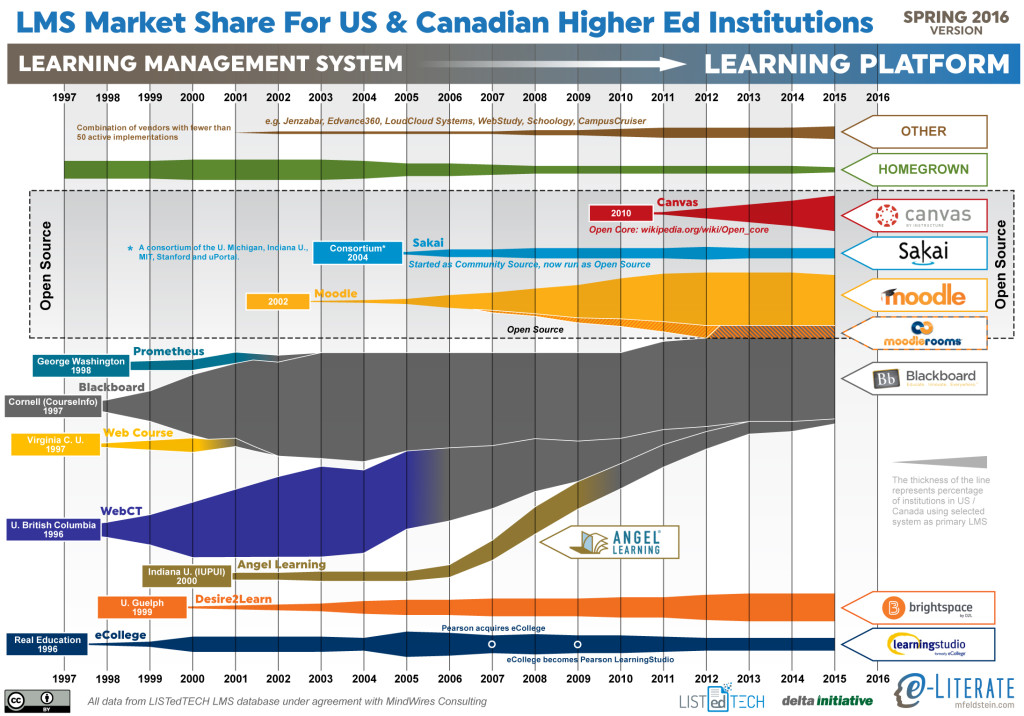
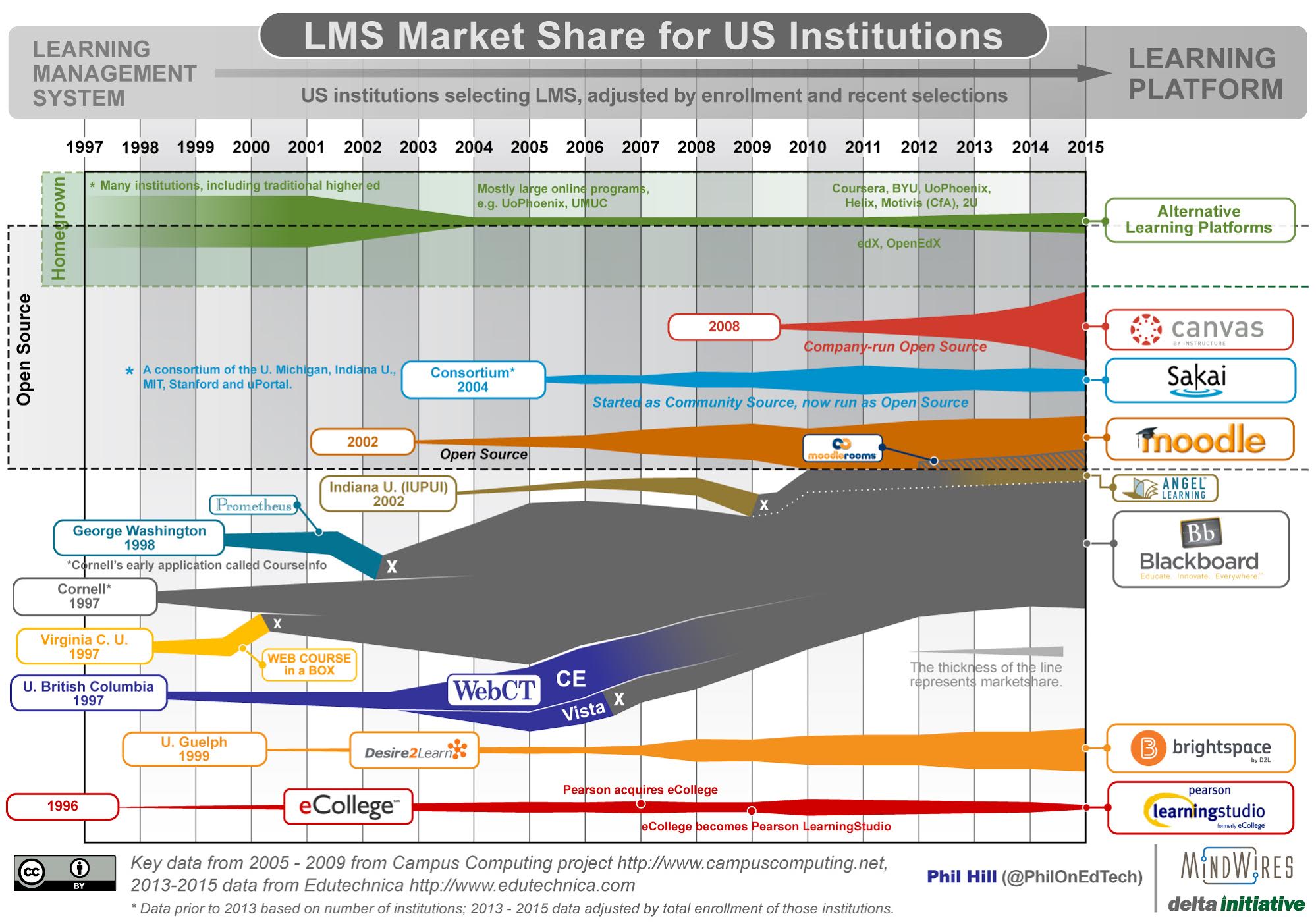
Likewise, the Scriba outage story plays into a “Sakai is dying” narrative. As it happens, I was at conference for the foundation that hosts Sakai last week and got something of a rundown on what was going on, including a preview of the release scheduled to come out this summer. (Oddly, nobody mentioned the outage, which must have been in its early stages at that point.) The Sakai sustainability story is complicated enough to merit a separate post, which I will get to later this week. In the meantime, I’d like to put the Scriba outage in context of how open source works in general and how the Sakai ecosystem works in particular. Because it is very easy for this story to reinforce preconceptions rather than looking at it carefully on its own merits.
Phil wrote,
There is an interesting angle here in that Sakai is open source yet data is not easily recoverable.
Right. Open source can help with problems like the Scriba outage. As far as I can tell, it did help UC Davis. But it’s not that simple. There is a lesson to be learned here for all LMS-using schools, but it’s not “open source doesn’t provide the flexibility that it is supposed to provide”; nor is it “Sakai is dying.”
(more…)