
e-Literate

Present is Prologue

Tag: student voice

  • Recommended Reading: Times Higher Education (THE) Reports on Student Views of Blended Learning

    Recommended Reading: Times Higher Education (THE) Reports on Student Views of Blended Learning

    Citing in-house research that surveyed over 100,000 students in the United States, THE reported late last week (see article) that students in exclusively face to face courses and students in exclusively online courses tended to give higher marks to their programs than those students taking blended courses that combine face to face learning with online learning. The report suggests that there is something about the design, implementation or execution of blended learning that is leading to lower overall satisfaction among students across several metrics that were tracked. For those universities pursuing some form of blended learning, and the list is growing every day, the THE report provides a launching point for new conversations around what is working and what isn’t working on their campuses.

    Blended learning is in its early stages and measurement and analysis are key factors that can drive improvement. As Mike Sharples, chair in educational technology at the UK’s Open University states in the article, “…the survey results do not show that ‘blended learning is a failure,’ but either that universities do not yet know ‘how to blend properly’ or that ‘there is a difference between what students say they like and what they do better at.” More data is needed, but this is an important conversation to be having.
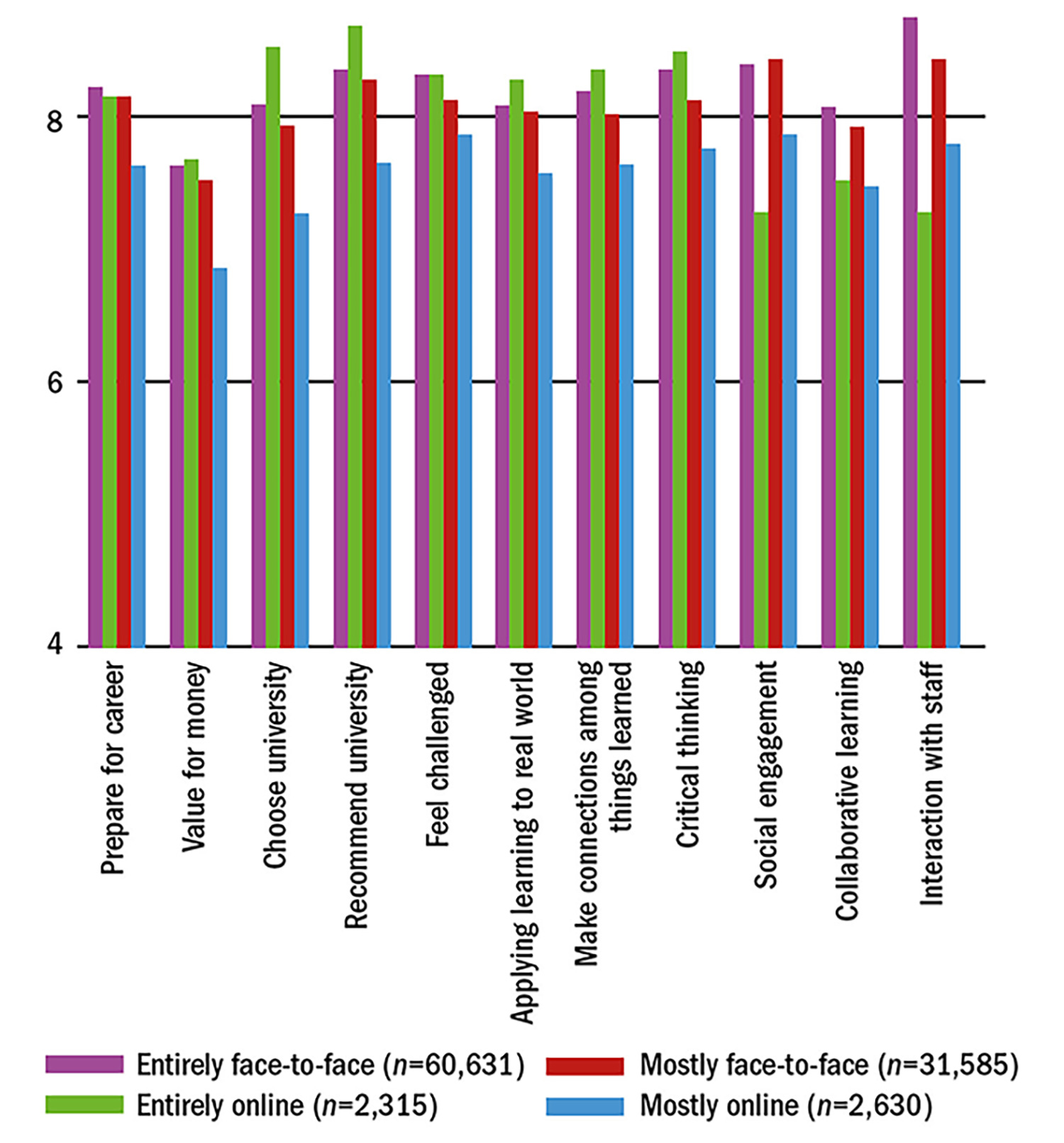
    Snapshot of data from THE article.
    Snapshot of data from THE article.

  • SmartSite Goes Dumb: A student’s view of the UC Davis LMS outage

    [ed. Cydney Jones is a junior at UC Davis, and she was kind enough to share information and insights during my coverage of the UC Davis LMS outage (their Sakai-based LMS is branded as SmartSite and hosted by Scriba). I asked her if she could write a post giving a student’s inside view of the situation. You can follow Cydney on Twitter at @crabbyCyd.]

    By: Cydney Jones

    UC Davis’ SmartSite, the learning management system we love to hate, earned that hate when it went missing two weeks before the end of the Spring quarter. As used and abused by students and faculty, SmartSite is accessed constantly. Need to read new class materials, log into SmartSite. Want to learn about assignments and turn them in, access SmartSite. Curious about your grade, look it up on SmartSite. Accessible from anywhere, on campus or off, via smartphone or computer terminal, SmartSite was the glue that held most courses together.

    It seemed odd that something so integral to every class and course would need to go down for maintenance in the middle of the term for more than two and a half days. But, the UCD IT department shared their communication from our LMS’s host, Scriba, saying that the system had suffered “failures in our primary data center.” It seemed odd that we were only give a day’s notice. We should have been more prepared, students, faculty, and administration alike. (more…)

  • Using TAs As Key Component Of Active Learning Transformation at UC Davis

    Last week I described how UC Davis is making efforts to personalize one of the most impersonal of learning experiences – large lecture introductory science courses. It is telling that the first changes that they made were not to the lecture itself but to the associated discussion sections led by teaching assistants (TAs). It is well known that much of the instruction in lower division classes at large universities is led not by faculty but by TAs. This situation is often seen as a weakness of the business model of a research university, but it can also be leveraged as an opportunity to lead educational change. Consider this interview with staff from the iAMSTEM group at UC Davis from our e-Literate TV series on personalized learning:


    (more…)

  • UC Davis: A look inside attempts to make large lecture classes active and personal

    In my recent keynote for the Online Teaching Conference, the core argument was as follows:

    While there will be (significant) unbundling around the edges, the bigger potential impact [of ed innovation] is how existing colleges and universities allow technology-enabled change to enter the mainstream of the academic mission.

    Let’s look at one example. Back in December the New York Times published an article highlighting work done at the University of California at Davis to transform large lecture classes into active learning formats.

    Hundreds of students fill the seats, but the lecture hall stays quiet enough for everyone to hear each cough and crumpling piece of paper. The instructor speaks from a podium for nearly the entire 80 minutes. Most students take notes. Some scan the Internet. A few doze.

    In a nearby hall, an instructor, Catherine Uvarov, peppers students with questions and presses them to explain and expand on their answers. Every few minutes, she has them solve problems in small groups. Running up and down the aisles, she sticks a microphone in front of a startled face, looking for an answer. Students dare not nod off or show up without doing the reading. (more…)

  • WCET14 Student Panel: What do students think of online education?

    Yesterday at the WCET14 conference in Portland I had the opportunity along with Pat James to moderate a student panel. ((Pat is the executive director of the California Community College Online Education Initiative (OEI) – see her blog here for program updates.)) I have been trying to encourage conference organizers to include more opportunities to let students speak for themselves – becoming real people with real stories rather than nameless aggregations of assumptions. WCET stepped up with this session. And my new favorite tweet ((I’m not above #shameless.)):

    As I called out in my introduction, we talk about students, we characterize students, we listen to others talk about students, but we don’t do a good job in edtech talking with students.  There is no way that a student panel can be representative of all students, even for a single program or campus ((As can be seen from this monochromatic panel, which might make sense for Portland demographics but not from a nationwide perspective.)). We’re not looking for statistical answers, but we can hear stories and gain understanding.

    (more…)

  • Three Makes a Movement: Branson creates youth panel for student voice in ed tech

    Based on my involvement in the Evolve conference sponsored by the 20 Million Minds Foundation, held in January, I wrote a series of posts covering the discussions around online education and educational technology. The three main posts:

    During the conference I put out a call for other conferences to follow 20MM’s lead and work harder to directly include students in their discussions of ed tech – full post here and video below:

    Before we get to the analyses, however, it is important to highlight once again how unique this format is in education or ed tech settings. There is plenty of discussion about needing course design and support services that are learner-centric, yet typically ed tech conferences don’t have learner-centric discussions. We need to stop just talking about students and add the element of talking with students.

    While I do not believe there is a direct connection, this week Sir Richard Branson created a youth panel as part of the UK’s Generation Tech review, giving students a direct voice in educational technology. The panel’s focus is K-12 usage and is described in The Telegraph: (more…)